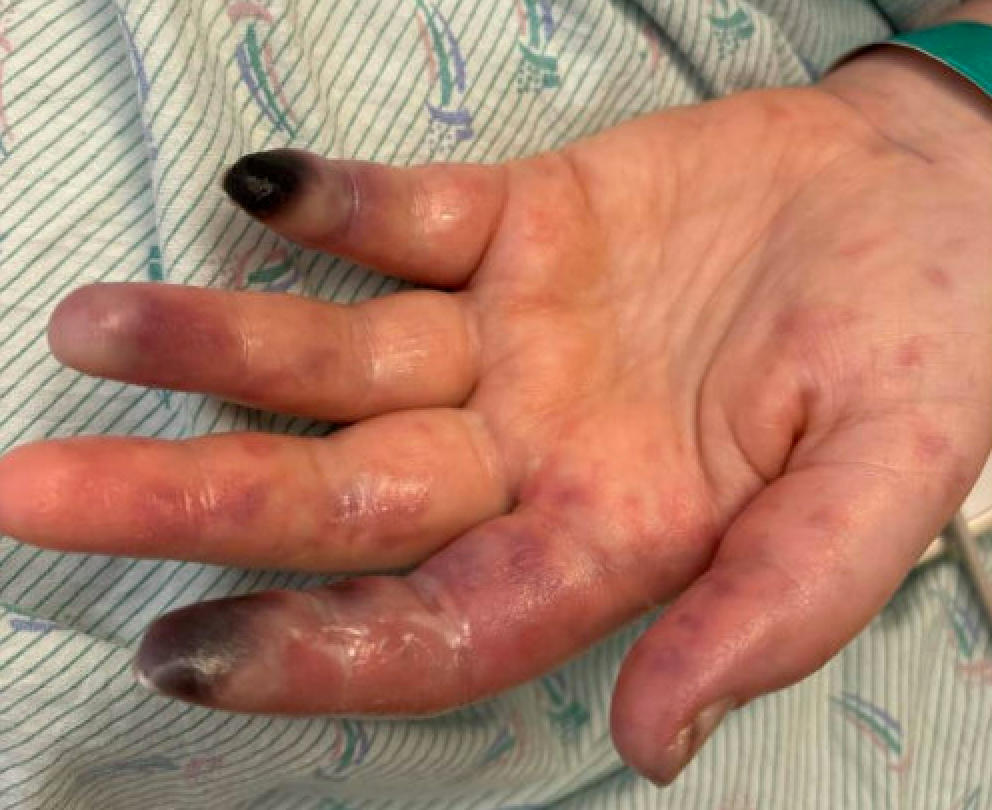
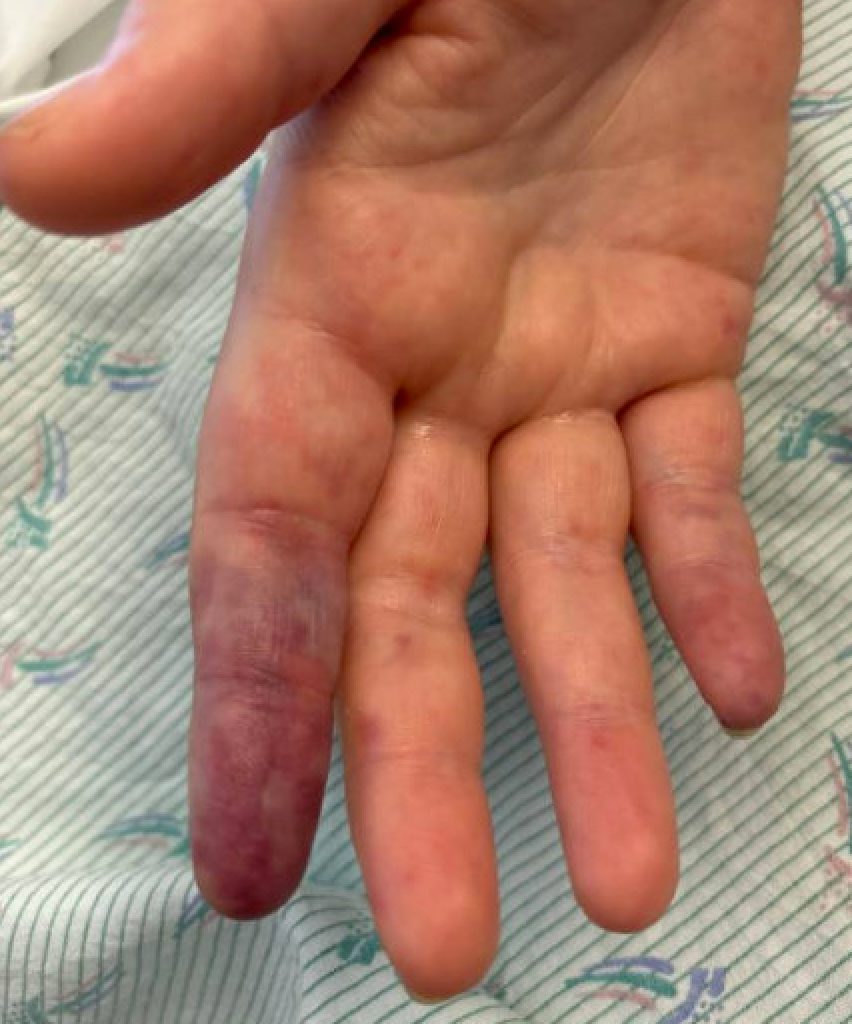
Case Presentation: A 33 year old female with reported history of recurrent ‘ear infections’ presented with acute ischemia of bilateral digits of her hands and feet after one month of bilateral hand and foot paraesthesia. Labs on admission showed white blood cell count 11.08 K/uL, hemoglobin 12.5 g/dL, platelet count 622 K/uL, ESR 107 mm/hr, CRP 6.5 mg/dL, negative ANA panel, weakly positive cANCA titer 1:40, negative pANCA titer < 1:20, elevated LDH 301 U/L and fibrinogen >700 mg/dL. Infectious and hypercoagulable workup was negative. Arterial duplex ultrasound of the extremities showed severe digital artery insufficiency in the hands and small vessel disease in the feet.The patient was empirically treated with continuous therapeutic heparin infusion, topical nitroglycerin applied to the fingers and toes, and oral nifedipine. Although the affected areas did not expand, despite these treatments, there was progression of the ischemic areas to dry, gangrenous necrosis, some areas developed surrounding bullae. Inflammatory markers were increasingly elevated. She developed fevers and diffuse maculopapular rash. The patient had transient microscopic hematuria that was suspected to be menstrual blood contaminating the urine sample. Biopsy was not performed. When the patient’s proteinase 3 antibody test returned positive, she was started on prednisone and rituximab. She then recalled her previous workup for ‘ear infections’ was positive for proteinase 3 antibody but had not been seen by rheumatology. She responded well to treatment with improvement in pain and circulation except for the already gangrenous fingertips.
Discussion: Granulomatosis with polyangiitis (GPA), formerly known as Wegner’s Granulomatosis, is an uncommon autoimmune vasculitis affecting small to medium size blood vessels. GPA is an antineutrophil cytoplasmic antibody (ANCA)-associated vasculitis. In GPA a patient’s plasma cells are activated to produce autoantibodies against the proteinase 3 enzyme found in the cytoplasm. Classically, GPA involves the respiratory tract and/or the kidneys. Less common presentations include otologic involvement and cutaneous involvement. Digital necrosis is a rare presentation of GPA.
Conclusions: Digital ischemia is a rare presentation of GPA and GPA must be considered on the differential diagnosis even with negative or equivocal ANA and ANCA laboratory results.