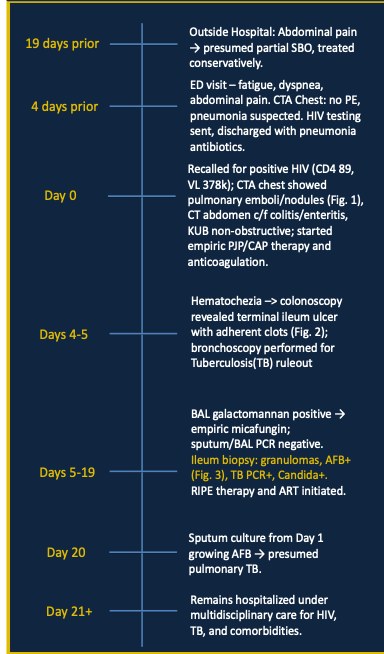
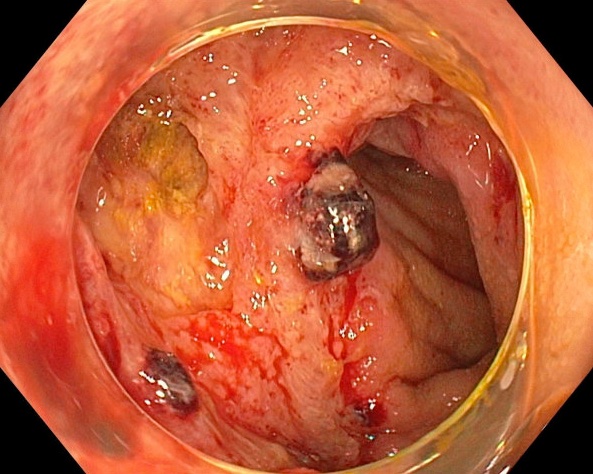
Case Presentation: Tuberculosis (TB) remains a major opportunistic infection in advanced HIV. Gastrointestinal TB is uncommon and often mimics malignancy or inflammatory bowel disease. In severely immunocompromised patients, low pulmonary bacillary burden can lead to false-negative respiratory testing for acid-fast bacilli (AFB). A 72-year-old man with hypertension, type 2 diabetes, and heart failure presented with two weeks of fatigue, dyspnea, and intermittent abdominal pain. Four days earlier, he had visited the emergency department with similar symptoms; CT angiography chest showed bilateral patchy opacities without pulmonary embolism, and he was treated for presumed community-acquired pneumonia. He reported to hospital as his confirmatory HIV testing returned positive and his symptoms persisted. His vitals were notable for tachycardia and tachypnea on presentation. Laboratory studies confirmed advanced HIV (CD4 89 cells/µL; viral load 378,000 copies/mL), and a QuantiFERON-TB Gold test was obtained. Empiric therapy was started for presumed Pneumocystis jirovecii pneumonia and community-acquired pneumonia.Repeat CT angiography chest revealed new segmental pulmonary emboli, and anticoagulation was initiated. CT abdomen/pelvis showed terminal ileal wall thickening and diffuse colonic air–fluid levels. On day four of anticoagulation, he developed hematochezia. Colonoscopy revealed a large terminal ileum ulcer with an adherent clot (Figure 1). Given his positive QuantiFERON-TB Gold, bronchoscopy was performed. Two admission sputum samples and two bronchoalveolar lavage (BAL) specimens were negative for AFB smear and Mycobacterium tuberculosis PCR, leading clinicians to consider TB unlikely and discontinue airborne precautions. BAL galactomannan was positive, prompting micafungin for pulmonary aspergillosis.Terminal ileum biopsy subsequently demonstrated granulomatous inflammation with numerous acid-fast bacilli, and PCR confirmed M. tuberculosis. RIPE therapy and antiretroviral therapy were initiated. On hospital day 20, one of the admission sputum cultures grew TB, confirming pulmonary involvement
Discussion: This case highlights a key diagnostic pitfall: negative respiratory acid-fast bacilli smears and PCR results do not exclude TB in advanced HIV. Low pulmonary bacillary burden can produce repeatedly negative respiratory studies, creating false reassurance—as reflected by the early discontinuation of airborne precautions. Extrapulmonary biopsy ultimately provided the first definitive diagnosis. Hospitalists should maintain suspicion for extrapulmonary or disseminated TB when symptoms persist despite nondiagnostic respiratory testing and should avoid excluding TB until cultures finalize.
Conclusions: 1. Negative respiratory AFB smear and PCR results do not exclude active tuberculosis in immunocompromised patients, as low pulmonary bacillary burden can lead to false-negative testing.2. Extrapulmonary evaluation, including endoscopy and biopsy, is essential when suspicion remains high.3. Airborne precautions and diagnostic consideration for TB should be maintained until respiratory cultures finalize, particularly in advanced HIV where disseminated disease is common.