Background: Social needs are associated with poor medical outcomes, including increased readmissions. Several studies compare demographic or ICD-10 code indices of social risk and readmissions, or social needs in disease-specific readmissions. Others found that addressing needs is associated with decreased readmissions. However, little is known about how needs differ between patients who are readmitted to the hospital and those who are not readmitted. This project aimed to compare (1) the proportion of patients with specific social needs, and (2) the average number of social needs per patient, between patients who were readmitted and patients who were not readmitted to the pediatric hospital medicine service.
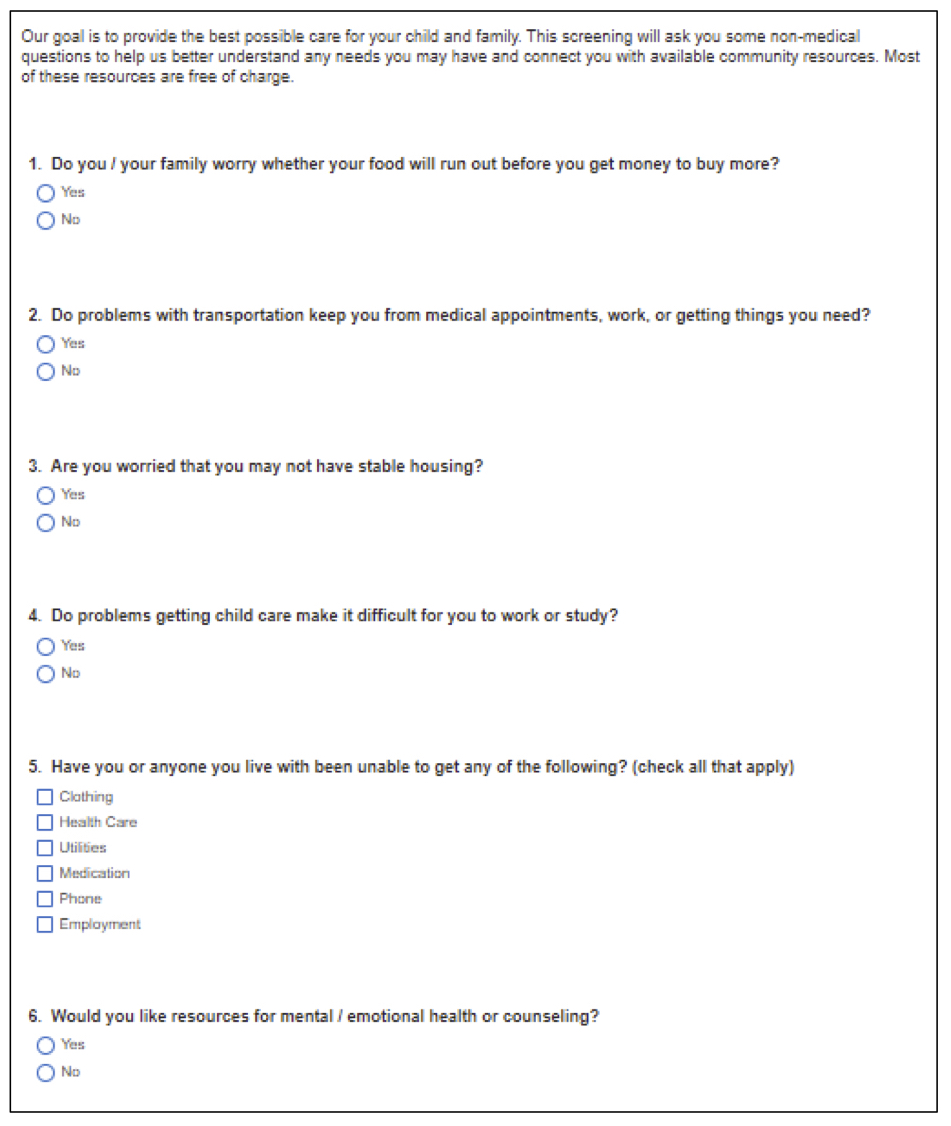
Methods: This retrospective observational study used chart review to compare demographic data and results of a social needs screening tool (Figure) completed by patients readmitted to the pediatric hospital medicine service at a free-standing children’s hospital within 30 days of discharge between 10/1/2022 and 1/31/2023 to patients admitted in this timeframe without readmissions. We compared the percentage of positive responses to each question on the screening tool and the average number of needs per patient between groups. Demographics and responses were summarized using frequencies and proportions for categorical variables and means and standard deviations for continuous measures. Group comparisons were conducted using Chi-squared or Fisher’s exact tests for categorical variables and the Wilcoxon rank sum test for continuous variables. The statistical significance level was 0.05.
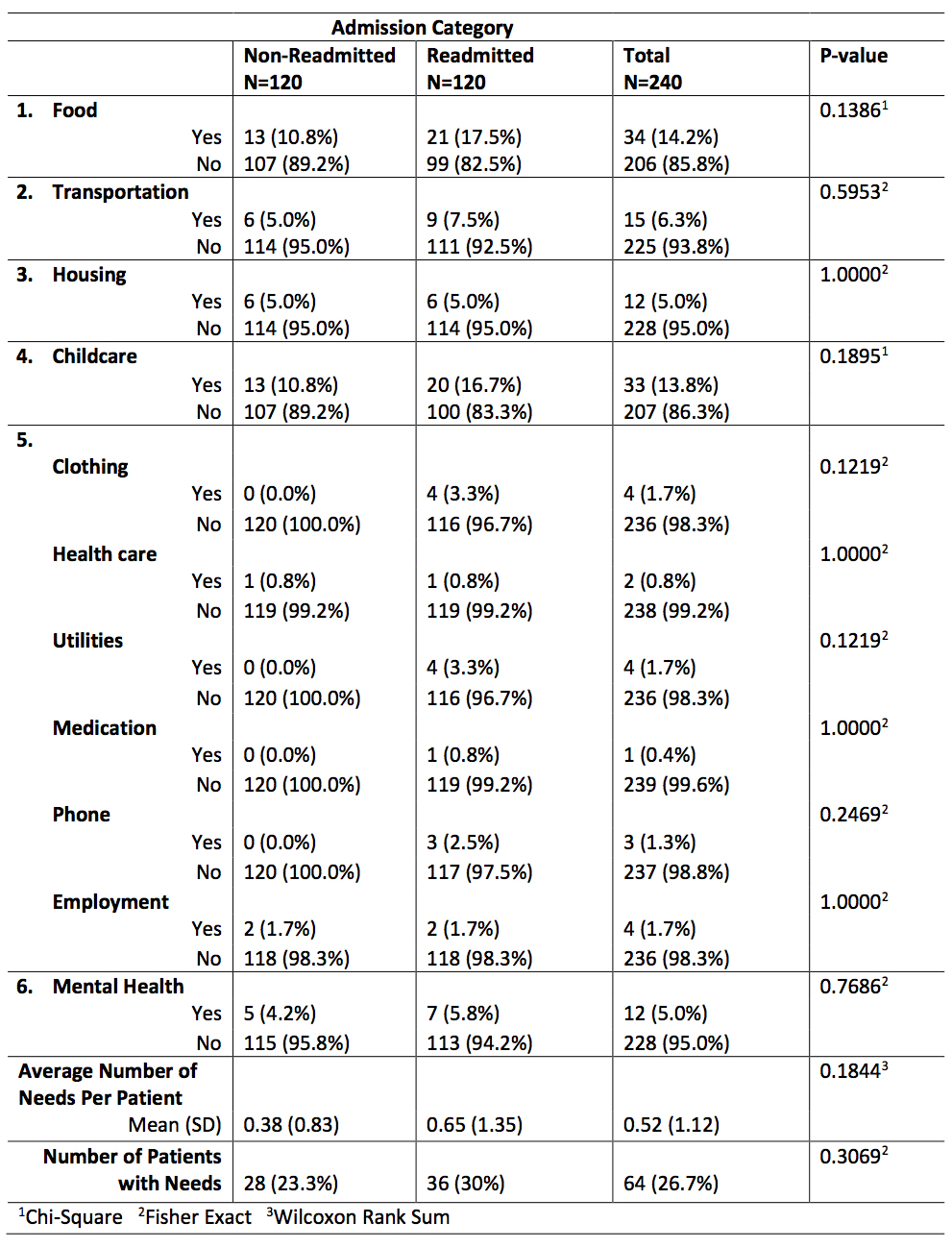
Results: Of 240 patients included, 120 were re-admitted patients and 120 were non-readmitted patients. There were no significant differences in demographic characteristics between readmitted and non-readmitted patients. Patients were 52.5% male, with an average age of 5.33 years. Forty-eight percent of patients identified as White/Caucasian, 31.7% Hispanic/Latino, 10% Black/African American, 7.1% Native American, and 2.5% Asian. English was the most frequent primary language (90.4%), followed by Spanish. Readmitted and non-readmitted patients differed in frequency of the most common primary diagnosis, with 29.2% of readmitted patients with respiratory illnesses versus 50% of non-readmitted patients. Twenty-seven percent of all patients had 1 or more social needs, with 23% in non-readmitted patients and 30% in readmitted patients (Table). There were no significant differences between readmitted and non-readmitted patients in the proportion of individual social needs, or in average number of needs per patient (Table). The most frequent social need in both readmitted and non-readmitted patients was food insecurity (17.5% and 10.8% of patients respectively) (Table).
Conclusions: Although there were no differences between readmitted and non-readmitted patient groups in the proportion with individual needs or average number of needs, this study highlights the prevalence of social needs at our institution. More than 25% of patients overall had 1 or more need, with food insecurity identified most frequently. This emphasizes the importance of screening during all admissions. Future studies will examine differences in social needs in the same patients between primary admission and subsequent readmissions and whether providing resources impact their needs.