Background: Peripheral Intravenous Catheters (PIVs) are the most frequently used invasive device in hospitalized patients. Although they are often considered low risk, complications associated with peripheral IVs include phlebitis, bloodstream infection, extravasation. They are also among the commonest devices implicated in cases of Staphylococcus Aureus bacteremia. While these complications can be mitigated by assessment of PIV presence, indication and rationale for continued use, how often clinicians are aware of PIV use is not well known.
Methods: We conducted a prospective study to assess awareness of PIV presence in clinicians caring for hospitalized, non-critically ill patients. In our academic medical center, patients were approached by study team members to evaluate PIV presence and location. Clinicians responsible for the patient (nurse, students, intern, resident, attending physician) were next approached and asked, “Does your patient have a PIV? If so, where is it located?” Differences in device awareness were assessed by chi-square tests; p< 0.05 was considered significant.
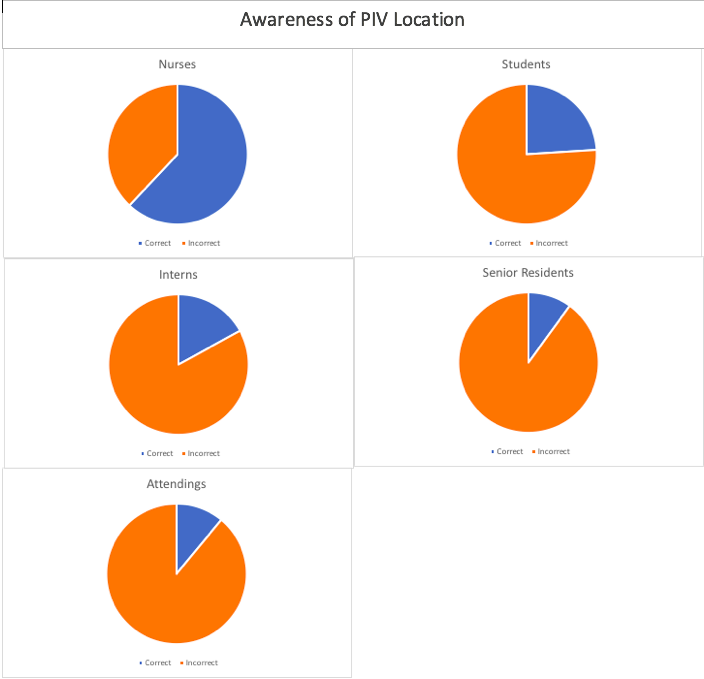
Results: A total of 578 patients were included. For patients who had a PIV in place, nurses were aware of PIV presence 99% of the time, students were aware 94%, interns 97%, senior residents 96%, and attendings 95% of the time. However, when no PIV was present, awareness varied substantially. Nurse awareness of lack of IV presence was 91%, students 25%, interns 68%, senior residents 44%, and attendings 71% of the time. Collectively, nurses were correct about PIV presence 95% of the time, students 60%, interns 83%, senior residents 70%, and attendings 83% of the time. When asked about location of the PIV, 62% of nurses were able to correctly identify site. In contrast, only 24% of students, 17% of interns, 9% of senior residents, and 11% of attendings were able to identify the location of the PIV.
Conclusions: Nurses are most often aware of the presence and location of a PIV catheter. In contrast, physician awareness varied substantially. Few physicians were able to identify the location of the catheter. Given the ubiquity of these devices and concerns related to safety, strategies to improve physician awareness of PIV presence appear necessary.