Background: Inpatient care delays – processes that prolong hospitalization beyond medical necessity – negatively impact quality of care, patient experience, and hospital throughput. Although quality improvement initiatives often focus on optimizing workflows to reduce care delays, gaps remain in understanding how providers identify and manage these delays in routine practice. We aimed to characterize provider workflows for recognizing and addressing care delays to inform more effective quality improvement interventions.
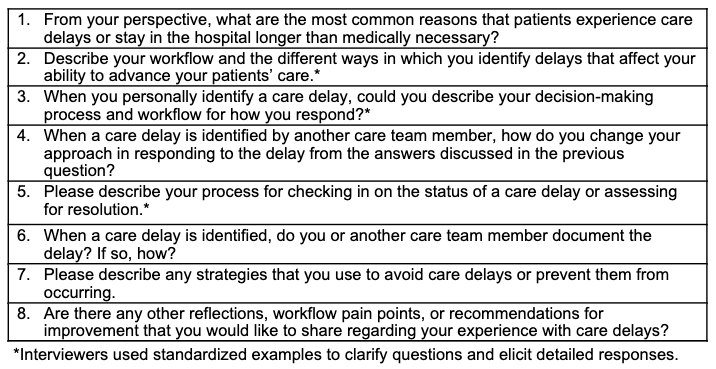
Methods: We conducted semi-structured interviews with inpatient providers at a 600-bed tertiary academic medical center from July to November 2025. Questions explored common causes of care delays, current management strategies, and opportunities for improvement (Table 1). Interviews were audio recorded, transcribed, and analyzed using rapid qualitative methods.
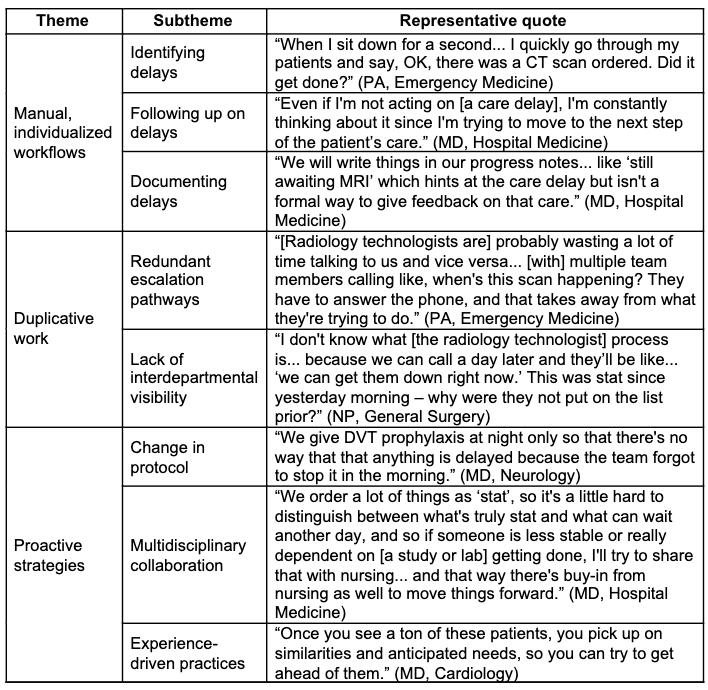
Results: Fifteen clinicians (5 physicians, 8 nurse practitioners, 2 physician assistants) from six specialties (Hospital Medicine, Neurology, Emergency Medicine, Surgery, Critical Care, and Cardiology) participated in interviews. Qualitative analysis identified three key themes (Table 2): (1) reliance on manual, individualized workflows to identify, track, and document care delays, contributing to high cognitive load; (2) duplicative work, driven by limited visibility into other departments’ workflows and unclear expectations for turnaround times; and (3) proactive strategies to prevent delays, including use of individualized workflows and multidisciplinary collaboration, often informed by institutional experience.
Conclusions: Providers rely on memory, manual follow-up, and proactive planning to manage care delays, leading to labor-intensive workflows and high cognitive load. System-level interventions that standardize escalation pathways and improve interdepartmental visibility on the status of outstanding tasks may reduce provider burden while improving efficiency and quality of care.