Background: Iron deficiency anemia (IDA) is one of the most prevalent causes of anemia encountered across both inpatient and outpatient settings, contributing to fatigue, prolonged recovery, and hospital readmissions. Although daily oral ferrous sulfate is the standard treatment, emerging evidence shows that consecutive-day dosing can increase hepcidin release, paradoxically reducing iron absorption. Moreover, daily dosing is often associated with gastrointestinal side effects that limit adherence.For hospital medicine, this gap is critical; patients discharged on iron supplementation frequently return with persistent or recurrent anemia due to poor adherence and limited discharge education. Addressing this represents an opportunity to improve post-discharge care and reduce preventable readmissions.Our quality improvement (QI) initiative aimed to enhance adherence and optimize outcomes by transitioning patients from daily to every-other-day ferrous sulfate supplementation.
Purpose: To evaluate whether transitioning patients with iron deficiency anemia (IDA) from daily to every-other-day oral ferrous sulfate supplementation improves adherence and tolerability without compromising hematologic stability during subsequent follow-up visits.
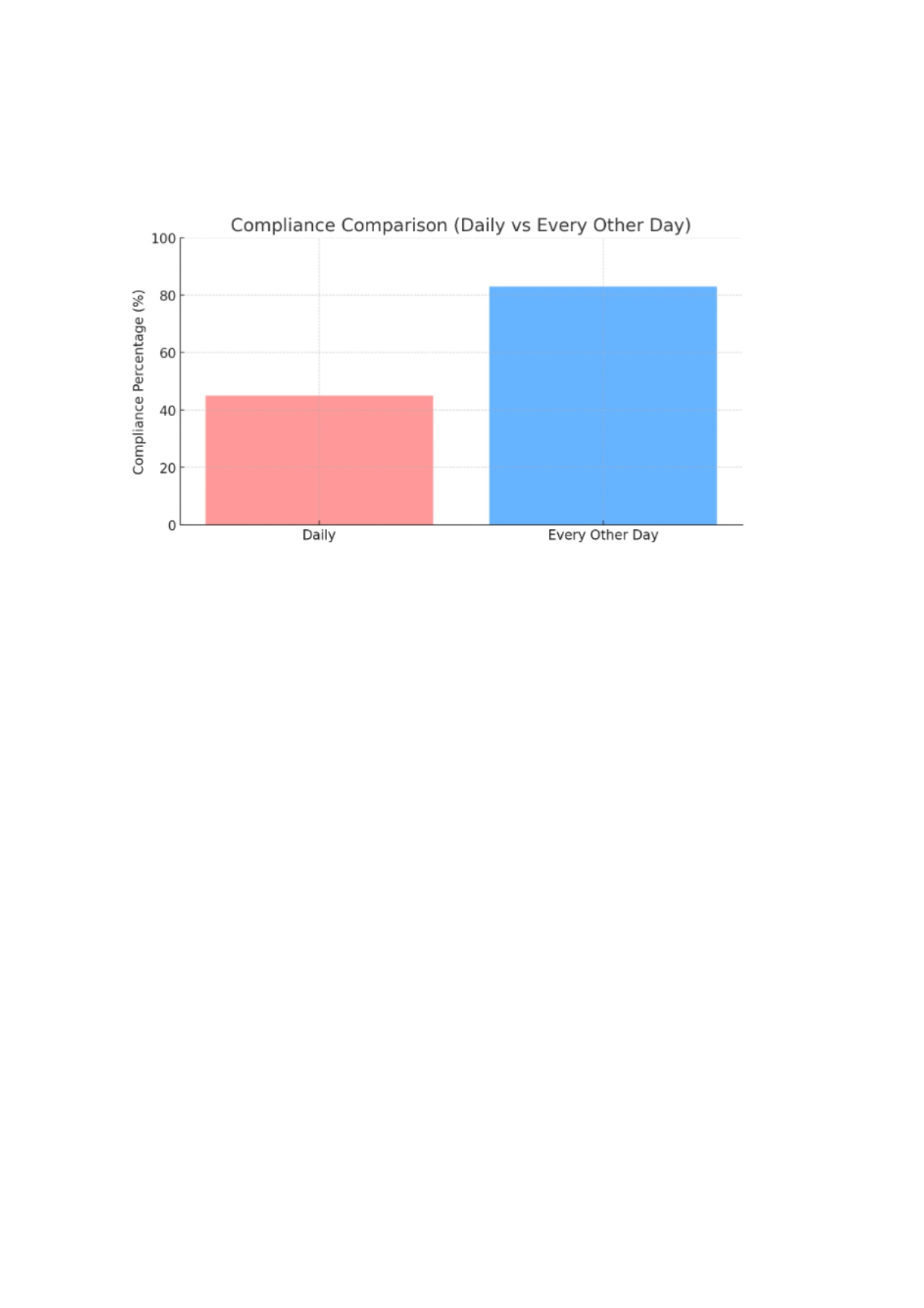
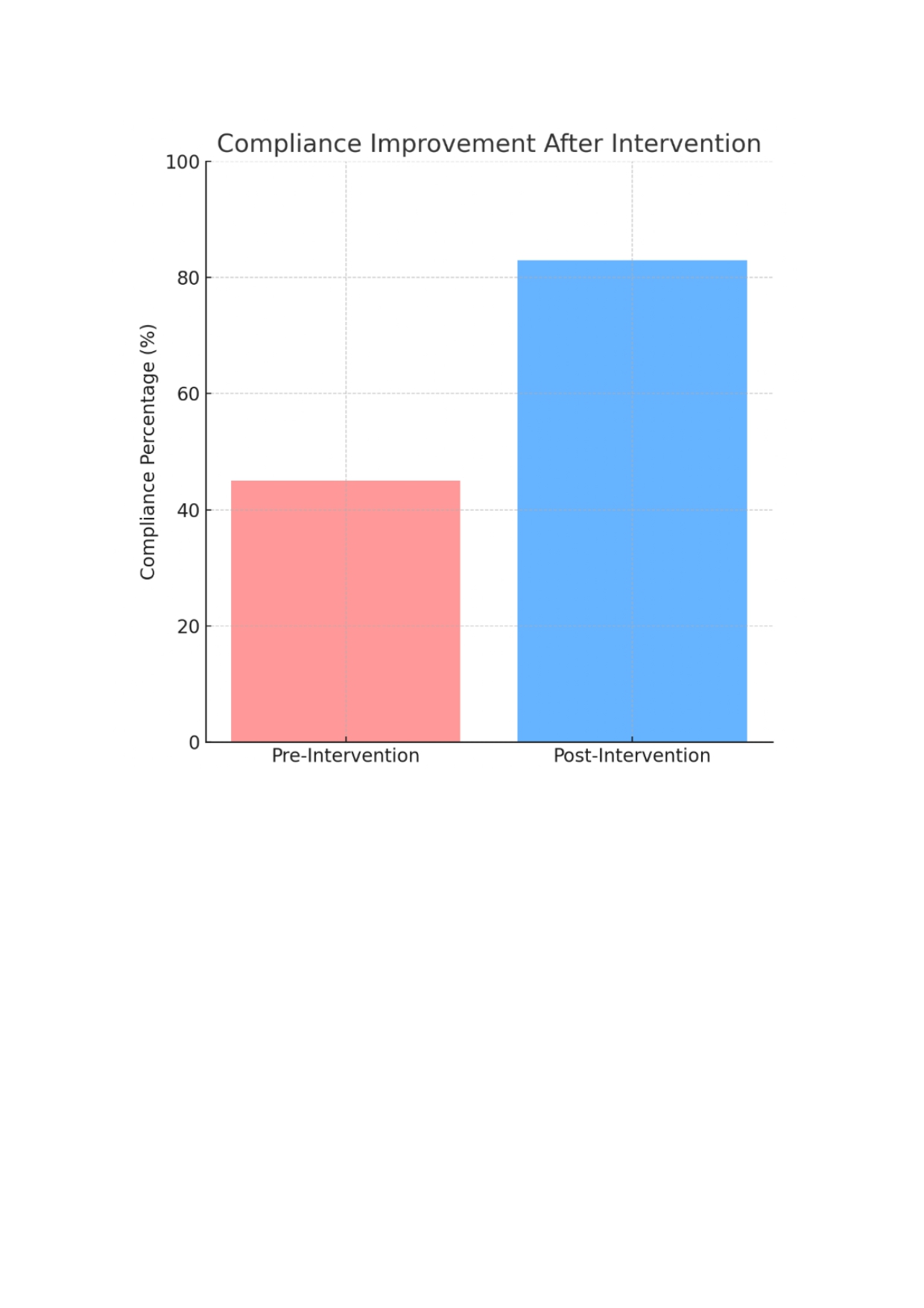
Description: A retrospective quality improvement (QI) project was conducted at a community-based resident-run internal medicine clinic between 2023–2024. Sixty adults with IDA who were recently discharged from the hospital and followed up in the clinic were included. Of these, 42 were prescribed daily ferrous sulfate 325 mg and 18 were on every-other-day dosing. Baseline adherence rates and reported side effects were extracted from electronic medical records.The intervention involved transitioning all daily-dosed patients to every-other-day supplementation and providing targeted education on physiological rationale, expected side effects, and adherence benefits. Follow-up at six months assessed compliance, tolerability, and available hemoglobin and iron indices. The primary outcome was change in adherence rate; secondary outcomes included stability of hematologic parameters and readmission rates.At baseline, only 45% (19/42) of daily-dosed patients were compliant, primarily due to gastrointestinal side effects such as abdominal discomfort and constipation. After transitioning to every-other-day dosing, adherence improved to 83% (34/42) at six months. Among the 13 patients with post-intervention labs, mean hemoglobin and ferritin levels remained stable within normal ranges, confirming preserved efficacy. No new anemia-related readmissions occurred during follow-up.
Conclusions: Transitioning from daily to every-other-day ferrous sulfate supplementation significantly improved adherence and tolerability while maintaining hematologic efficacy. This simple, physiology-based, and low-cost intervention can be seamlessly integrated into hospital discharge education and outpatient follow-up workflows. By reinforcing medication adherence during transitions of care, this initiative advances a key hospital medicine priority; enhancing post-discharge continuity, reducing preventable readmissions, and promoting sustained recovery.Sometimes, the most impactful improvements are the simplest ones; reminding us that, in medicine, less can indeed achieve more.