Background: Obesity medicine is an upcoming subspecialty in the field of medicine. We are actively learning about the epidemic of rising trend of this disease, as healthcare professionals we must determine our role to make it possible to intervene obesity effectively at every door-step to halt the rising trend
Methods: NHANES data from 1999 thru 2016 were analyzed. Minors (age <18 years) and underweight (BMI <18.5) were excluded. Prevalence and adjusted odds ratio were calculated among obese versus non-obese
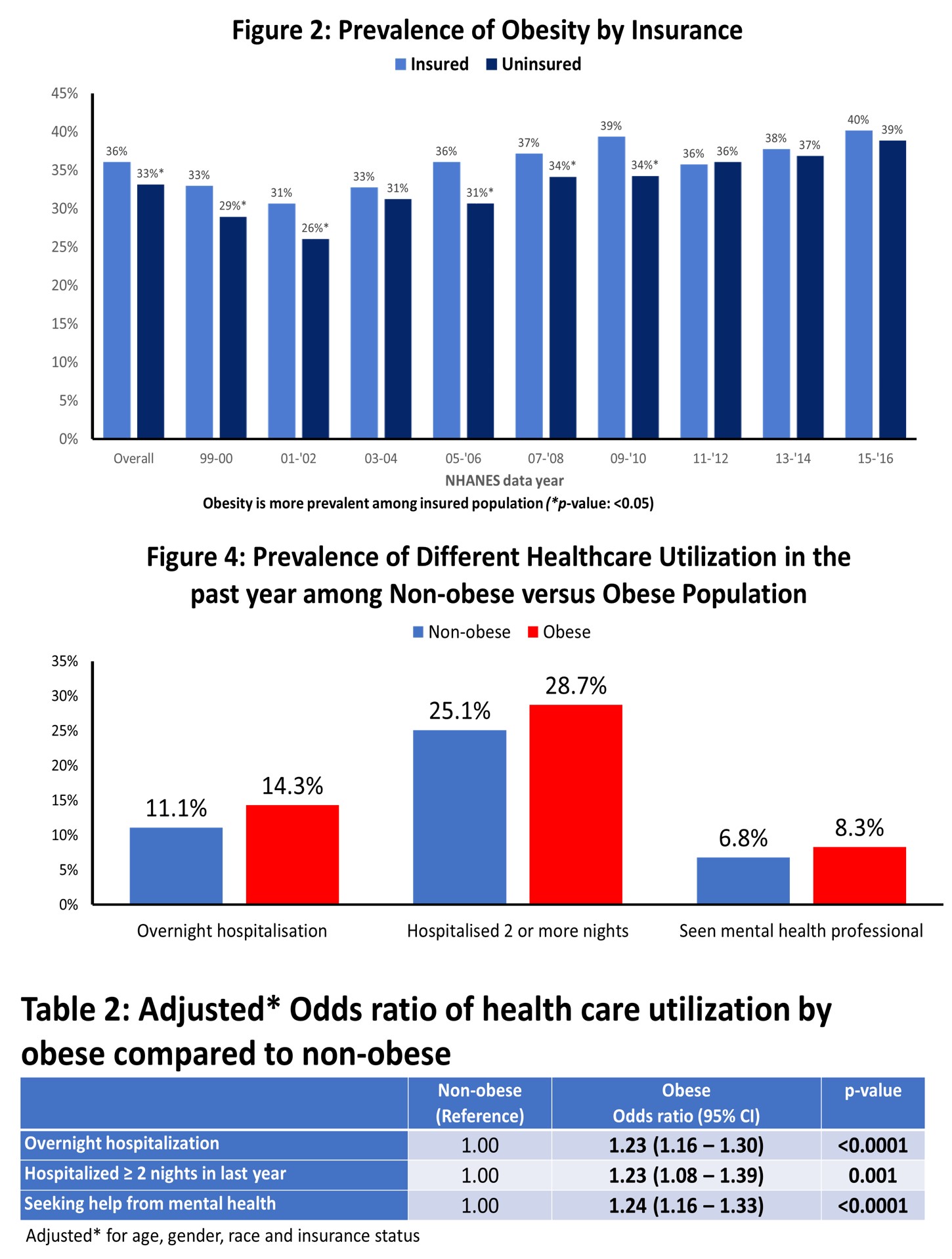
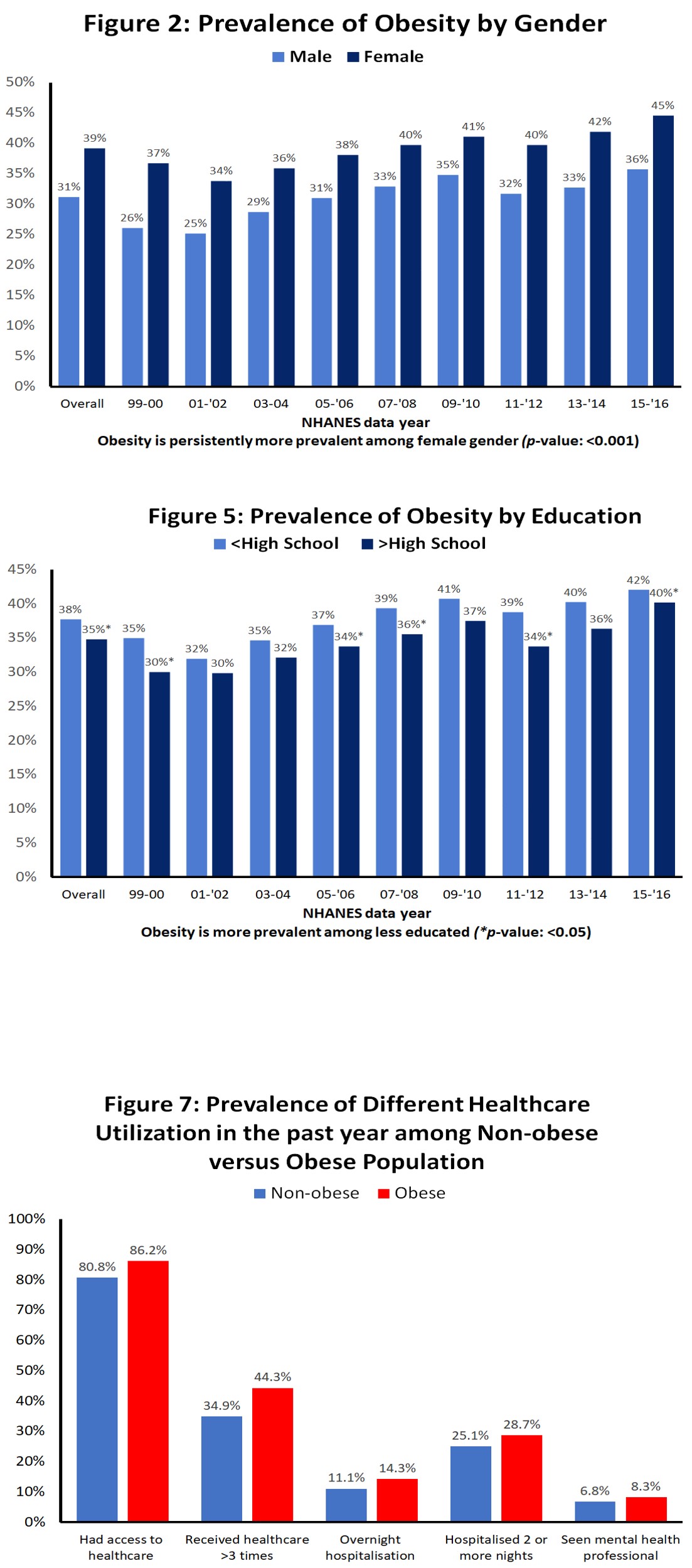
Results: Surprisingly, overall prevalence (36.0%) of this disease is higher among insured individuals compared to un-insured (33.1%) and this trend is similar among different gender and race. Some hypothesis behind this is, most likely population who have healthcare access are much more reluctant to take care of their health and thus are not worried about gaining weight and associated comorbidities. 86.2 % among obese population has a place to go for healthcare access, which is more than non-obese (80.8%). While main source of healthcare is through PCP (68.9%) among obese, these people are 23% more likely to be hospitalized for 2 or more nights compared to non-obese. Impressively, 86.8% of obese population have insight of being obese and 90.1% want to weigh less.
Conclusions: Our result signifies that as healthcare professionals we are not raising enough awareness, educating obese population of their disease and thus failing to intervene. Obesity medicine has come far, treatment modalities are now available which includes a multimodal approach of education, motivational therapies, preventive and lifestyle changes, pharmacotherapy as well as state of the art surgeries. Other than PCP we have some avenues that we can approach to intensify further intervention among these population to reach target of 100% access to obese individuals to intervene effectively. Hospitalist can take the opportunity to initiate obesity education and treatment while inpatient with the following steps: 1) identify obesity as a disease, 2) must include obesity among the problem list and 3) possible intervention includes: education material, videos and referral information to an obesity clinic or center.