Background: Chronic obstructive pulmonary disease (COPD) affects 14.2 million Americans(1) is the fourth leading cause of death and is responsible for significant morbidity(2). Evidence from clinical trials suggests that either azithromycin or roflumilast can be used to treat airway inflammation in patients with controlled COPD, but few studies have described how often these medications are prescribed in practice, or their real-world effectiveness in terms of reducing readmissions.
Methods: We conducted a retrospective observational cohort study using an administrative database from 206 clinical sites participating in the Vizient® Clinical Data Base (CDB) and including data on patients hospitalized between January 2017 and June 2023. In that cohort we identified patients with COPD and chronic bronchitis present on admission using standard ICD-10CM definitions and further identified patients who received roflumilast or azithromycin for the first time on either the day before or day of discharge. We excluded admissions with a length of stay less than 2 days, those who were coded with mycobacterium infection, and those who died at discharge. We used bivariable statistics to compare patient characteristics. We then estimated the average treatment effect using propensity score weighting, propensity score matching, and augmented inverse probability weighting (AIPW) to determine whether there were differences in readmission to the hospital within 60 days based on treatment received at discharge. The treatment assignment models for all three methods included age, sex, race, ethnicity, primary payer, secondary payer, all Elixhauser comorbidities except COPD, admission source, admission status, attesting physician specialty. All analyses were carried out in Stata 18 (College Station, TX).
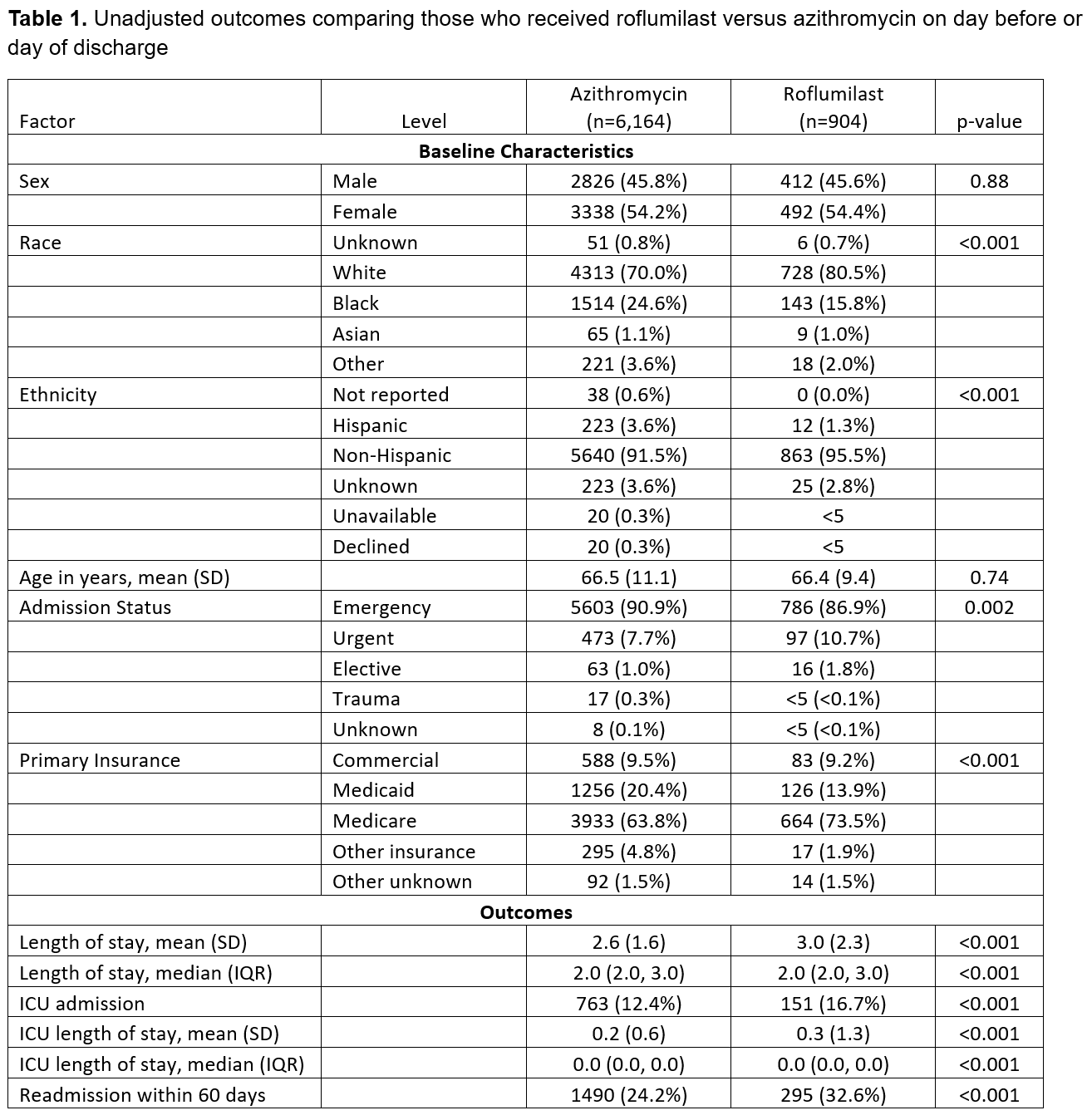
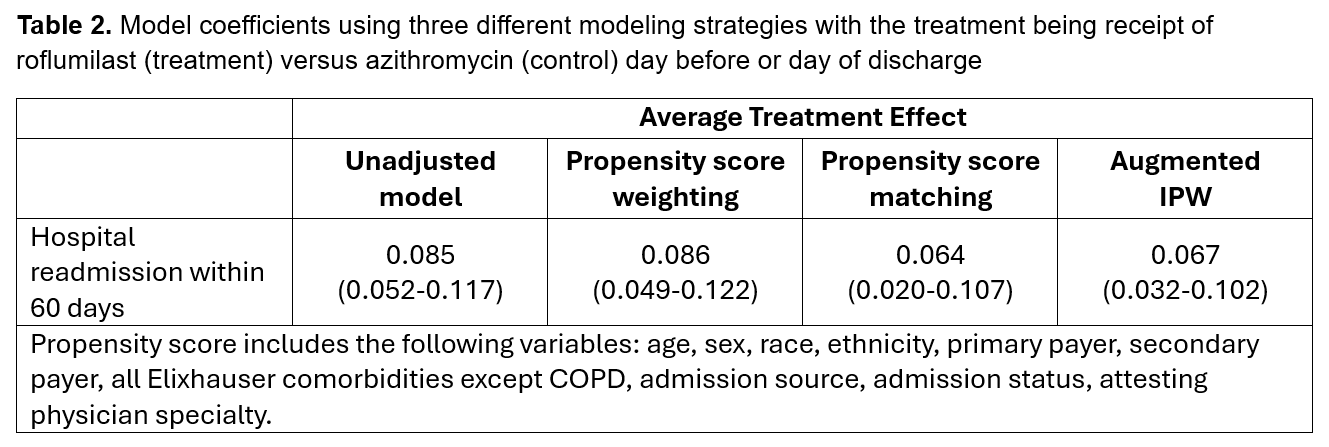
Results: We identified 225,944 hospitalizations with COPD, 7,068 of which (3.1%) started azithromycin or roflumilast on the day before or day of discharge; of these patients, 87% (n=6,164) received azithromycin and 13% (n=904) received roflumilast. Baseline characteristics and outcomes are presented in Table 1. In unadjusted analyses, patients who received roflumilast had higher risk for readmission at 60 days when compared to those who received azithromycin, a finding which was consistent across adjusted analysis estimation methods (Table 2).
Conclusions: In our large cohort of hospitalized medicine patients, roflumilast was far less commonly prescribed than azithromycin at discharge among patients with COPD, and these patients were more likely to be readmitted to the hospital even after adjustment in advanced statistical models. These results are limited by lack of longer term care patterns (such as ambulatory data), granular measures of illness severity such as functional status, so are likely impacted by residual confounding. In addition, roflumilast is indicated in those with chronic bronchitis, something which was infrequently coded in the cohort. However, our work highlights the importance of valid, computable phenotype data for COPD patients, including longitudinal data, a necessary precondition for pragmatic observational trials in COPD patients.