Background: The health care transition (HCT) from adolescence to young adulthood is a vulnerable time for youth with special health care needs (YSHCN). Inadequate preparation and support from clinicians, increased responsibilities, and lack of ongoing parental assistance may lead to worsening health conditions. It is generally understood that YSHCN should undergo a structured pediatric to adult HCT in the ambulatory setting (1). However, efforts to guide HCT do not typically address hospital-based transition to adult care models. Hospitalized youth have demonstrated a lack of preparedness for transition to adult-oriented care (2), which highlights a need for intervention.
Purpose: The Inpatient Transition Consult (ITC), staffed by internal medicine-pediatrics trained physicians and a licensed clinical social worker, aims to advance the HCT process for YSHCN by providing education on care transitions, coordinating care with outpatient providers, and offering anticipatory guidance for future hospitalizations in the adult setting. The ITC also aims to facilitate the transfer of select hospitalized patients from pediatric to adult providers in the inpatient and outpatient settings.
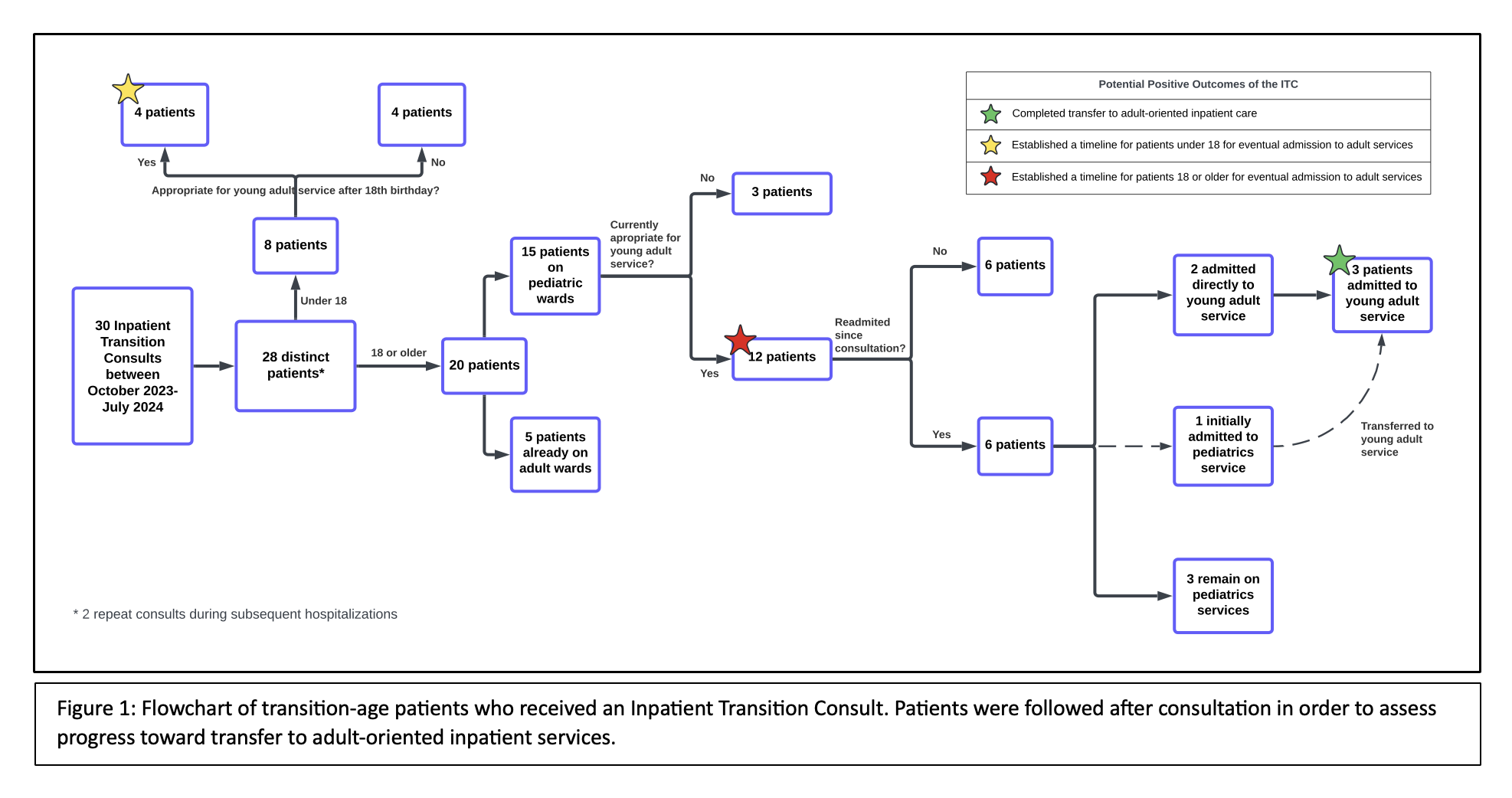
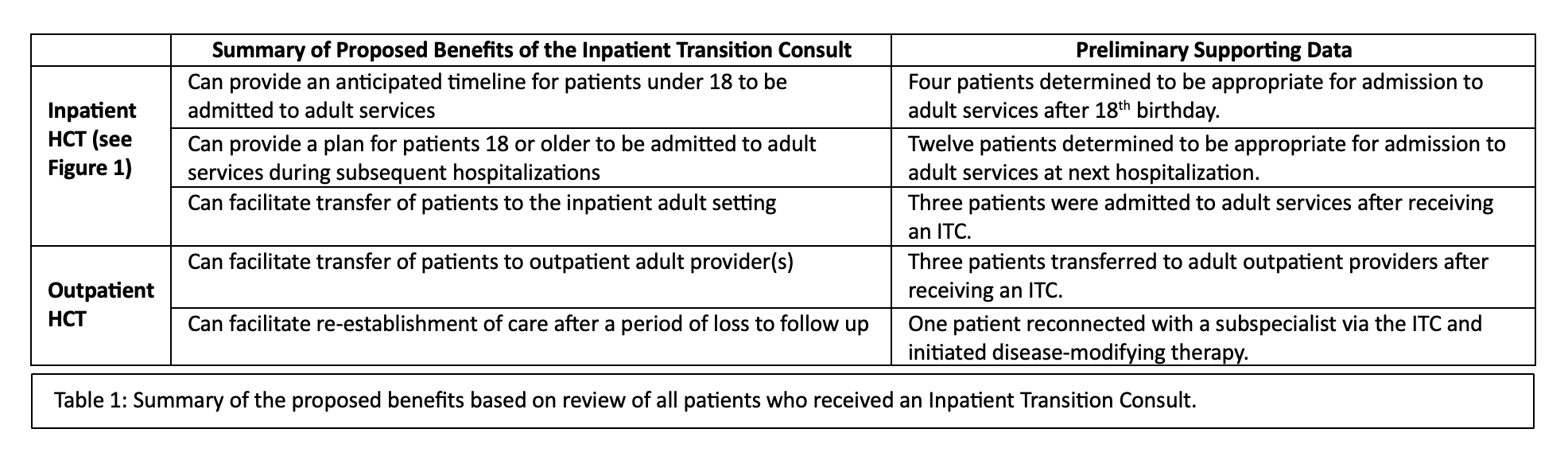
Description: We designed an ITC to address the needs of transition-age hospitalized YSHCN. Key components of the consult include a comprehensive medical summary, advance care planning, review of social determinants of health, transition assessment and counseling, and care coordination with the patient’s outpatient medical team. Patients admitted to a pediatrics service are assessed for readiness for admission to adult medicine wards during future hospitalizations. This decision is based on discussions with the patient, family, and inpatient and outpatient health care teams. We reviewed the charts of patients who received an ITC in order to assess progress toward advancing their HCT process. We made note of potential themes or outcomes that could reasonably be attributed to the ITC (summarized in Table 1).Preliminary Data: Between October 2023 and July 2024, 28 patients aged 17 to 22 received an ITC. Patient charts were reviewed in August 2024. Four patients under 18 were deemed appropriate for admission to adult services after their 18th birthday, and 12 patients aged 18 or older were deemed appropriate for admission to adult services at the next hospitalization. Of the six patients readmitted to our institution since consultation, two were admitted directly to the young adult service, one was initially admitted to a pediatrics team and later transferred to the young adult service, and three remained admitted to pediatrics teams during subsequent hospital stays (Figure 1).Additionally, three patients transitioned from pediatric to adult outpatient subspecialty providers after hospital discharge. One patient was reconnected with her subspecialist via the ITC and initiated disease-modifying therapy.
Conclusions: Preliminary data suggest that hospitalization provides an opportunity to impact care for youth anticipated to need transition to adult medical care and for young adults with inadequate HCT who are overdue for transfer to adult-oriented models of care. Potential benefits of the ITC include providing an anticipated timeline for transfer completion, facilitating transfer to adult providers, and coordinating a return to care after loss to follow up. Further longitudinal observation is needed to determine the full extent of benefits and identify the most effective components of the consult.