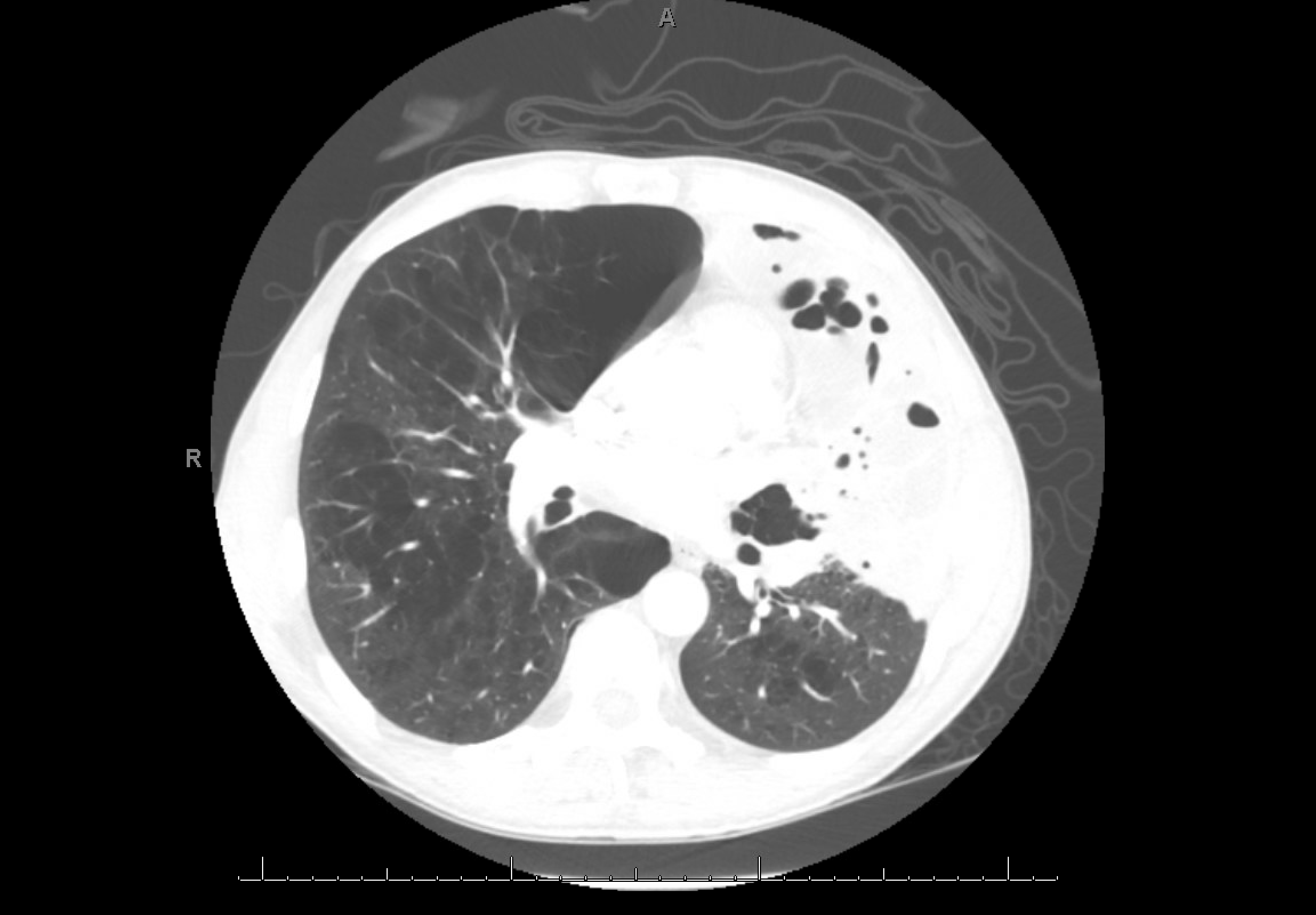
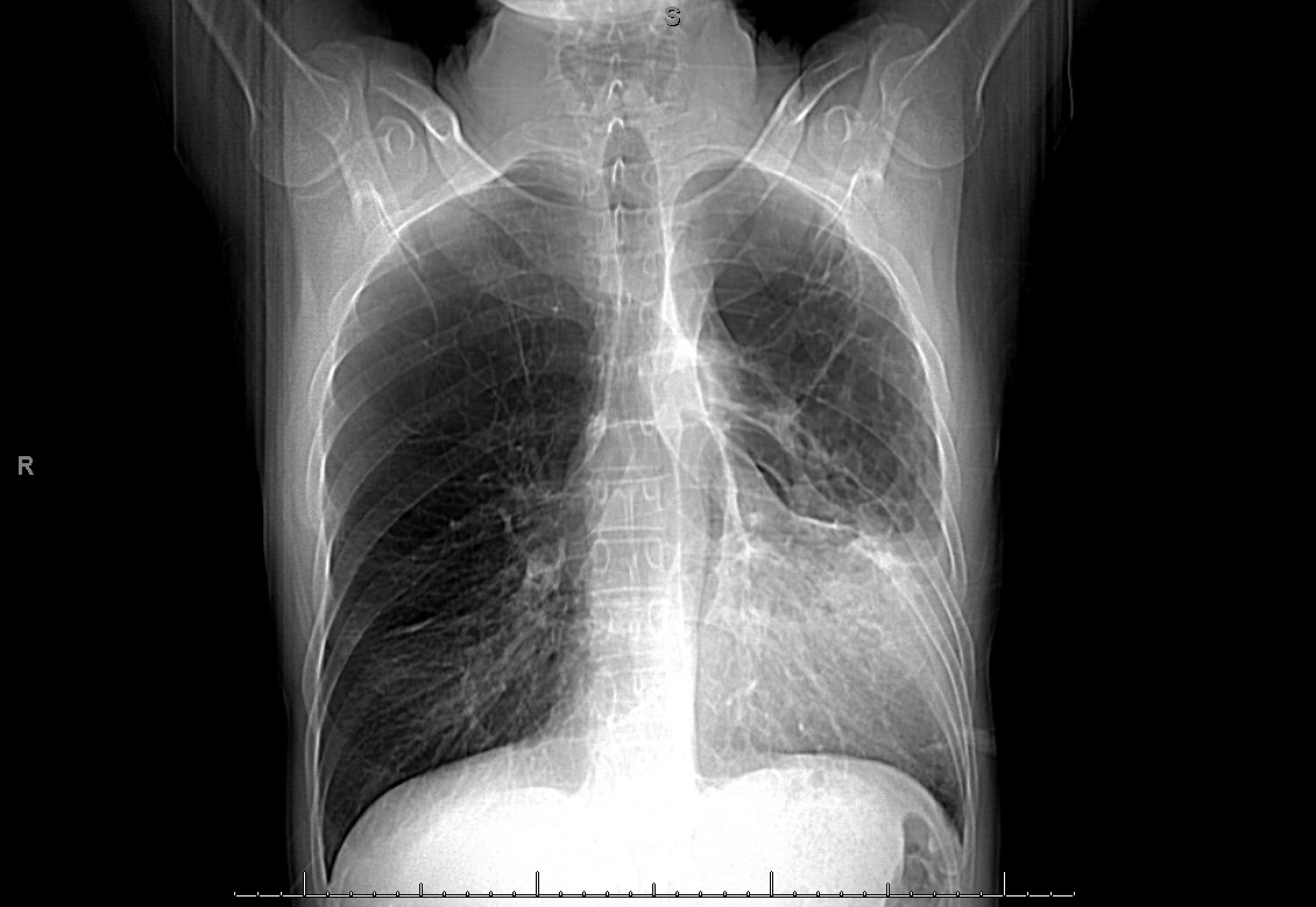
Case Presentation: A 48-year-old man with a history of asthma and chronic cigar use presented with a two-year history of progressive dyspnea that acutely worsened with fever, nonproductive cough, and pleuritic chest pain. He had no known immunodeficiency or prior immunosuppressant exposure. CT chest revealed multiple small pulmonary nodules, severe emphysematous changes, and a left upper-lobe consolidation. Empiric ampicillin–sulbactam was initiated, then escalated to piperacillin–tazobactam due to radiographic progression. Sputum cultures remained nondiagnostic. Unrelenting fevers and lack of clinical improvement prompted evaluation for mycobacterial and fungal etiologies. (1→3)-β-D-glucan was markedly elevated, and Aspergillus galactomannan testing returned positive. Bronchoalveolar lavage ultimately grew Actinomyces, confirming a dual infection with Actinomyces and Aspergillus. Persistent fevers resolved following discontinuation of piperacillin–tazobactam, consistent with a β-lactam–induced drug fever. The patient was discharged on long-term doxycycline and voriconazole, with complete symptom resolution at follow-up.
Discussion: Chronic pulmonary aspergillosis is a progressive fungal infection that can evolve into invasive disease in the setting of significant immunosuppression. Pulmonary actinomycosis, by contrast, is a chronic bacterial infection resulting from aspiration of oral commensal flora. Both infections are associated with underlying structural lung disease; however, concomitant infection is exceedingly rare and poses substantial diagnostic challenges. Diagnostic complexity can be further complicated by β-lactam–induced drug fever, an uncommon adverse reaction that can mimic ongoing infection and obscure clinical assessment. Although rare, both Actinomyces and Aspergillus should be considered in cases of pneumonia that do not respond to standard therapy, especially in patients with structural lung disease. Drug-induced fever can further mimic persistent infection and complicate clinical evaluation.
Conclusions: This case illustrates the importance of maintaining diagnostic vigilance and recognizing both infectious and noninfectious contributors to fever in complex pulmonary infections.