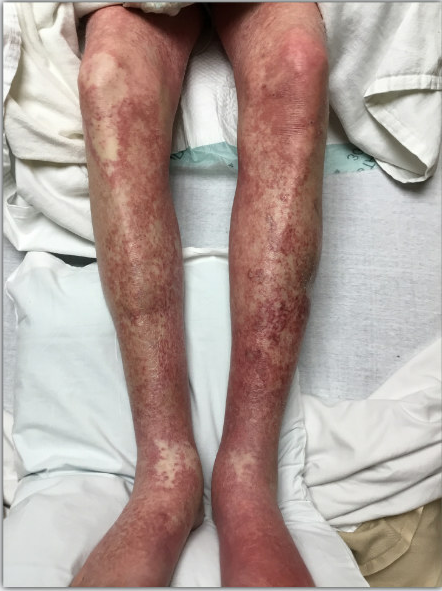
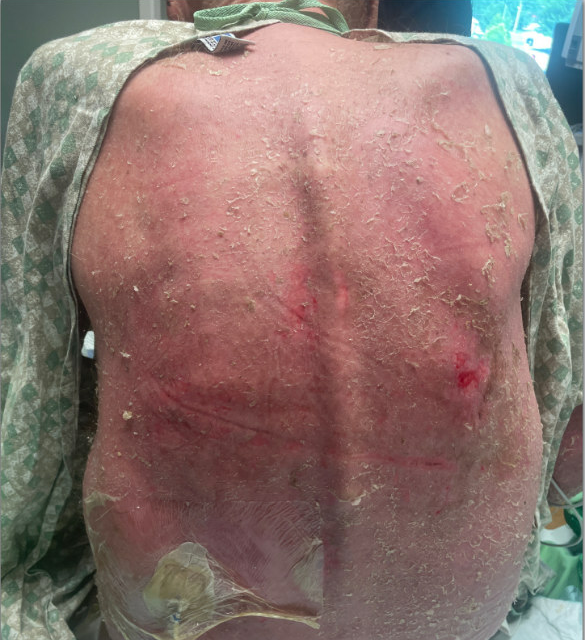
Case Presentation: A 73-year-old male with a history of recurrent follicular lymphoma (on lenalidomide), atrial fibrillation, coronary artery disease, and heart failure presented with dyspnea, weight gain, and bilateral leg swelling. On admission, diffuse erythematous rash with superficial peeling and erythroderma was noted, without mucosal involvement. Skin biopsy revealed psoriasiform lichenoid dermatitis with eosinophils, apoptosis, and vacuolar alteration at the dermal–epidermal junction, consistent with DRESS syndrome. Lenalidomide was held and oral prednisone (60 mg daily) was initiated, leading to gradual resolution of rash. The patient was discharged on a tapering steroid regimen and placed on PJP prophylaxis.
Discussion: Drug Reaction with Eosinophilia and Systemic Symptoms (DRESS) is a rare, potentially life-threatening hypersensitivity reaction that typically occurs 3–6 weeks after drug exposure (1). Common triggers include antiepileptics, antibiotics, and NSAIDs, whereas chemotherapeutic agents are rarely implicated (2,3). Typical manifestations of DRESS syndrome include fever, lymphadenopathy, morbilliform rash, facial edema, organ involvement (1,2) largely caused by T-cell mediated hyper-immune response (3,4). Laboratory tests may reveal leukocytosis, atypical lymphocytes, eosinophilia and liver/ kidney function test abnormalities. RegiSCAR criteria is typically used to diagnose this condition and may be confirmed by skin biopsy (1,2,5).The incidence of DRESS syndrome is estimated between 1 in 1,000 to 1 in 10,000 exposures, though underdiagnosis likely makes the true rate higher (2). Mortality approaches 4% (2). Pathogenesis involves T-cell–mediated hypersensitivity with multi-organ involvement, most commonly affecting the liver, kidneys, and hematologic system (4). Management includes immediate discontinuation of the offending agent and initiation of systemic corticosteroids (3). Alternative therapies, such as cyclosporine and targeted biologics (e.g., reslizumab), have been reported in refractory cases (3). Early recognition and treatment are critical to improving outcomes.
Conclusions: · DRESS syndrome should be suspected in patients presenting with rash, eosinophilia, and systemic symptoms after new drug exposure.· Lenalidomide, though rarely implicated, can cause severe DRESS syndrome.· Prompt diagnosis, discontinuation of the offending drug, and corticosteroid initiation are essential for favorable outcomes.