Background: The healthcare sector is a significant contributor to the global climate crisis, driven by substantial resource consumption and greenhouse gas (GHG) emissions associated with healthcare delivery. However, healthcare institutions are only beginning to explore responsible resource utilization, sustainable procurement, and related initiatives. Single-use-materials– particularly those used in surgical and procedural settings– represent a significant source of healthcare-related emissions and waste. At our academic medical center, hospitalists staff a bedside procedure service specializing in diagnostic and large-volume paracentesis. Utilizing life cycle analysis techniques, this study evaluates the environmental impact of some of the materials used in bedside paracentesis, with the goal of identifying strategies to reduce the procedure’s carbon footprint.
Methods: The primary aim was to compare glass and plastic evacuated containers utilized for ascites fluid collection in the context of a planned materials transition in our hospital system. Other procedural equipment was outside the scope of this LCA. Manufacturers were contacted to obtain material composition data; when unavailable, estimates were derived from publicly accessible information. The LCA followed ISO 14040 standards and utilized EcoInvent process data and the TRACI 2.2 V1.00 / US 2008 framework to compare one-liter evacuated containers. Due to limitations in the database, the analysis excluded the creation of the vacuum seal and the autoclaving component of biohazardous materials disposal. Both products were assumed to be manufactured in China and shipped via similar methods, recognizing that glass bottles may require additional packaging and specialized handling to prevent breakage
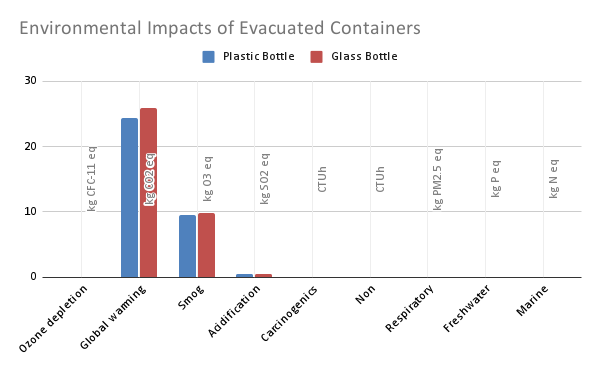
Results: Two bottle types were analyzed, and results were reported per bottle used. The components of the respective bottles are listed in Table 1. The life cycle emissions of the glass bottle was calculated to be 25.8 kg CO2 equivalents, compared with 24.3 kg CO2 equivalents for the plastic container, a difference of 1.5 kg CO2-equivalents per bottle. Utilizing the plastic container 1000 times equates to the emissions associated with driving almost 4000 miles in a gasoline-powered vehicle, according to the U.S. EPA calculator (1). Across additional environmental impact categories (Figure 1), glass generally demonstrated higher burden. For a single procedure, anywhere from one to ten bottles can be used depending on the volume of ascitic fluid removed, amplifying cumulative emissions over repeated use.
Conclusions: Routine clinical procedures require substantial material resources, and procurement choices made by hospital systems can meaningfully influence the environmental footprint of healthcare delivery. This analysis models how life cycle analysis can be leveraged to make choices about purchasing decisions informed by sustainability.
.png)