Background: Hospital at Home (HaH) offers inpatient-level care in the home setting and consistently demonstrates high value through improved patient experience and reduced complications (1). Most U.S. HaH programs operate under the CMS Acute Hospital Care at Home (AHCAH) waiver, which mandates a two in-person clinician visits per day (1), which how most program are staffed. Consequently, patients requiring treatments more frequent than twice daily—such as q6h or q8h IV antibiotic dosing—are often excluded due to staffing capacity, despite being clinically appropriate. To address this gap, some programs have piloted infusion pump strategies with variable success. We implemented elastomeric infusion pumps to enable safe, timely, and efficient delivery of high-frequency IV antibiotics at home. Here, we evaluate the value impact of this innovation.
Methods: In November 2023, our HaH team partnered with the Home Infusion Pharmacy to create a clinical pathway supporting elastomeric pump use when patients required >2 IV antibiotic infusions per day. Pharmacologically appropriate antibiotics were selected using infusion-pharmacy literature (2) under the guidance of infusion and infectious diseases pharmacists and infectious diseases specialists. Pumps were ordered through the EMR and supplied during business hours. A retrospective review was conducted of all elastomeric pump utilization from December 2023 to July 2025. Value was assessed through expanded access (number of eligible patients served), treatment days supported, and operational feasibility.
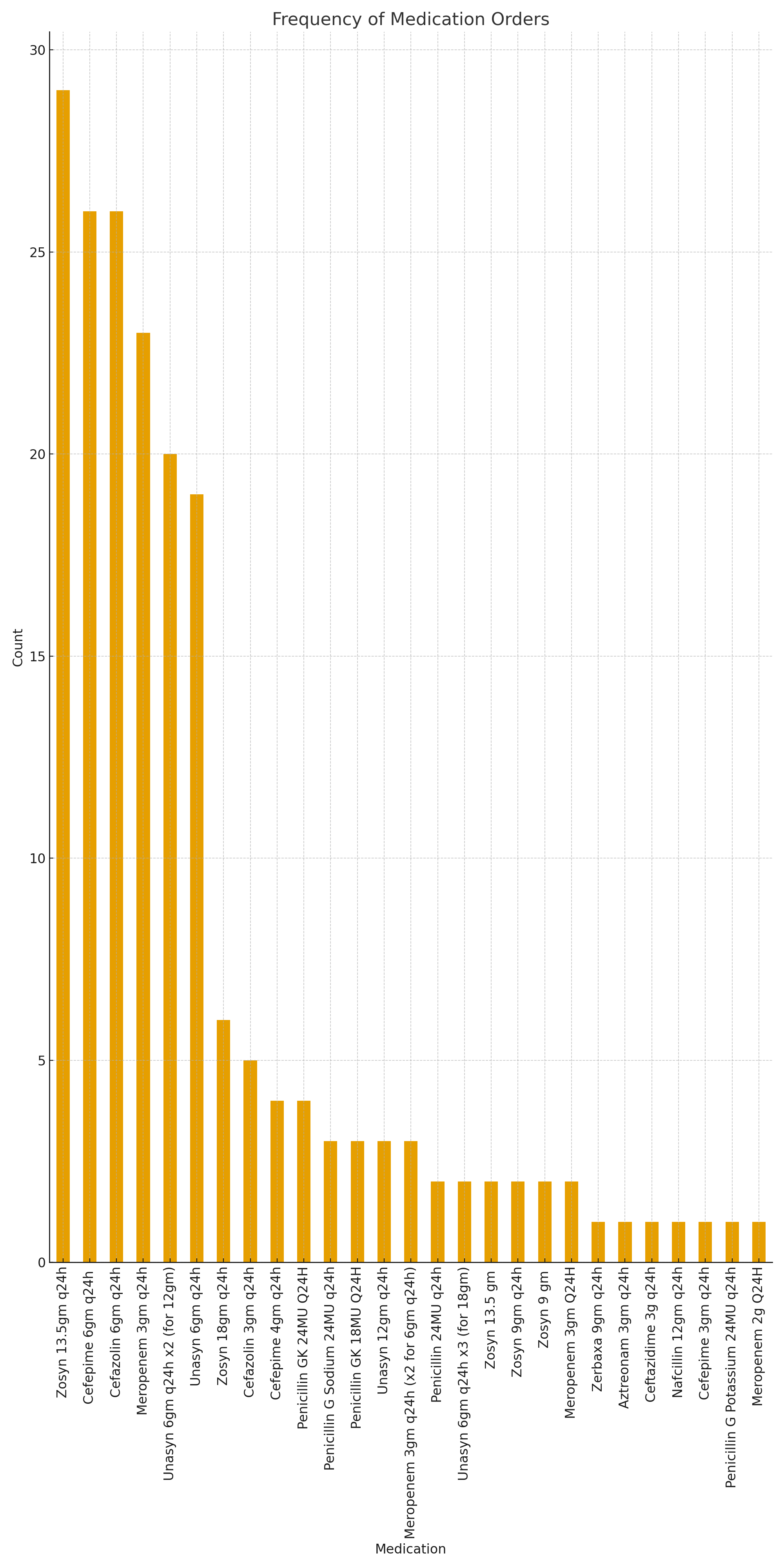
Results: Between December 2023 and July 2025, 193 elastomeric pump orders were placed for 120 unique patients, enabling 587 antibiotic-days and 642 pumps used (some regimens required multiple pumps per dose.) Frequently used antibiotics included piperacillin–tazobactam, cefepime, cefazolin, meropenem, and ampicillin–sulbactam. The most common antibiotic–dose combinations were:• Piperacillin–tazobactam 3.375 g q6h (n=29)• Cefepime 2 g q8h (n=26)• Cefazolin 2 g q8h (n=26)• Meropenem 1 g q8h (n=23)• Ampicillin–sulbactam 1.5 g q6h (n=20)No reported clinically-significant adverse outcomes.
Conclusions: This initiative demonstrates substantial value creation within HaH by expanding program eligibility, reducing avoidable facility-based hospital days, and improving equitable access to home-based acute care. Elastomeric pump–enabled antibiotic delivery proved feasible, scalable, and operationally efficient, allowing us to care for 120 additional patients with high-frequency infusion needs, patients who would otherwise have been excluded due to visit requirements. This technology enhances the overall value of HaH by optimizing resource utilization, sustaining high-acuity care at home, and aligning with the mission of providing patient-centered, cost-effective acute care.