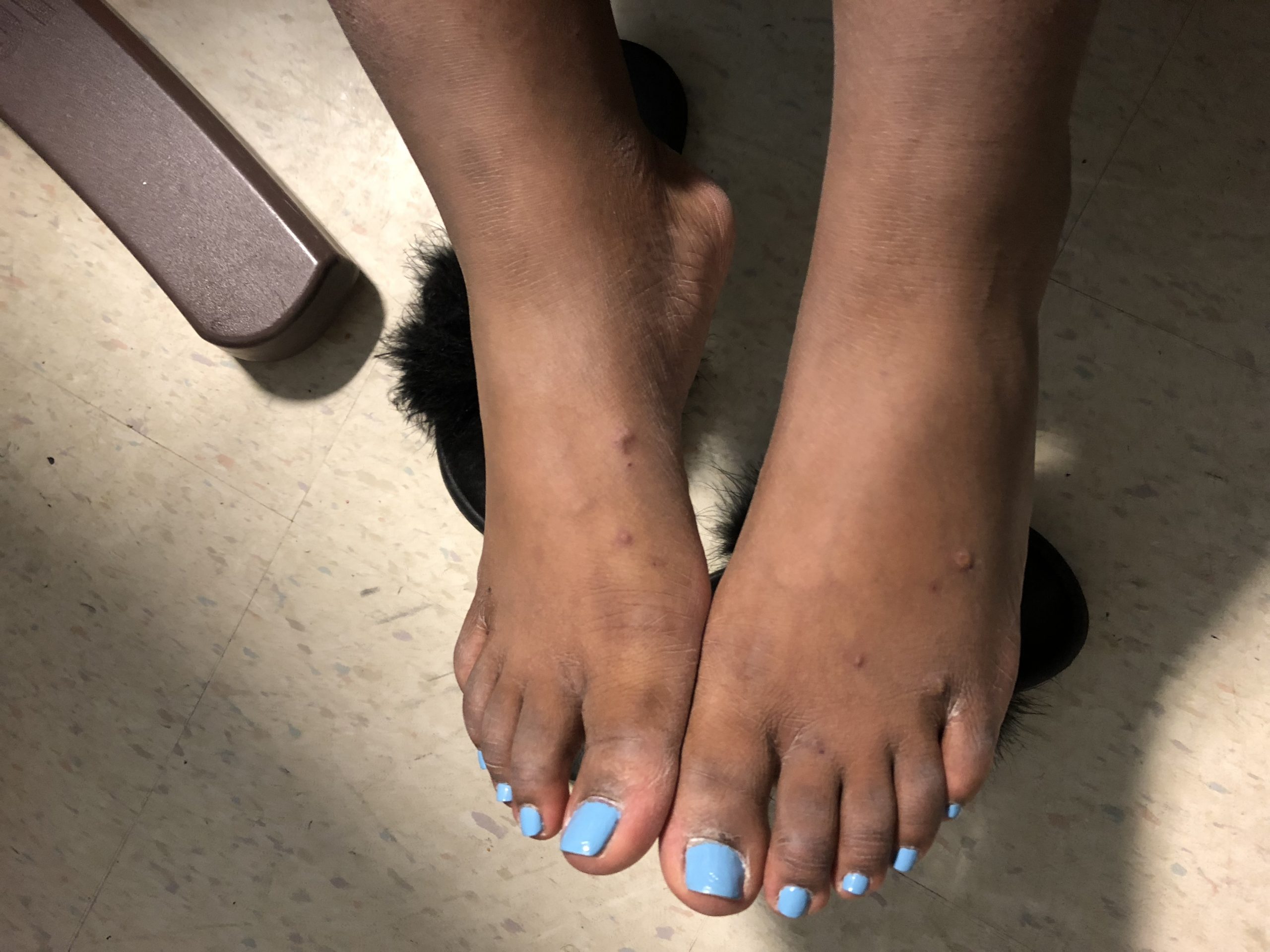
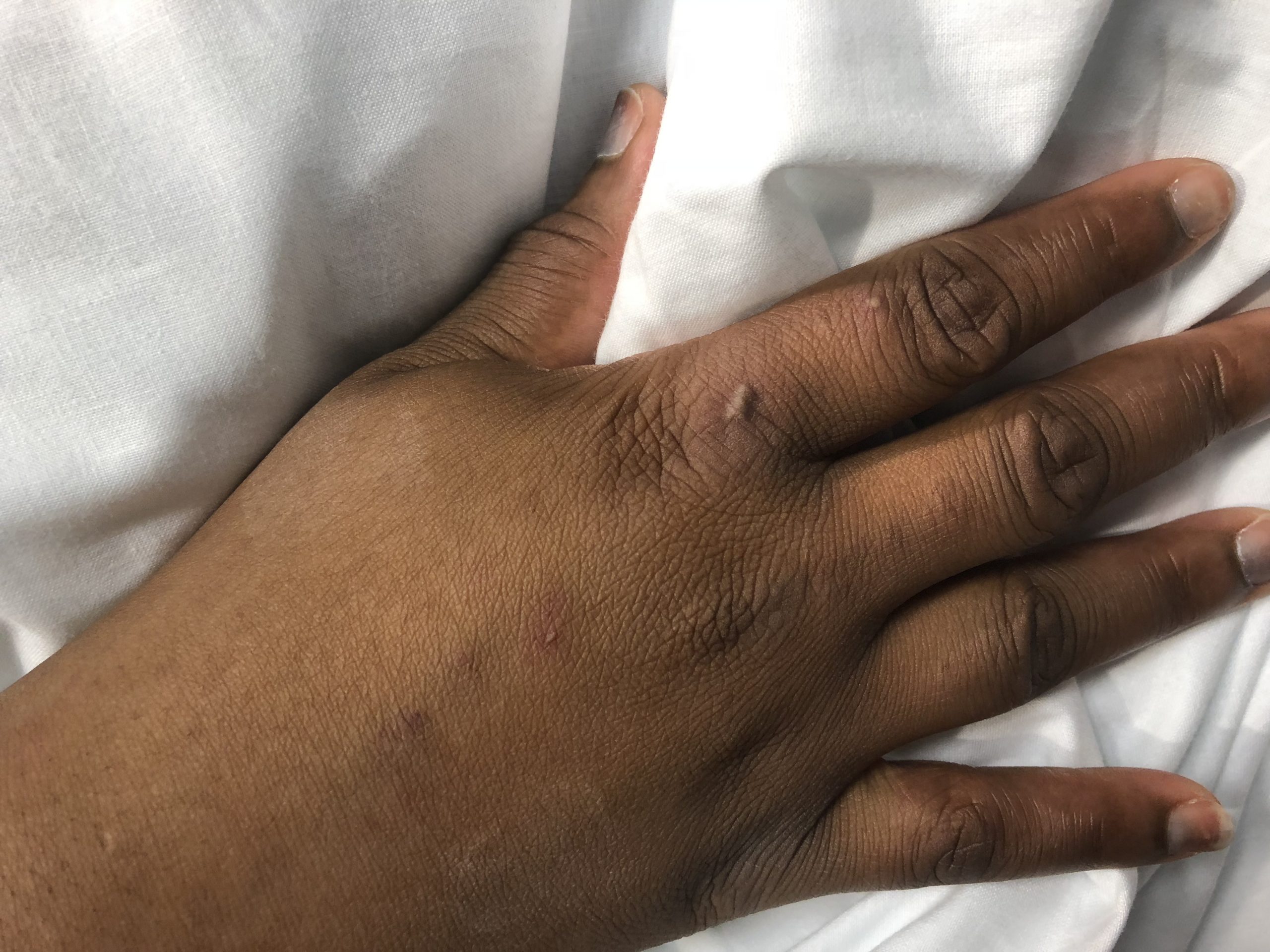
Case Presentation: Case Presentation:24year old woman with history Systemic Lupus Erythematosus (SLE) complicated by Lupus nephritis, history of prior Pulmonary embolism presented to emergency department with 2-3 days of fever, chills, chest pain, left ankle pain, left proximal interphalangeal joint pain and sudden onset of painful Maculopapular rash on arms, hands and feet. Her last lupus flare was 2 years ago. she denied any sick contacts. Her last sexual exposure was 6 months ago. Exam was notable for maculopapular rash on upper and lower extremities .Initial labs were notable for WBC -16.4 bands 14%, hemoglobin 11.8 , hematocrit -35.8 , platelets 174 , sodium 138 , potassium 3.5 , chloride 108 , bicarbonate 27 ,BUN 16 ,Creatinine 1.0 ,AST -24 , ALT-17 , Alkaline phosphatase -44 ,bilirubin 0.5 , double stranded DNA 520 , C3 83 ,C4 5 ,CRP -4.99 ,ESR 85 .Urinalysis was notable for 3+protein,1+leucocytes3+blood ,39 RBC,52 WBC. Blood cultures, HIV Chlamydia and Gonococcus PCR were pending. Given concern for SLE flare she received 1gram solumedrol in the Emergency Department. She was also prescribed ceftriaxone 2gm q 24hrs. Within 24 hours her rash became pustular. Blood culture were positive for Neisseria Gonorrhea, PCR for chlamydia and gonorrhea was positive. She received 1gm of Zithromax to treat chlamydia. Repeat Blood cultures remained negative. Patient was discharged home to finish total of 2week course of ceftriaxone for disseminated gonococcal infection (DGI). Safe sex education was provided and the case was reported to the local County health department.
Discussion: Systemic Lupus Erythematosus is commonly encountered by Hospitalists. Given the range of symptoms seen with DGI and SLE overlap Clinicians need to have a high index of suspicion for DGI in appropriate patients. Anchoring on a known diagnosis can lead to premature diagnostic closure and a missed opportunity to diagnose and treat bacterial infection. DGI results from Bacterial spread of the sexually transmitted pathogen Neisseria gonorrhoeae, symptoms and signs include arthritis or arthralgias, tenosynovitis, serositis and multiple skin lesions. DGI is estimated to occur in 0.5 to 3 percent of patients infected with N. gonorrhoeae. SLE may predispose to DGI. Patients with active SLE may have low circulating complement as a result of immune complex deposition. They are typically young female, with renal disease as in patient discussed above.
Conclusions: Given the range of symptoms seen with DGI and SLE overlap Clinicians need to have a high index of suspicion for DGI in patients with SLE. The best approach for physician in treating SLE is to Immunize all patients with SLE with Neisseria meningitidis and have a low threshold of suspicion for the diagnosis of Disseminated Neisseria or other encapsulated bacterial infection in a patient with SLE who is sick and treat empirically with appropriate third generation cephalosporin after obtaining appropriate cultures.