Background: In the US, over 200,000 patients experience in-hospital cardiac arrest (IHCA) annually, with survival rates remaining low. Despite advances in resuscitation, predicting return of spontaneous circulation (ROSC) and post-IHCA hospital discharge remains challenging. We evaluated key predictors of ROSC and discharge following IHCA.
Methods: This retrospective cohort study analyzed medical records of IHCA patients at Staten Island University Hospital; only those with blood work within 24 hours prior to arrest were included. Over 50 parameters were collected. Four supervised machine learning models were trained and evaluated: logistic regression, decision tree, random forest, and XGBoost. Models were tuned with Optuna or grid search, tested on stratified splits, and interpreted using SHAP values. Feature scaling, class imbalance adjustments, and calibration curves enhanced robustness. All modeling was performed in Python 3.10 using scikit-learn, XGBoost, SHAP, and matplotlib.
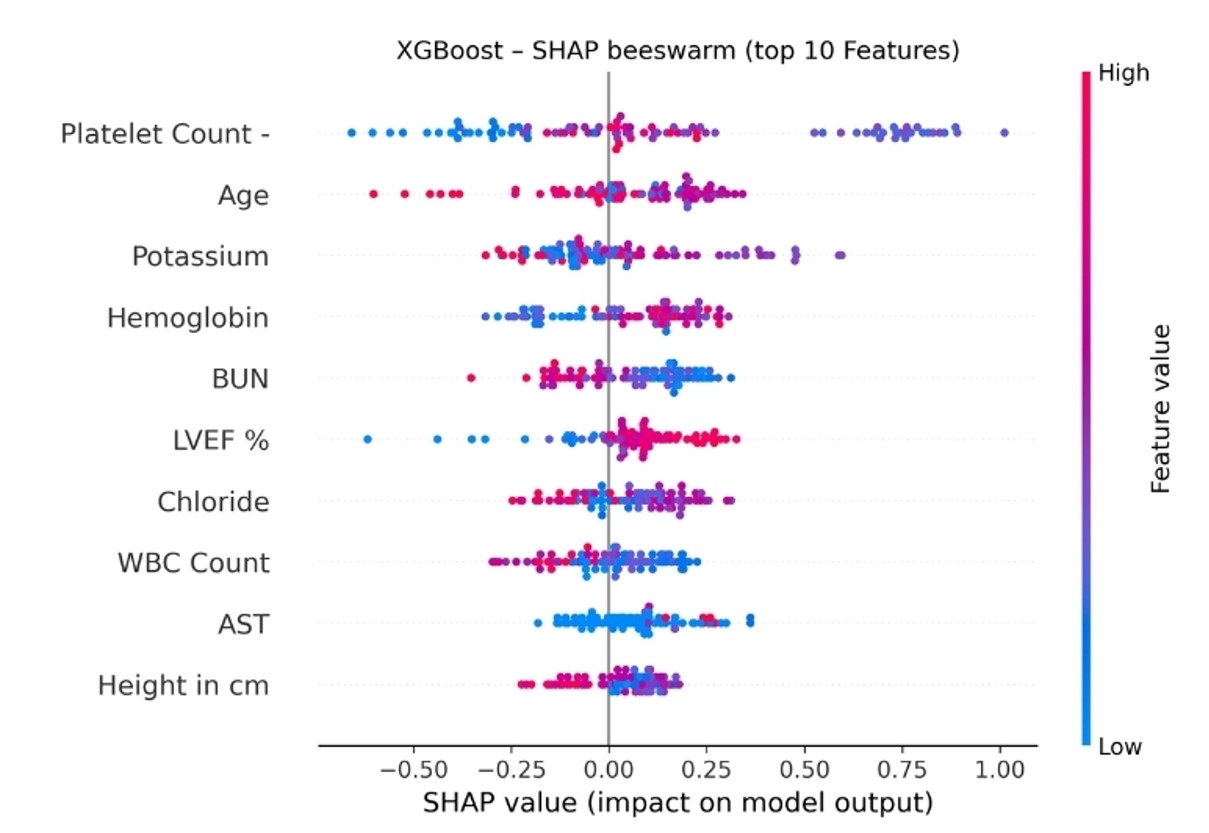
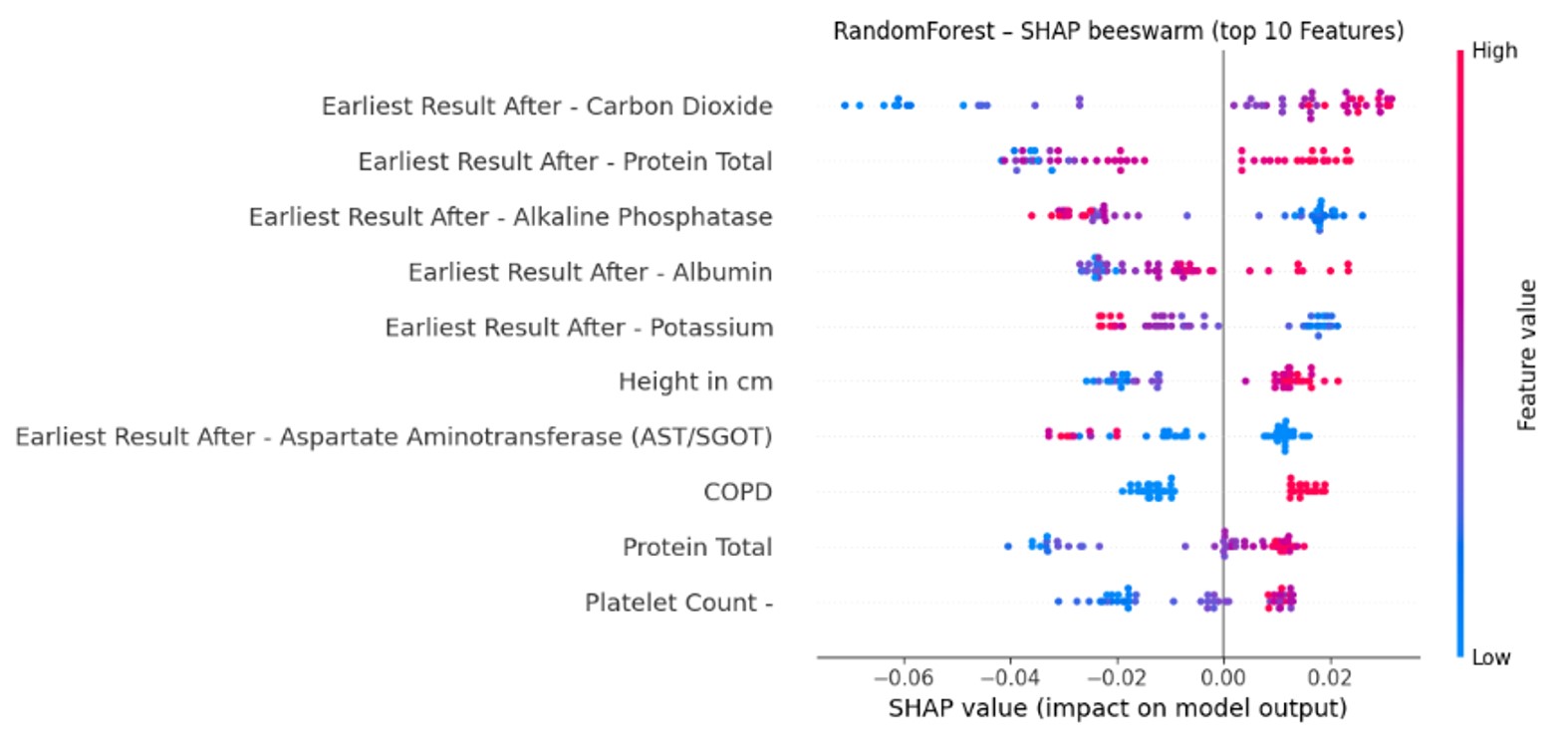
Results: Of 322 patients, 71% achieved ROSC and 17% were discharged alive. The mean age was 62 years, and 57% were male. Common comorbidities included hypertension (67%), tricuspid regurgitation (58%), type 2 diabetes (41%), heart failure (40%), coronary artery disease (33%), COPD (39%), and prior stroke (17%). XGBoost performed best for ROSC (ROC AUC=0.76). Top predictors (SHAP values- presented in Figure 1) were platelet count (0.35), age, potassium and hemoglobin (0.15), BUN (0.13), LVEF (0.12), chloride and WBC (0.11), AST (0.10), and height (0.09). SHAP plots showed lower platelets, hemoglobin, and LVEF; older age; and elevated potassium, BUN, and WBC were linked to reduced ROSC probability. AST and chloride showed less interpretable patterns. For discharge prediction, random forest performed best (ROC AUC=0.93), with the ten most influential features: platelet count (0.039), total protein (0.038), weight and COPD (0.030), albumin (0.028), BUN (0.025), chloride (0.022), age (0.021), creatinine (0.019), and height (0.016).
Conclusions: Our study identifies ten key predictors of ROSC and discharge following IHCA. Prospective studies are warranted to validate these findings and assess their utility in guiding individualized resuscitation strategies and improving outcomes.