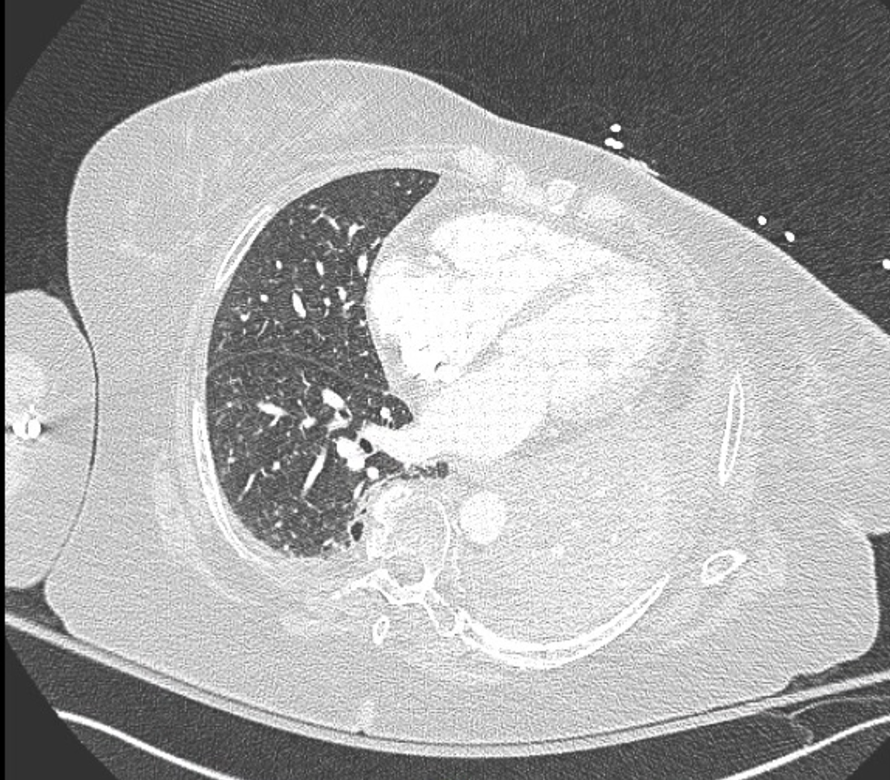
Case Presentation: We present a case of early and atypical checkpoint inhibitor pneumonitis (CIP) in an elderly female with chronic obstructive pulmonary disease (COPD) who received just two infusions of Pembrolizumab for stage III non-small cell lung carcinoma (NSCLC). Before starting immunotherapy, she had been receiving chemotherapy with carboplatin and paclitaxel for 6 months. The patient presented to the hospital 30-days after her first pembrolizumab treatment with fatigue, cough, hypoxemia (over her baseline of 4LPM), and acute worsening of dyspnea. She lacked signs or symptoms of fluid overload. On admission, she required 8-9LPM oxygen and started a 7-day course of empiric cefepime, daily furosemide, and daily bronchodilators. Further workup revealed no evidence of infectious etiologies and initial CT imaging showed a stable left bronchus occlusion secondary to long standing NSCLC with no new metastases and no other parenchymal changes. On day 4, pulmonology was consulted and began a 3-day course of prednisone 60mg. However, there was minimal improvement, and she remained dyspneic with elevated oxygen requirements (7-9LPM). Steroids were increased to 1 mg/kg/day with minimal symptomatic improvement. On day 9, CT chest revealed new ground glass opacities throughout the right lung, suggestive of pneumonitis. Pulmonology agreed with the diagnosis of presumptive CIP and consequently increased steroids to 2 mg/kg/day and initiated IVIG. After 3 days of high-dose steroids, she showed significant improvement and oxygen requirements returned to baseline. She was started on a prolonged steroid taper and was discharged with plans to follow-up outpatient with oncology to decide to restart chemotherapy without pembrolizumab or enter a clinical trial. Follow-up CT three weeks post discharge revealed resolution of ground glass opacities.
Discussion: Immune checkpoint inhibitor therapy has served as an efficacious adjunct in the treatment of advanced malignancies. Pembrolizumab, a monoclonal antibody directed toward PD-1 on effector T-cells, is widely used in NSCLC treatment. Side effects of pembrolizumab in patients with NSCLC include fatigue (19%), rash (10%), diarrhea (8%), and rarely CIP (3%), in which monoclonal antibodies attack and destroy lung parenchyma. This patient’s acute presentation of dyspnea, increased oxygen requirements, findings on imaging, and significant response to high-dose steroids and IVIG as well as lack of response to antimicrobials is consistent with check-point inhibitor pneumonitis. Typically, CIP presents 2-12 months after beginning pembrolizumab with some of the earliest reported cases occurring after at least four infusion sessions. However, the patient’s symptoms appeared just after 2 immunotherapy infusions, or 30 days after the initiation of pembrolizumab. This case highlights an atypical early presentation of an already rare pembrolizumab-induced immunotherapy complication.
Conclusions: We report a case of atypical early-onset CIP caused by a PD-1 inhibitor, pembrolizumab. Clinically, CIP should be considered as early as possible in patients who develop acute onset of respiratory symptoms even after just 2 pembrolizumab infusions or within 4 weeks following immunotherapy initiation and should be treated with high dose steroids and IVIG.