Background: The Progressive Care Unit (PCU) is an intermediary unit between the ICU and the general medical ward. Unit coverage is provided by a dedicated Hospitalist during the day. During the hours of 7pm to 7am, coverage is provided by the Nocturnist, a night-shift Hospitalist. Issues requiring immediate attention are channeled through a phone call/paging system, to the Nocturnist. In addition to the PCU, the Nocturnist is designated to respond to calls from the general medical ward, resulting in a high call volume to responder ratio. If the nocturnist is unable to respond to the calls, the Medical Evaluation Team (MET) is called to bedside.
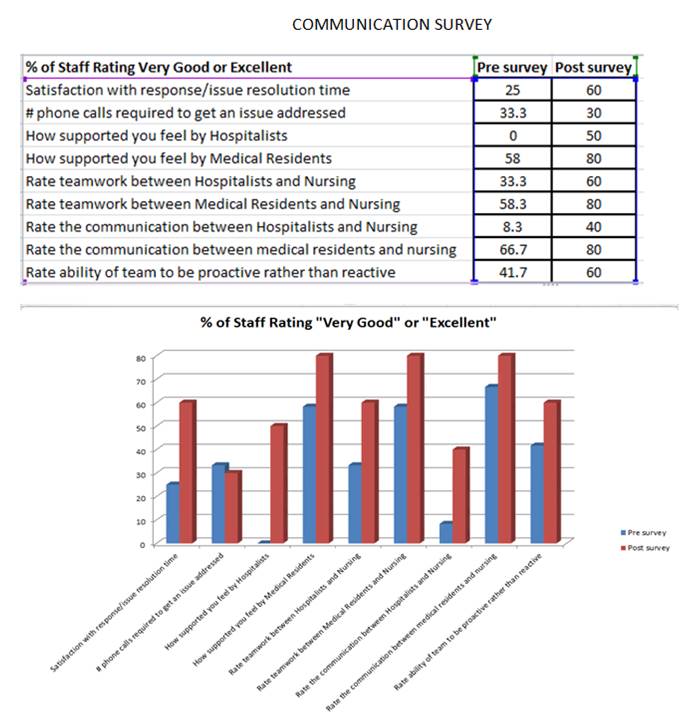
Methods: Evening PCU rounds were conducted by medical residents, twice per night shift to address urgent and anticipated areas of concern. Objective data collected, including the number of phone/MET calls to providers, and the effectiveness of team dynamics based on communication and response times, were plotted and analyzed to assess the utility of the nightly PCU rounds. Day and Night Shift PCU nurses filled out a 9-question survey that evaluated the efficiency of the exchange of information with physicians, response times, and issue resolution over a 9-month pre-implementation period, which were compared with responses during the implementation period. Responses pertaining to communication with Medical Residents and Hospitalists, teamwork between Medical Residents and Hospitalists, and support from Medical Residents and Hospitalists fall under the umbrella of overall team satisfaction reported by the nursing staff.
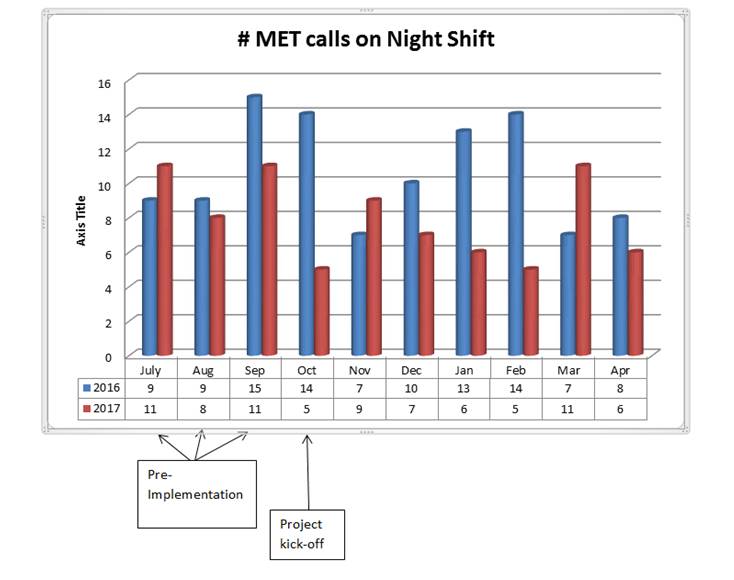
Results: Comparison of pre and post survey data demonstrated differences in overall team satisfaction, and number of phone/MET calls to the PCU. 60% of PCU Nursing reported satisfaction with response and issue resolution times post-survey, in contrast with 25% satisfaction pre-survey. A remarkable 381.9% improvement in communication between Hospitalists and Nursing was reported, with 80% of nursing reporting feeling supported by the residents. A comparative analysis of the Pre (Oct-Apr, 2016) and Post (Oct-Apr, 2017) survey periods demonstrated a 21.7% decrease in the number of MET calls since the PCU evening rounds were implemented. Prior to the project taking effect, the number of MET calls between the months of Jul-Sep 2017 and the months of Jul-Sep 2016 did not show significant change.
Conclusions: Data indicated that the evening rounding system resulted in a reduced number of MET calls, translating to a decrease in the number of patients that decompensated and required immediate evaluation during the night, improving workflow, manpower utilization and conserving time resources. This translated into an overall increase in team satisfaction.