Background: Non-infectious complications of urinary catheterization, such as difficult placement and iatrogenic trauma, contribute to significant morbidity in hospitalized patients. While infectious risks are well characterized, the risk factors for non-infectious catheter-related trauma, particularly in female patients, remain poorly described.
Methods: This retrospective cohort study reviewed hospitalized adult patients who received Urology consultations for challenging or traumatic urinary catheterization at Michigan Medicine from January 1, 2022, to December 31, 2024. Cases were identified through a resident-maintained Urology consult database. A random sample of 100 patients with either traumatic or difficult catheter placement (or both) was selected for detailed chart review, with equal representation of males and females. Study variables were defined through a multidisciplinary review process, focusing on catheterization details and documented risk factors. Data was abstracted from the electronic health record (EHR) and stored in REDCap. Ten percent of records were double abstracted.
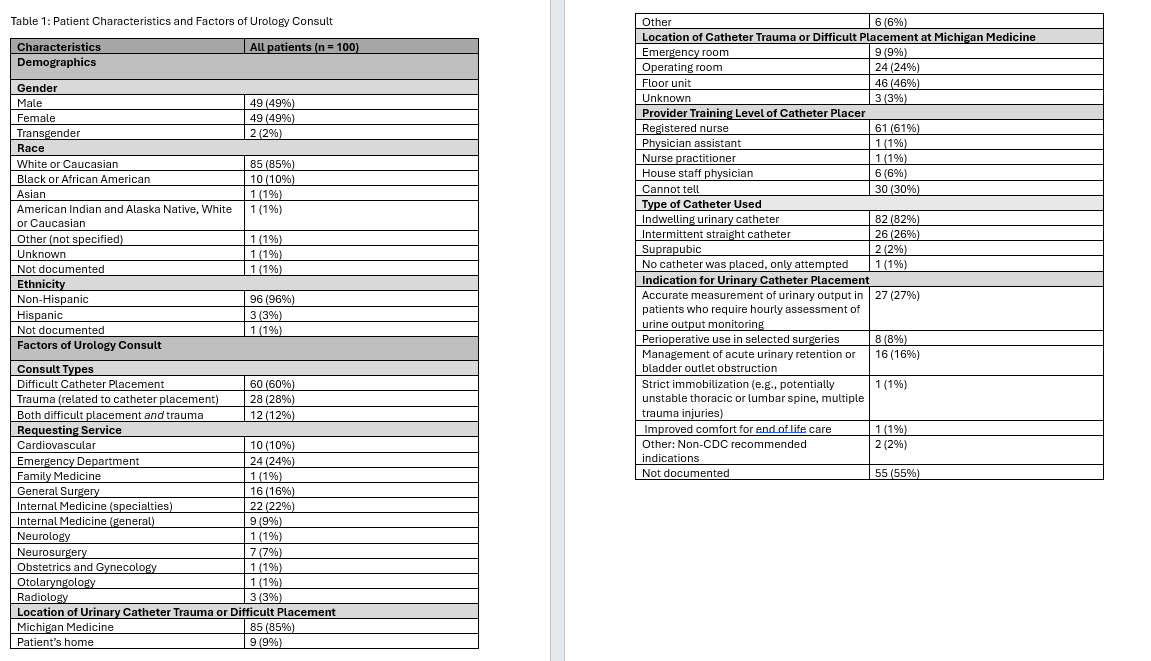
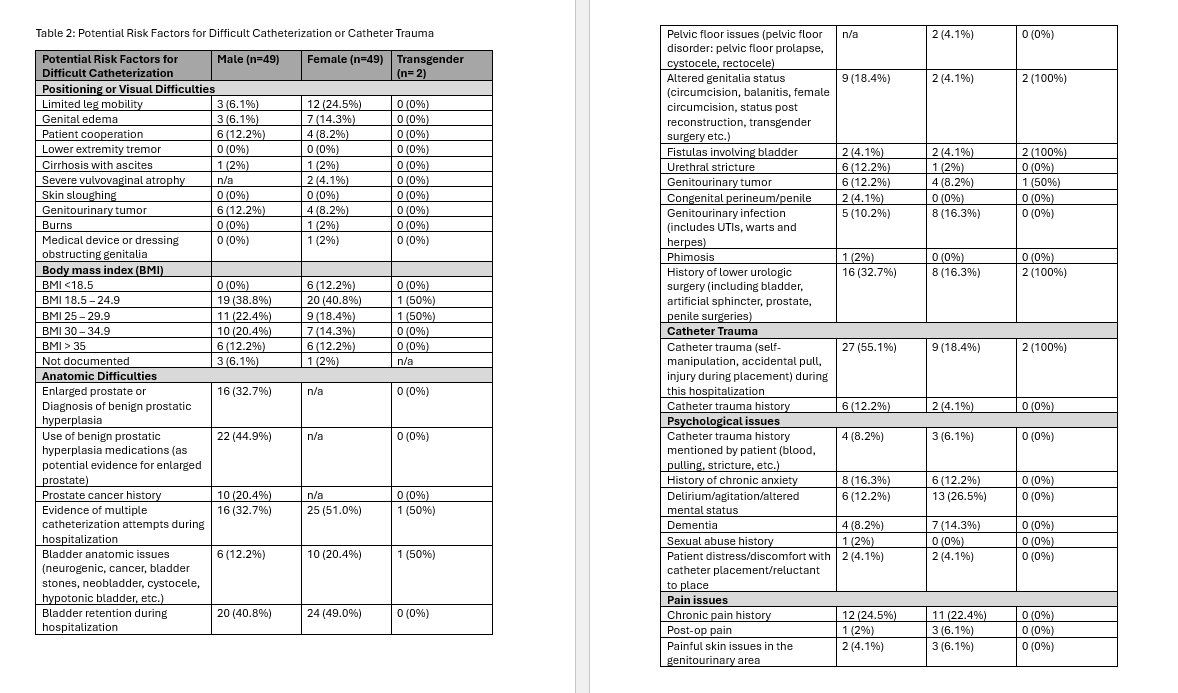
Results: Of 100 patients, 49 were male, 49 female, and 2 transgender women (Table 1). For male patients, cooperation, genitourinary tumor, accidental pull or self-manipulation of catheter during hospitalization, bladder retention, chronic anxiety, and chronic pain were frequently noted in cases of iatrogenic catheter trauma. Among female patients, limited leg mobility, multiple catheter attempts, delirium, and chronic pain were often present in those experiencing catheter trauma. For transgender patients, catheter trauma during hospitalization, altered genitalia status, and history of urologic surgery were found in cases of catheter trauma (Table 2).
Conclusions: This study highlights anatomical, positional, psychological and provider-level potential risk factors for urinary catheter-related trauma and placement difficulty in a tertiary care population. These findings will inform the development of targeted education and protocols designed to reduce preventable catheter-related injuries and improve patient outcomes.