Background: Aspiration events in hospitalized patients can lead to increased morbidity and mortality through unexpected transfers to a higher level of care, acute respiratory compromise (ARC), or in-hospital cardiac arrests (IHCA). (1) Systematic and scoping reviews have shown that dysphagia, advanced dementia, diabetes mellitus, malnutrition, and poor mobility are associated with aspiration pneumonias in frail and older patients. (2,3) However, there is limited data on contributing factors to serious aspiration events in hospitalized patients outside of the intensive care unit (ICU). The aim of this study was to demonstrate risk factors associated with serious aspiration events in hospitalized patients on the medical wards.
Methods: A retrospective chart review was performed on cases referred from our 900-bed academic county hospital’s safety event reporting system from October 2023 to October 2025 that were determined to be suspected aspiration events or possible aspiration events on the medical wards or stepdown unit. Many of the safety events were reported as rapid response team activations or transfers to higher levels of care. Suspected aspiration events were documented as such in the chart; possible aspiration events were defined as still likely aspiration but not definitive as etiology of event. Charts were reviewed to determine suspected etiology of aspiration event and quantify associated pre-defined contributing risk factors (dysphagia, altered mental status, tube feeds, frequent emesis, and gastrointestinal obstruction/ileus.) If a patient had multiple reported aspiration events within the same encounter, only the first episode was included. A full waiver was granted by the affiliated university institutional review board.
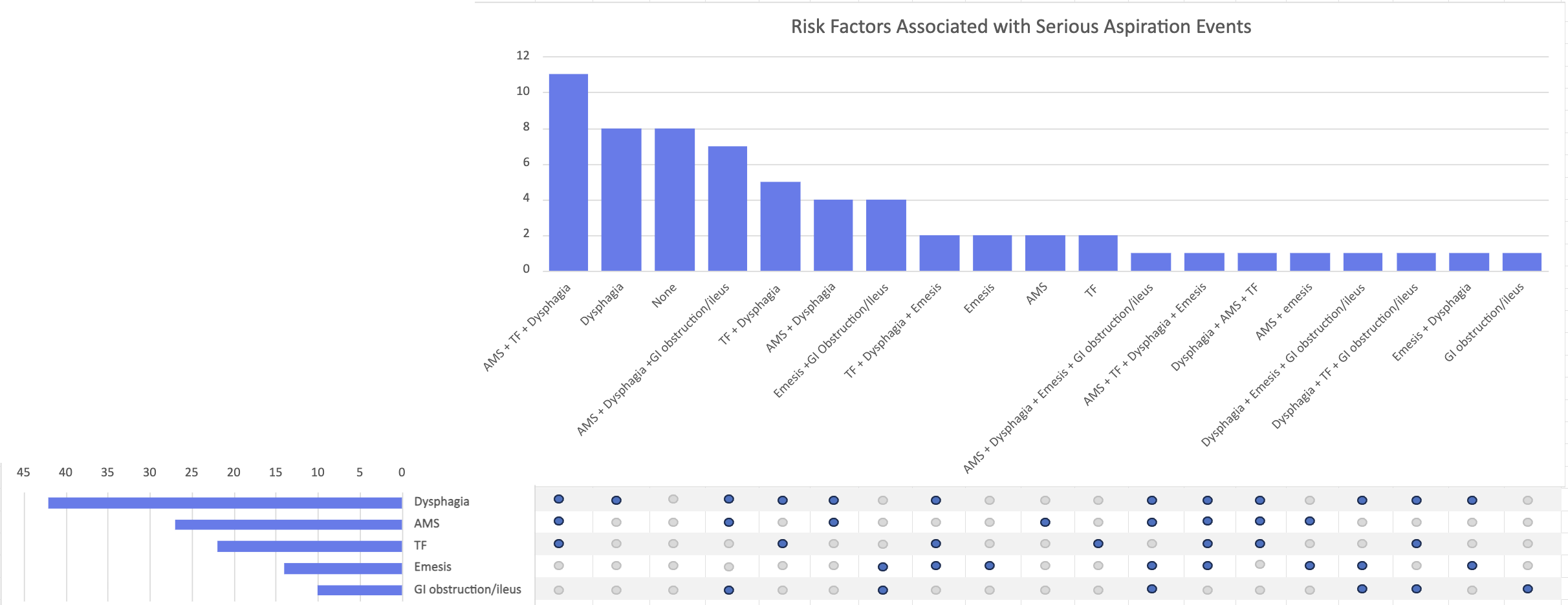
Results: Over the study period, there were 50 suspected aspiration events and 13 additional possible aspiration events on the medical wards and medical stepdown unit. See Table for Demographics. 40% of the patients were > 65 years of age. 21% of patients were underweight with a BMI < 20. Twenty-six (41%) of these events led to IHCA and 11 (17%) led to ARC. Forty-eight patients (70%) were transferred to a higher level of care, not including those who did not survive the initial IHCA. Thirty (48%) patients survived until discharge, though there was a 57% 30-day mortality. The most common suspected etiology of serious aspiration events was emesis with 29 (46%) events with 8 (13%) events specifically in the setting of gastrointestinal obstruction or ileus and 7 (11%) events in the setting of tube feeds. Fifteen (24%) aspiration events were secondary to emesis without having frequent emesis as a risk factor. Choking on either food or pills was also common (19%), three (5%) without history of dysphagia, followed by oropharyngeal secretions (13%). See Figure which demonstrates the frequency of each of the proposed risk factors in this subset of serious aspiration events. The most common combination of risk factors for serious aspiration events were tube feeds, altered mental status, and dysphagia.
Conclusions: Aspiration events on medical wards are associated with high rates of morbidity and mortality. Emesis, dysphagia, altered mental status, tube feeds, and gastrointestinal obstruction/ileus frequently contribute to serious aspiration events in the hospital, often in combination. Early identification of these factors and targeted preventive strategies may help reduce aspiration-related morbidity and mortality in hospitalized patients outside the ICU.
.png)