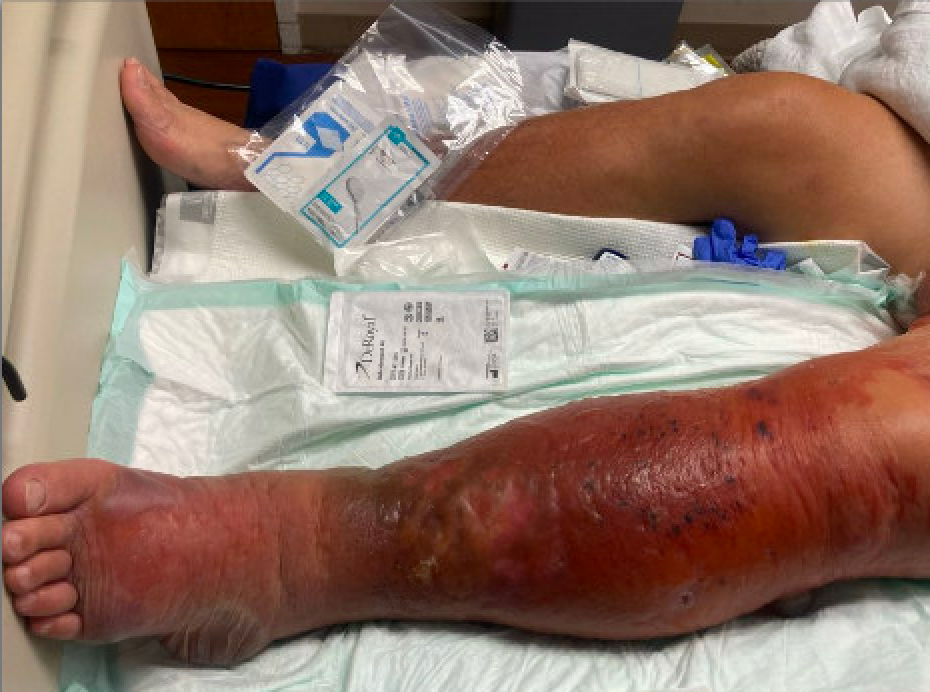
Case Presentation: Streptococcus suis is a zoonotic gram-positive bacteria that affects both pigs and humans. It resides asymptomatically in the upper respiratory tract, gut, and genitals of pigs. The predominant mode of transmission is through consumption of undercooked infected pork, occupational exposure through exposed skin lesions, and aerosolization. We present a 62 yo male truck driver with history of alcohol abuse and Crohn’s disease who presents to the hospital with a 4-day history of redness and swelling of his left leg. He was tachycardic at 123 beats/min, afebrile and hemodynamically stable on admission. A CTA chest was negative for PE. CT scan of his leg showed subcutaneous edema and deep inguinal and pelvic lymphadenopathy. He was started on Vancomycin, Piperacillin-Tazobactam, and Clindamycin for concern for necrotizing infection. Hospital course was further complicated by renal failure requiring hemodialysis. Despite broad antibiotic therapy, he rapidly deteriorated and was seen by surgical team who evaluated compartment syndrome and though not convincing, he was taken for fasciotomy. Antibiotic adjustments were made to Linezolid and Cefepime. He was recommended to be transferred to a tertiary center for higher level surgical care. At the tertiary burn center, he developed worsening shock, was now jaundiced, and had started to develop bullous lesions on his LLE. The patient went to the OR for repeat surgical debridement of the LLE. There were no findings of necrosis. However, during induction with Anesthesia he had massive vomiting and aspirations which led to PEA arrest. ROSC was achieved after 3 rounds of Epi and one shock for Vfib. He was intubated and transferred to the ICU for pressor support. The following day the patient was cannulated for VV ECMO for ARDS. While on VV ECMO his metabolic acidosis remained elevated. IV immunoglobulin was initiated. Other possible differentials including Bartonella was considered based on history of 2 dogs and a recently acquired stray kitten. The tissue cultures from the LLE isolated “rare growth of Strep Suis”. Susceptibility was not done as pathogen was non-viable. The patient had no known exposure to farm animals. He had not consumed any raw pork products though the family admitted to eating cooked pork meals. In the end, after nearly 2 weeks on antibiotics and supportive care, the patient’s family decided to transition the patient to comfort care after multiple discussions with the ICU and surgical team. He passed away shortly after transitioning to comfort care.
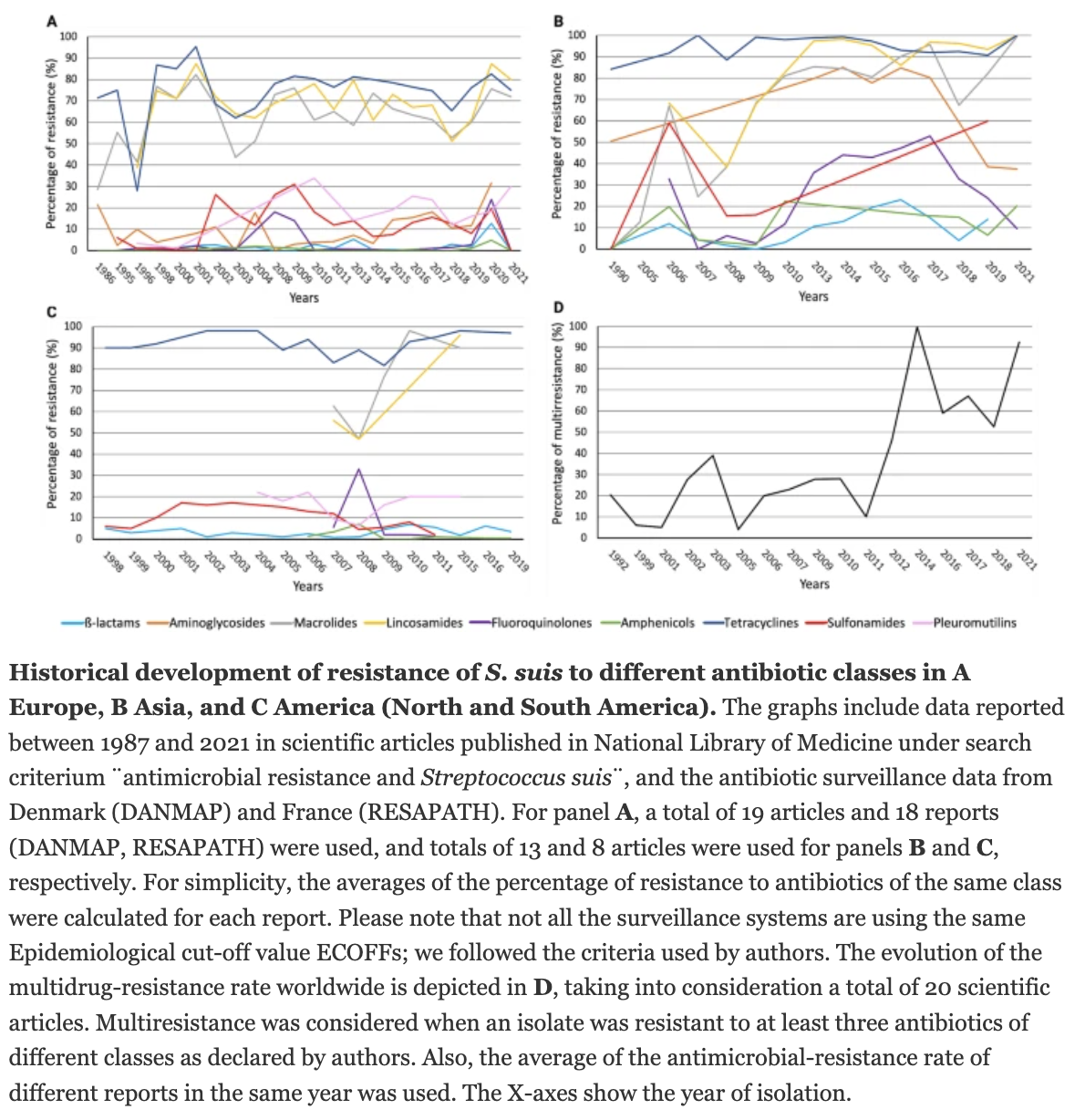
Discussion: In pigs, S. suis is a major cause of financial loss for the swine industry. In humans, fatal cases have been observed during epidemics in China in 1998 and 2005 but are otherwise sporadic. Though S. suis infections are sporadic in most of the world, it is very hard to believe we do not have more cases in North America considering how large the swine industry is. The first human case in the US was reported in 2006 and still much is unknown about the human pathogenesis of S. suis. Our patient failed multiple antibiotic therapy despite early presentation to the hospital and prompt antibiotic initiation which raises concern for the possibility of a resistant pathogen. Increasing antibiotic usage in our farm industry may imply a rise in AMR zoonotic infection.
Conclusions: S. suis remains a highly fatal disease and should be considered in patients with septicemia and contact with swine and undercooked pork. A thorough diet history may help in assessment. Could farms with high antibiotic usage pose a risk to the community?