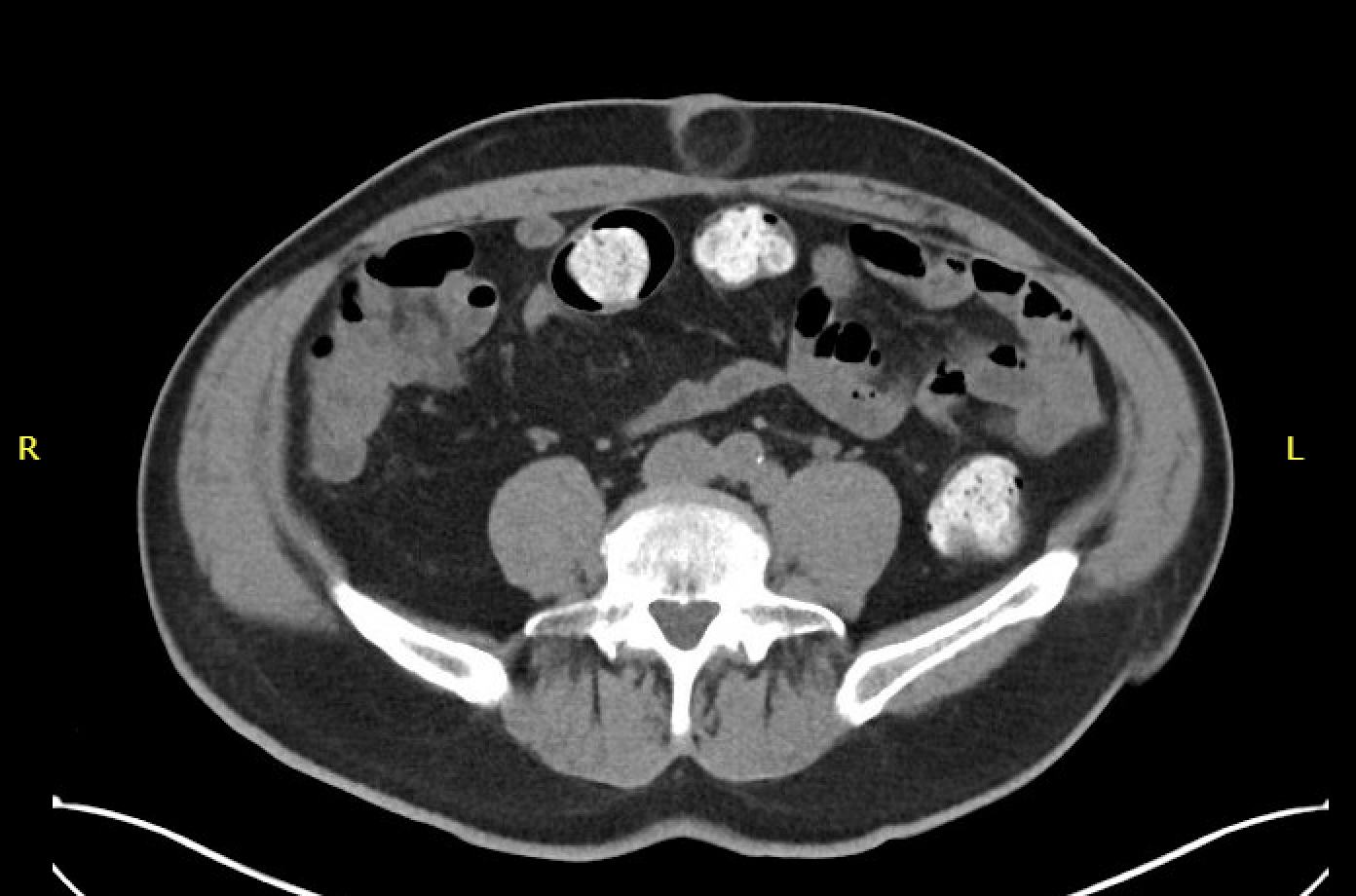
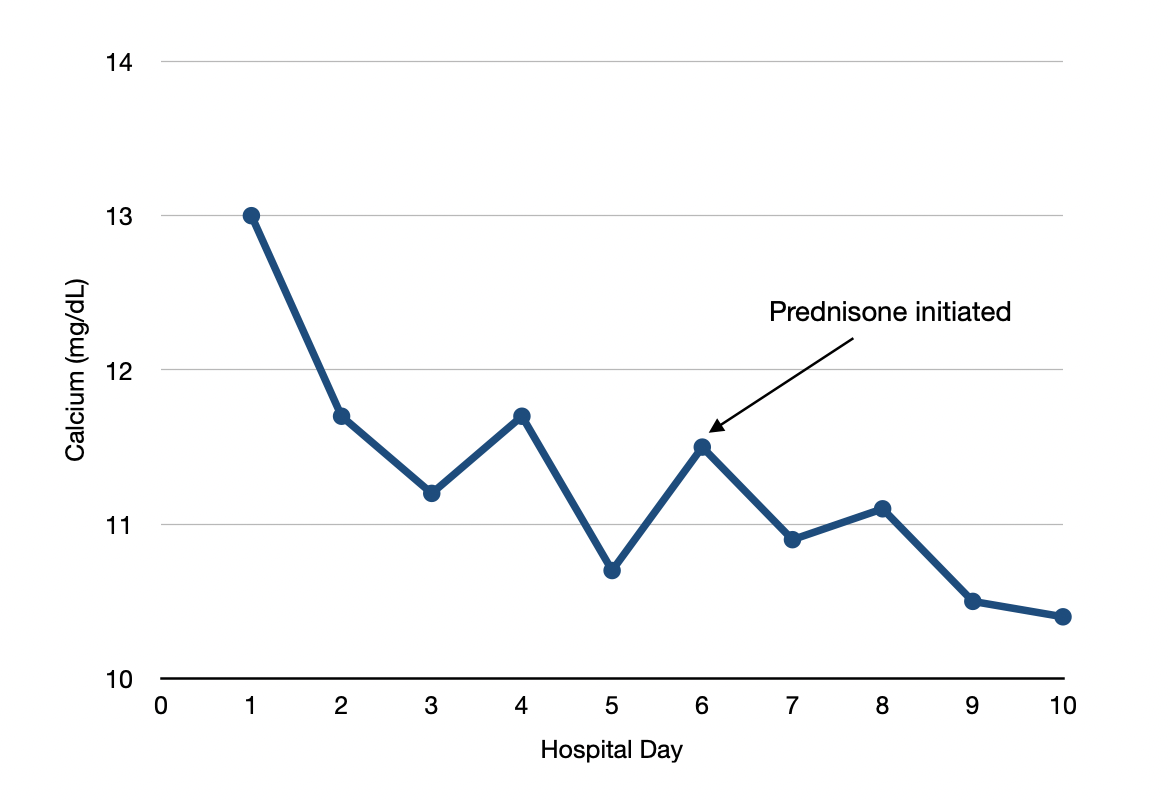
Case Presentation: A 68‑year-old man with type 2 diabetes and hypertension presented with one month of progressive nausea, vomiting, 20‑lb weight loss, and abdominal pain. He reported taking 14 calcium tablets daily (1,200 mg each) and over 150,000 IU of vitamin D per day for several weeks. On admission, creatinine was 5.24 mg/dL (baseline ~0.8–1.0), BUN 82 mg/dL, and total calcium 13.0 mg/dL (baseline 9.5). Parathyroid hormone was suppressed, and 25‑hydroxy vitamin D was markedly elevated at 318 ng/mL. He received aggressive IV fluids and loop diuretics, with partial improvement, and prednisone was initiated to reduce intestinal calcium absorption. Over the hospital stay, his symptoms resolved, calcium normalized, and creatinine improved to 2.4 mg/dL. He was discharged on a prednisone taper, with close nephrology follow-up, and extensive counseling on supplement safety.
Discussion: Vitamin D toxicity remains uncommon but is increasingly observed with high-dose supplementation. Unlike typical causes of hypercalcemia, vitamin D excess can produce persistent and severe metabolic disturbances due to its fat solubility and long half-life. Extreme supplementation can result in symptomatic hypercalcemia and acute kidney injury, as in this case. A retrospective analysis of over 25,000 samples found hypervitaminosis D (25‑OH D >160 nmol/L) in ~1.9%, but only ~11% had hypercalcemia, and very few reached critical levels (>13 mg/dL), highlighting the rarity of severe toxicity. Previous case series demonstrate the potential for AKI and persistent hypercalcemia, often requiring glucocorticoids for resolution. Recognition depends on a thorough supplement history and awareness of modern toxicity patterns. This patient’s presentation is notable for the combination of extreme vitamin D and calcium intake and rapid response to targeted therapy, emphasizing a scenario that general internists may increasingly encounter as use of readily available over-the-counter supplements rises.
Conclusions: In an era of unregulated supplement use, understanding the clinical manifestations and treatment strategies for hypervitaminosis D is essential for timely and effective intervention. This case demonstrates how extreme over-the-counter vitamin D and calcium intake can precipitate severe hypercalcemia and acute kidney injury in an otherwise stable patient. Timely recognition, a careful supplement history, and targeted interventions, including glucocorticoids when needed, can dramatically alter outcomes. For hospitalists and general internists, the case highlights how detailed bedside assessment and thoughtful evaluation of supplement use can be decisive in diagnosing and managing rare but severe complications, while illustrating an emerging challenge in modern general medicine.