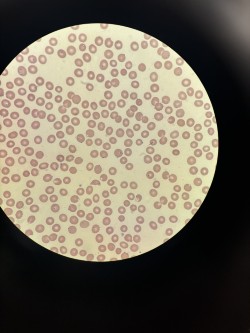
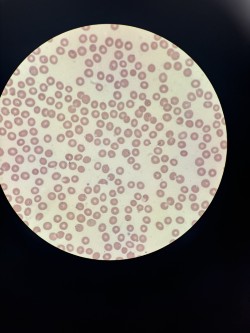
Case Presentation: A 58-year-old female with recent travel history to Nigeria presented with persistent high-grade fevers, fatigue and altered mental status for one week. Upon initial evaluation, the patient was febrile at 102.8F with leukocytopenia, thrombocytopenia, transaminitis, and elevated lactic acid. A malaria smear was performed which was positive for Plasmodium falciparum with a parasitemia level of 9.6%. Infectious disease was consulted, and the patient was started on oral artemether-lumefantrine. She continued to have cyclic fevers and further decline in platelets and white blood cell count as well as elevation in liver enzymes and worsening mental status. Due to the patient’s decompensation and history of Roux-en-y likely decreasing absorption of oral artemether-lumefantrine, she was transitioned to IV Artesunate. However, despite adequate treatment for severe malaria and improvement in parasitemia, the patient remained somnolent and overall, not improving clinically. Therefore, alternative diagnoses were considered and worked up for hemophagocytic lymphohistiocytosis initiated. She was found to have significantly elevated ferritin >9000 and triglycerides >500. Rheumatology was consulted and confirmed that the patient met diagnostic criteria for HLH. She was treated with high-dose IV Solumedrol. Subsequently, the patient remained afebrile with improvement in thrombocytopenia, leukocytopenia, and transaminitis. She was then treated with a 5-day course of IVIG and dexamethasone.
Discussion: Severe malaria, particularly caused by Plasmodium falciparum, can present with a wide range of life-threatening complications, including severe anemia, acute respiratory distress, multi-organ failure, and altered mental status. One of the challenging aspects of managing severe malaria is the overlap in clinical features with other serious conditions, such as hemophagocytic lymphohistiocytosis (HLH). HLH is a rare but potentially fatal inflammatory syndrome characterized by excessive activation of macrophages and T-cells. Common clinical features shared by severe malaria and HLH include fever, cytopenias, liver dysfunction, and multi-organ involvement. Early recognition of HLH is critical, as it requires specific treatment, including immunosuppressive therapy such as corticosteroids, cyclosporine, and possibly intravenous immunoglobulin (IVIG) or chemotherapy, in contrast to the antimalarial treatments needed for malaria. Misdiagnosis or delayed treatment of HLH can lead to high mortality, making prompt identification and management essential for improving outcomes.
Conclusions: In conclusion, the overlapping clinical features of both conditions—such as fever, organ dysfunction, and cytopenias—can easily lead to misdiagnosis or delayed treatment. Prompt recognition of HLH in the setting of severe malaria is crucial, as it requires distinct therapeutic interventions, including immunosuppressive therapy, unlike malaria-specific treatments. Early identification and differentiation of these conditions are essential for improving patient outcomes and preventing fatal complications.