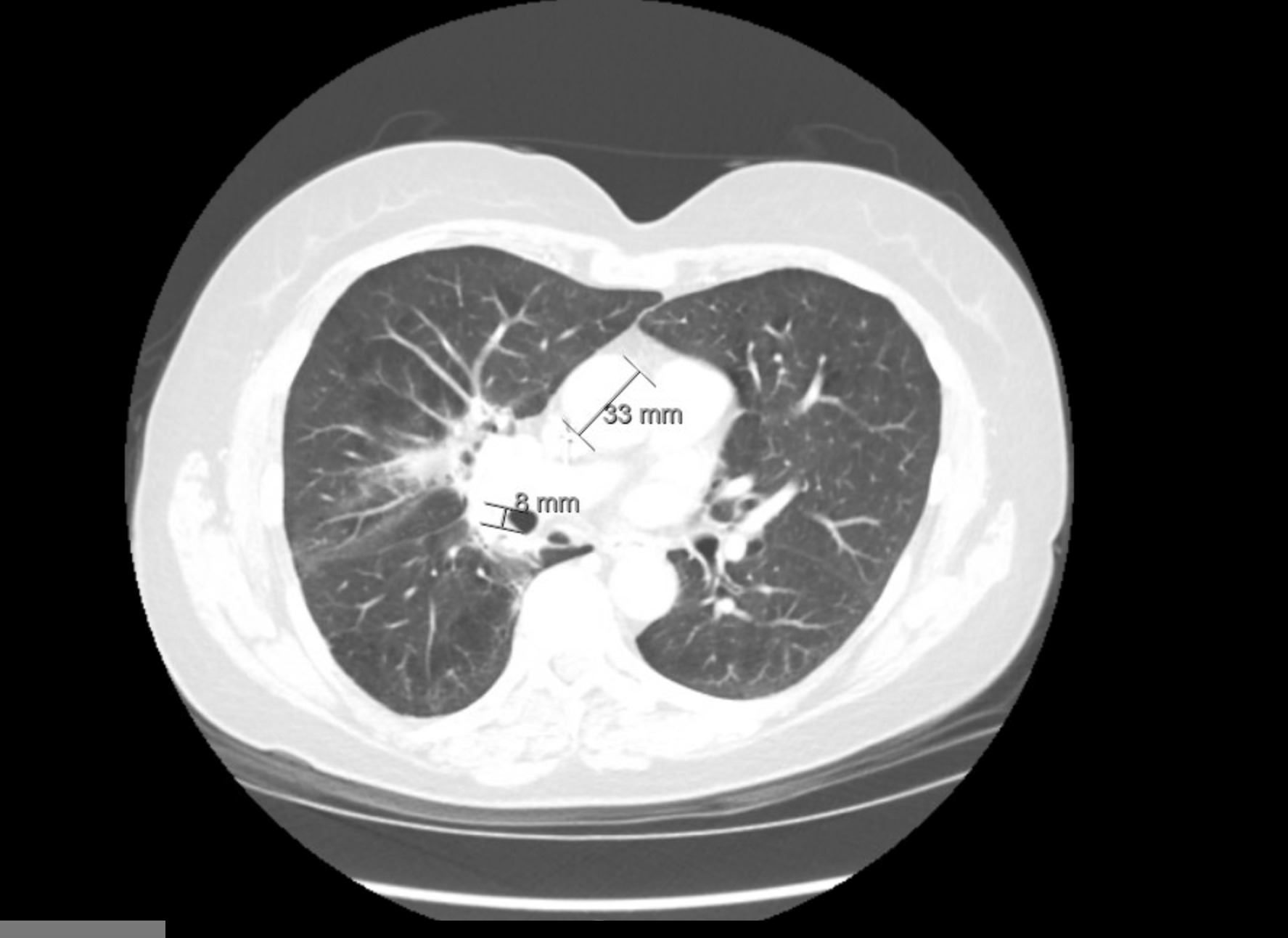
Case Presentation: A 57-year-old female with a history of tobacco use presented with two weeks of confusion, memory loss, and abnormal movements described as gasping followed by upper body shaking and eye closure. She was hypoxic, initially combative, then lethargic. Neurologic exam showed confusion, normal strength, and diffuse hyporeflexia. Admission labs including TSH, ammonia and urine drug screen were normal except for hyponatremia (Na 124). CT head was normal, but CT chest revealed a 5-cm right hilar mass with mediastinal lymphadenopathy. Due to worsening mentation and hypercapnia (pCO₂ 110) despite BiPAP, she was intubated. EEG showed sharply contoured generalized nonepileptiform discharges. MRI brain and lumbar puncture were unrevealing. On Day 2, brief episodes of tachycardia with fixed left gaze and decreased responsiveness raised concerns for seizures, prompting initiation of IV lacosamide and brivaracetam. EBUS biopsy confirmed small cell lung carcinoma (SCLC). Given concern for PNS, she was empirically treated with IVIG (1 g/kg ×3 doses) and IV solumedrol. Her mental status improved, allowing extubation. She was eventually transferred to the medical floor and discharged with close outpatient follow-up. She subsequently received carboplatin and etoposide with continued improvement. Post-discharge paraneoplastic testing revealed positive ANNA-1 (anti-Hu) antibodies, confirming PNS secondary to SCLC.
Discussion: Although uncommon, PNS occurs in 3–5% of SCLC patients(1). The mechanism is thought to involve immune-mediated production of antibodies targeting neuronal antigens(2). Anti-Hu antibodies are strongly associated with SCLC and carry prognostic significance(3). This patient’s nonspecific altered mentation and seizure-like activity made early diagnosis challenging. Her progressive symptoms and smoking history heightened concern for PNS. Because neuroimaging and CSF may be nonspecific, antibody identification and tumor detection are crucial. In this case, ANNA-1 positivity guided the diagnosis and management.
Conclusions: PNS can present with vague neurological symptoms and may precede the diagnosis of SCLC. Prompt recognition and aggressive treatment of the underlying malignancy remain critical for stabilizing neurological decline. This case thus illuminates the need for clinicians to maintain a high index of suspicion for PNS in patients with unexplained encephalopathy, as early diagnosis can substantially alter both neurological outcomes and overall prognosis.