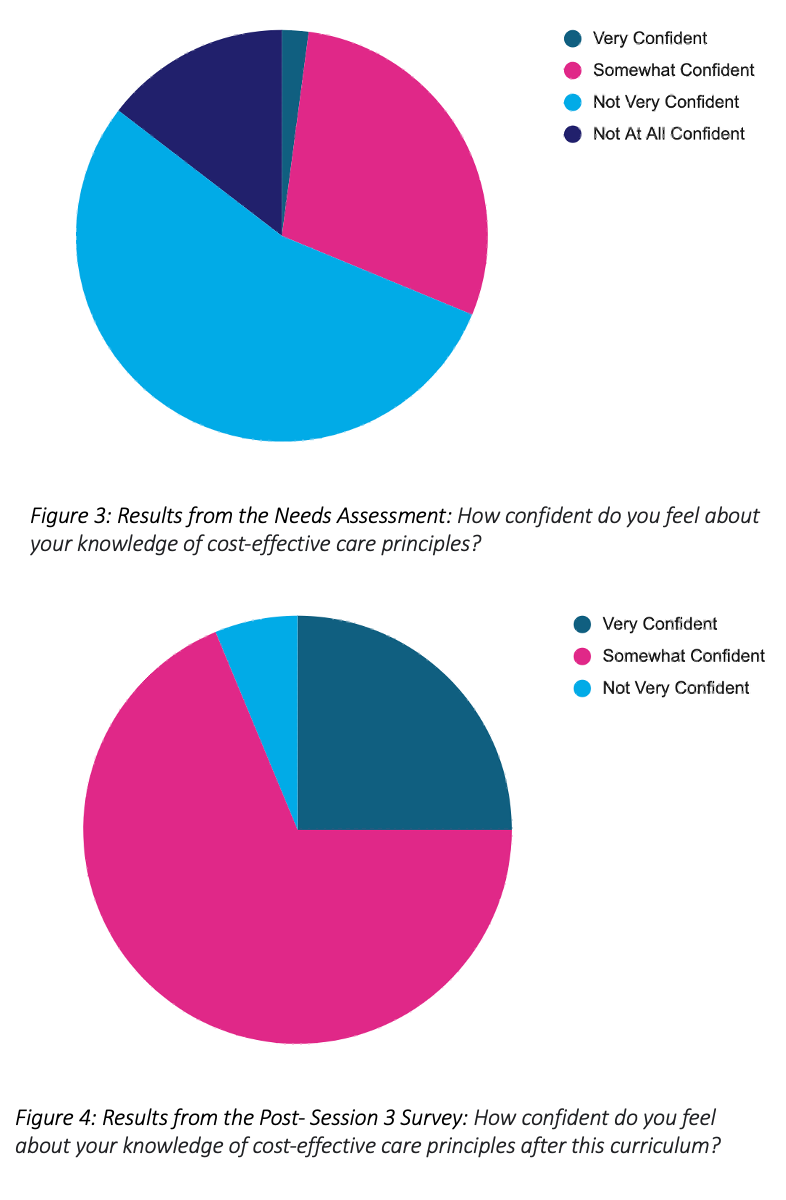
Background: A residency-wide needs assessment (48 respondents of 285; 31.3% PGY-1, 45.8% PGY-2, 22.9% PGY-3) revealed significant gaps in cost-effective care knowledge and confidence. While outpatient resources (72.9%) and logistical factors (64.6%) commonly influenced decision-making, only 33.3% considered cost. Confidence was low, with 54.2% “not very confident” and 12.5% “not at all confident.” Residents expressed interest in discharge costs (85%), barriers to HVC (77%), and core HVC concepts (51%). To address these findings, we developed an interactive, needs-based curriculum aimed at improving early high-value care (HVC) decision-making among interns.
Methods: Three one-hour sessions were delivered during academic half-days over three months. Session topics included: (1) introduction to HVC and ethical dilemmas, including discussion of The High-Value Care Considerations of Inpatient vs Outpatient Testing; (2) inpatient vs outpatient costs and discharge planning; and (3) barriers to HVC and the cost of diagnostic imaging. Teaching methods incorporated “choose-your-own-adventure” clinical cases, breakout discussions, and didactic presentations. Content was adapted from the ACP HVC curriculum and informed by needs-assessment findings. Interns completed post-session surveys evaluating confidence, knowledge, and perceived effectiveness.
Results: Twenty-one interns participated in reflections and post-session 2 surveys, and sixteen completed post-session 3 surveys. After the curriculum, 94% of interns reported feeling “somewhat” or “very” confident in applying cost-conscious principles, with none reporting low confidence. Knowledge improved across multiple domains: correct identification that inpatient CBCs cost approximately three times more than outpatient CBCs increased from 56% to 63%. Understanding of Medicare SNF coverage rose from 33% to 63%, reflecting a 29% gain in clinically relevant knowledge. Sixty-nine percent reported the sessions were “very” or “extremely” effective in helping them overcome barriers to implementing HVC. Qualitative reflections highlighted challenges in balancing patient-centered care with resource stewardship, especially around prolonged admissions, outpatient follow-up, transportation barriers, and insurance limitations.
Conclusions: This needs-based, interactive curriculum effectively addressed knowledge and confidence gaps in cost-conscious care. Interns demonstrated improved cost awareness, enhanced ethical reasoning, and greater readiness to incorporate high-value, patient-centered decision-making into clinical practice. This model provides a scalable approach to early HVC education within internal medicine residency training.