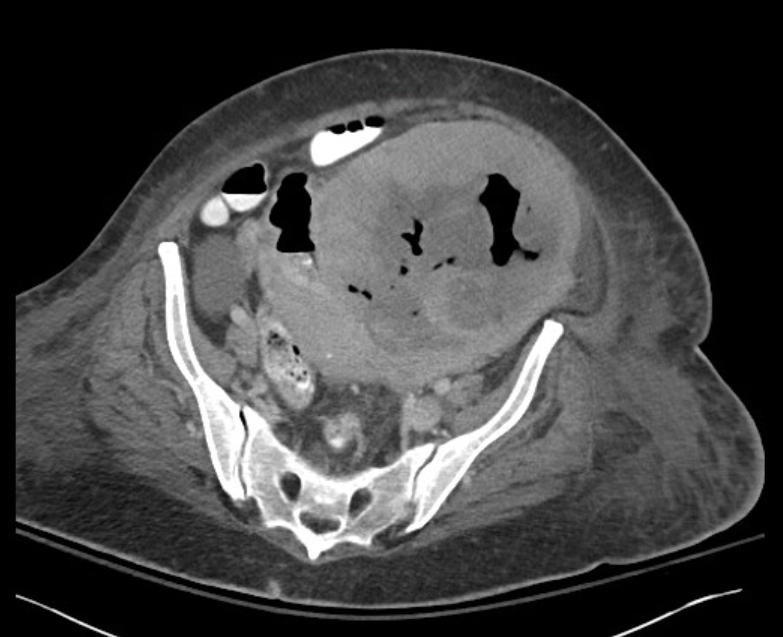
Case Presentation: A 67-year-old female with no significant medical history presented for evaluation of a newly discovered metastatic lung adenocarcinoma. Prior imaging revealed a pelvic mass abutting the adnexa which raised suspicion for a second primary ovarian malignancy. Gynecology-oncology (Gyn-Onc), Surgical Oncology, Medical Oncology, Interventional Radiology (IR) and Colorectal Surgery were all consulted. Initially, Gyn-Onc believed a total hysterectomy and bilateral salpingo-oophorectomy would be both diagnostic and therapeutic; however, due to high cardiac risk from a newly diagnosed left ventricular outflow tract obstruction, the procedure was deferred. Diagnostic workup proceeded with two IR biopsies: the first pelvic lymph node sample was inconclusive, while the second, targeting a parasplenic lesion, confirmed metastatic lung adenocarcinoma. Subsequent abdominopelvic computed tomography showed growth and invasion of the pelvic mass into the adjacent sigmoid colon with gas and stool infiltration plus central necrosis, causing sepsis. Broad-spectrum antibiotics and palliative pain control were initiated. Despite the patient’s decline, she and her family continued to receive conflicting prognostic information. Colorectal Surgery described an expectancy of weeks to months, whereas Oncology predicted over twelve months with chemotherapy initiation. Discussions regarding a potential colectomy with ostomy for infectious source control, versus chemotherapy initiation, continued for several weeks and confused the patient and her support system. The patient was ultimately started on Alectinib, but shortly transitioned to comfort care and passed.
Discussion: Our case illustrates the challenges of coordinating care when multiple subspecialties are managing a patient with complex oncologic and infectious pathophysiology. An unclear diagnostic picture and conflicting prognostic opinions led to fragmented decision-making and delays in treatment. Discordance in prognostication is common, as it is notoriously difficult for medical professionals. Clinicians can reliably identify patients at either extreme of prognosis, but in those with intermediate uncertainty, timely palliative care and advanced care planning can be especially valuable [1]. In our case, the disunity arose from specialties giving prognostic information on the problem they were addressing, instead of evaluating the patient holistically, causing discrepancies between Oncology’s and Colorectal Surgery’s prognoses. The patient had weeks to live by the time chemotherapy was initiated. This fueled unrealistic expectations from the family and contributed to delays in care, including the patient’s ultimate transition to comfort care.
Conclusions: Treatment delays and the lack of prognostic consensus in our case underscore the need for timely interdisciplinary communication, potentially through tumor board conferences with all teams. Balancing beneficence and non-maleficence requires careful consideration of whether pursuing diagnostic certainty outweighs the risk of prolonged suffering and further interventions. The “one more test” mentality can lead to cascading decisions and precipitate harm. Reflecting on cases like ours helps clinicians recognize pitfalls in complex decision-making, coordination of interdisciplinary care, and reinforces the collaborative value of patient-centered tumor boards.