Background: Patients living with pain associated conditions often experience a remitting and relapsing course resulting in frequent emergency department (ED) visits and hospitalizations. The optimal approach to management varies between patients and patient- centered therapy should be specific to each patient. However, healthcare fragmentation, distrust, clinician assumptions, and differences in clinician practices all contribute to barriers to consistent, patient specific approaches. These barriers may prolong time to pain control and result in potentially avoidable admissions. We evaluated the impact of individualized acute care plans (ACP)s on healthcare utilization and patient safety among the highest healthcare utilizers at our institution.
Methods: Our site is a large, academic hospital. Through a multi-disciplinary approach, including input from patients and specialists, ACPs were created for patients identified as high utilizers with pain related complaints. ACPs outlined individualized, consistent, and evidence-based care recommendations with a focus on managing acute pain and avoiding potentially unnecessary admissions. These were entered into the patient charts and were viewable to all providers. We retrospectively evaluated the impact of this quality improvement initiative using data 90 days pre and post ACP institution for each patient. The protocol was reviewed and approved by the local IRB. Outcomes included health care utilization (ED visits, hospitalizations (both inpatient and observation stays), and hospitalization days) and care quality outcomes including numbers of against medical advice (AMA) discharges and hematology consultations during hospitalization for patients with sickle cell disease. Counts were compared using the Wilcoxon signed rank test while the proportion of visits that resulted in an AMA discharge and hospitalizations in which hematology was consulted were compared using Chi square testing.
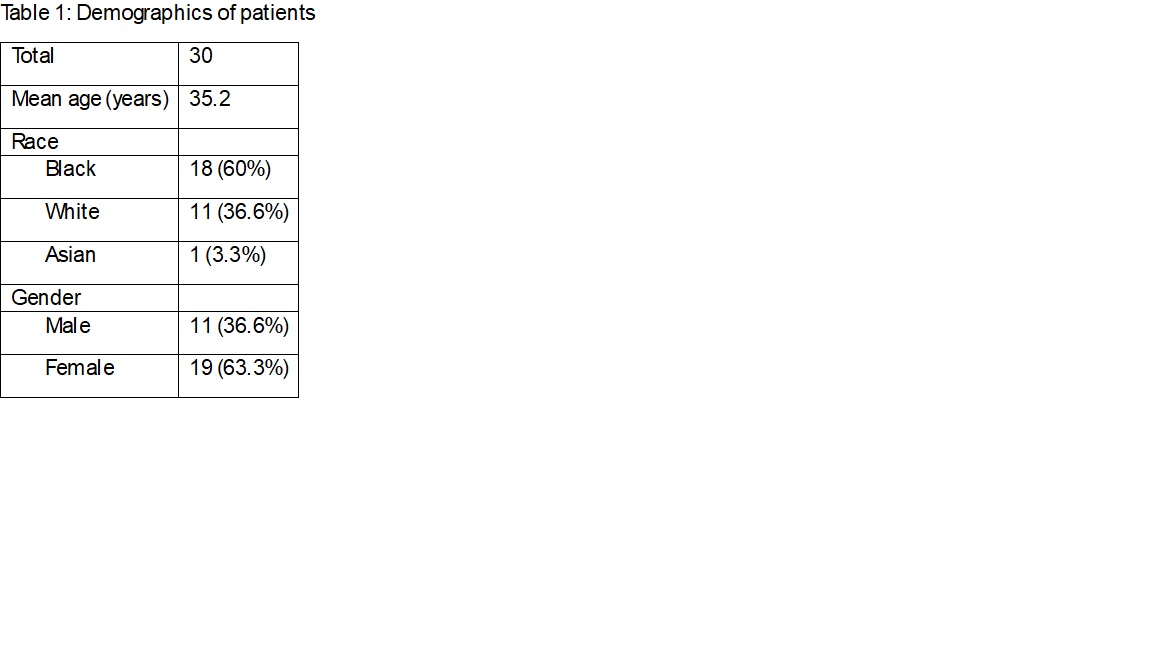
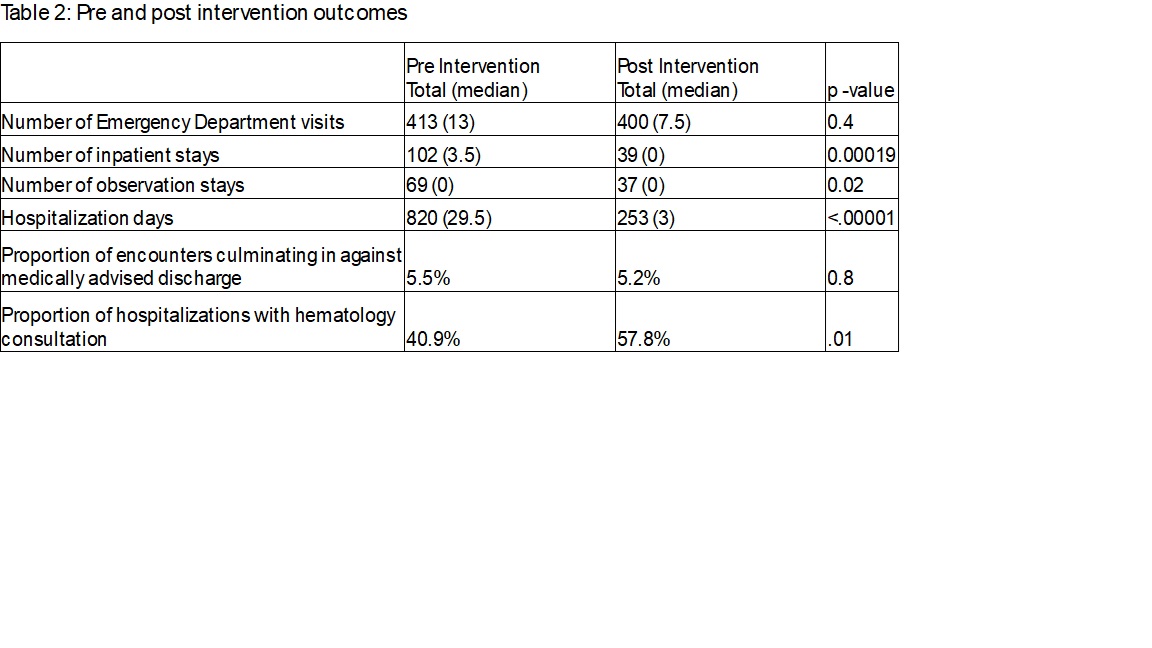
Results: ACPs were created for 30 patients. Of these, 11 (37%) had chronic abdominal pain conditions and the rest had sickle cell disease. The mean age was 35 years and 63% were women. (Table 1). In the pre intervention period there were a total of 413 ED visits with a range of 1-40 visits (median 13) per patient, and hospitalizations (inpatient and observation stays) ranged from 1-15 per patient (median 4). Pre intervention, the cohort collectively spent 820 days hospitalized (median 29.5 days). Post intervention ED visits did not see a statistically significant decline; however, the median number of hospitalizations decreased to 0, and days spent in the hospital decreased to 253 (median 3). (p <.05 for both) The proportion of visits culminating in an AMA discharge was comparable between groups (pre 5.5%, post 5.2 %). Post intervention a higher proportion of hospitalizations involved consultation with hematology. (41% vs 58%, p .01) (Table 2)
Conclusions: Discussion:Individualized ACPs were successful in avoiding hospitalizations and decreasing hospitalization days. Patients appropriately continued to seek care in the ED when necessary and rates of AMA discharges did not increase. Care quality for patients living with sickle cell disease improved, with more hospitalizations involving hematology consultations. Thoughtful, patient centered care created with input from patients has the potential to safely decrease health care utilization and improve care for patients living with complex pain conditions.