Background: Pediatric hospitalists at tertiary medical centers routinely collaborate with other hospitals, clinics and freestanding emergency departments via transfer center calls. These calls require medical decision-making, health system operations navigation, and professionalism in high-stress interactions with limited information. Education on transfer center calls, including concepts such as the Emergency Medical Treatment and Active Labor Act (EMTALA), is not routinely included in pediatrics residency training. With recent ACGME changes emphasizing outpatient training, residents now have less exposure to hospital operations and transfer center encounters. We surveyed pediatrics and medicine-pediatrics trainees on the number of transfer center calls completed in the past year, their comfort leading transfer center calls, their understanding of bedflow and hospital capacity, and their interest in improving their education around transfer center calls.
Purpose: To create a standardized curriculum and educational experience surrounding transfer center calls via a “serious game.”
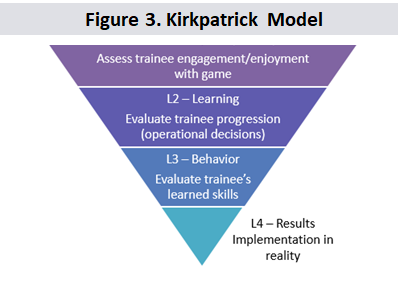
Description: Serious Games are learner-centric, interactive strategies in health professions education, focusing on delivering educational content with a secondary emphasis on enjoyment. In partnership with the School of Engineering, we are developing “Transfer Center Tycoon” a serious game simulating the most common pediatric conditions encountered in transfer center calls with the most common hospital capacity restraints. Residents (“players”) will interact via multiple-option prompts with differently resourced facilities, navigating patient care and system flow while maintaining professionalism under stress. If unable to progress, players will receive hints. At the end of each pediatric condition (“level’), players will receive a score and formative feedback on history taking, clinical judgement, decisions surrounding hospital capacity, and EMTALA considerations. To assess the educational value of the game, players will complete assessment scenarios without hints or feedback at the beginning and end of the game. To assess game completion, we will collect player statistics (time per scenario, scores). To evaluate playability of the game, we will survey players with a modified version of the Serious Educational Game in Nursing Appraisal Scale (SEGiNAS).
Conclusions: Of the residents surveyed, most have limited experience with transfer center calls and are not comfortable managing them. They also have a limited understanding of hospital bedflow and capacity. However, most residents expressed interest in training to better navigate transfer center calls. Based on these findings, we received a local grant to fund the development of Transfer Center Tycoon with a planned prototype by December 2025. Next, we plan to test the prototype with pediatric hospital medicine faculty to ensure accuracy and playability before collecting data from residents. If the game shows positive educational outcomes, we plan to adapt it for other training programs, such as internal medicine.
.png)