Background: The model of “teaching” and “non-teaching” services has become prevalent in academic medical centers, with increasing amounts of patient care provided by hospitalists without resident involvement. Previously, Duke Regional Hospital used a common model for allocating patients to the teaching versus nonteaching service. A hospitalist received all requests for admission from the emergency department and then decided which patients to assign to the teaching team versus the non-teaching service. This model of hospitalist-led educational triage is widely used nationally to determine which patients are assigned to the resident service. Prior research found that although hospitalists and residents share similar ideas about what an ideal case for the teaching service is, such a system of hospitalist-led educational triage can lead to resident perceptions of inequity. Furthermore, this hospitalist-led educational triage system leaves no room for the adult learner to give voice to their own learning goals, which adult learning theory suggests is important in optimizing the educational experience.
Purpose: To develop a novel triage system that supports increased resident input into patient assignment to the teaching service to allow residents to achieve their learning goals, without compromising patient throughput or hospitalist satisfaction.
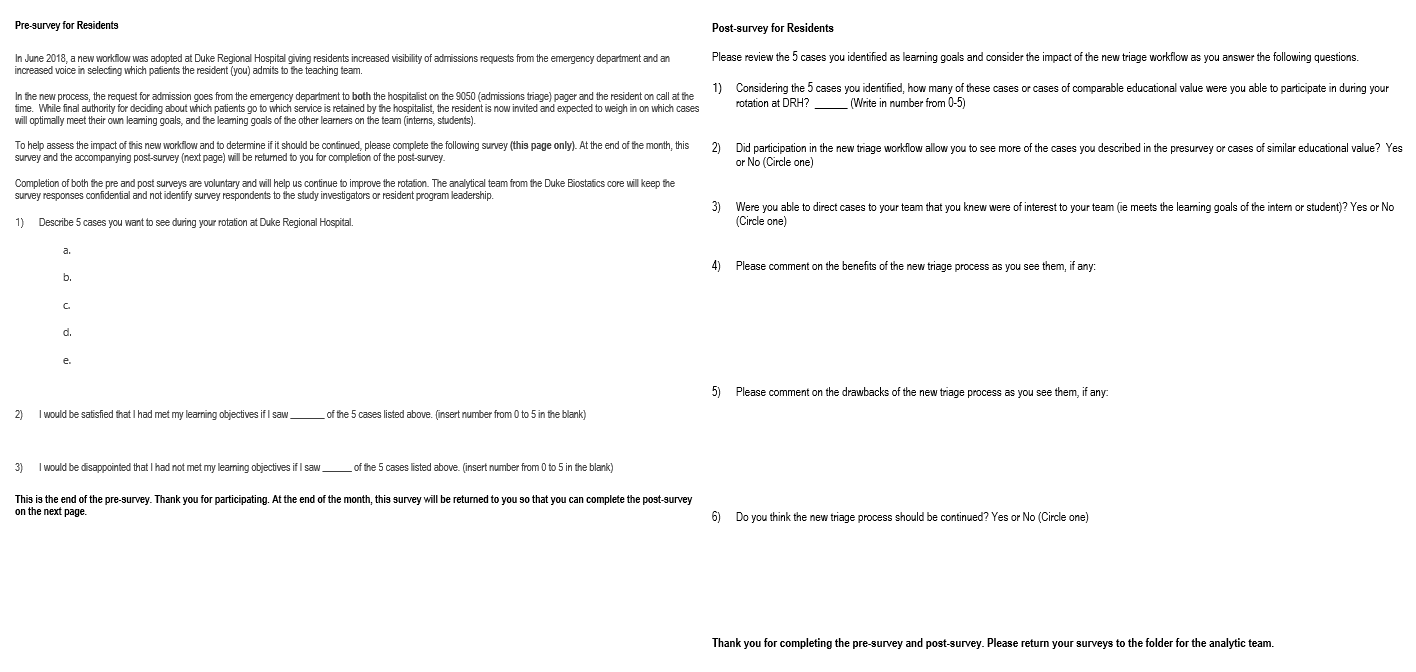
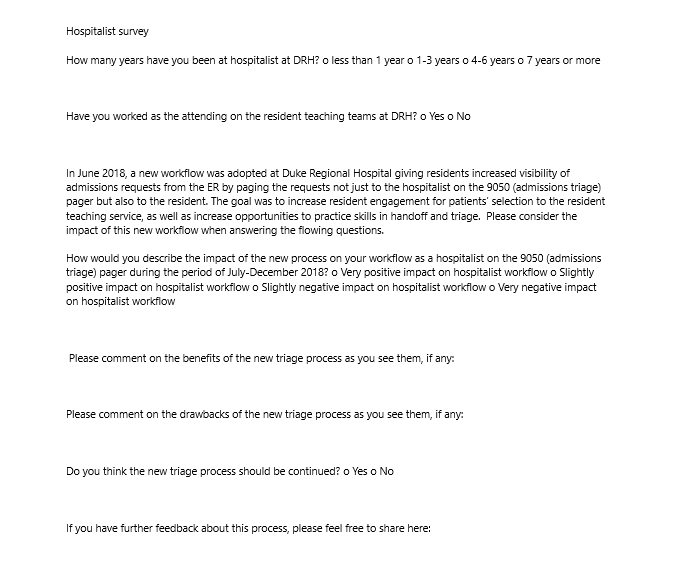
Description: We developed and piloted a novel workflow for the triage process and changed from a hospitalist-led educational triage system to a system where the resident and hospitalist jointly participate in the patient allocation to the teaching team. By changing the Epic admission request order from the emergency department and developing a new virtual pager number, the request for admission is now routed not only to the hospitalist, but also to the resident service. The resident learns about the patient in parallel to the hospitalist, rather than afterwards, and the resident can select patients for their own service based on individual learning goals. Both the hospitalists and residents received education about the new process and the importance of the residents’ voice in patient assignment (in line with adult learning theory). Education was also provided to both groups stressing the importance of prompt communication between the resident and hospitalist at the time of the request for admission to avoid negative impacts on workflow and throughput. The process was piloted for 1 month with initial positive verbal feedback from residents and hospitalists and without negative impact on patient throughput metric (time from request for admission to placement of admission order) during the pilot period.
Conclusions: As the environment surrounding resident education changes, we need to be prepared to adjust long standing practices such as triaging patients to the teaching team. Innovative triage models that may improve resident education and still support hospital and hospitalist priorities are possible.