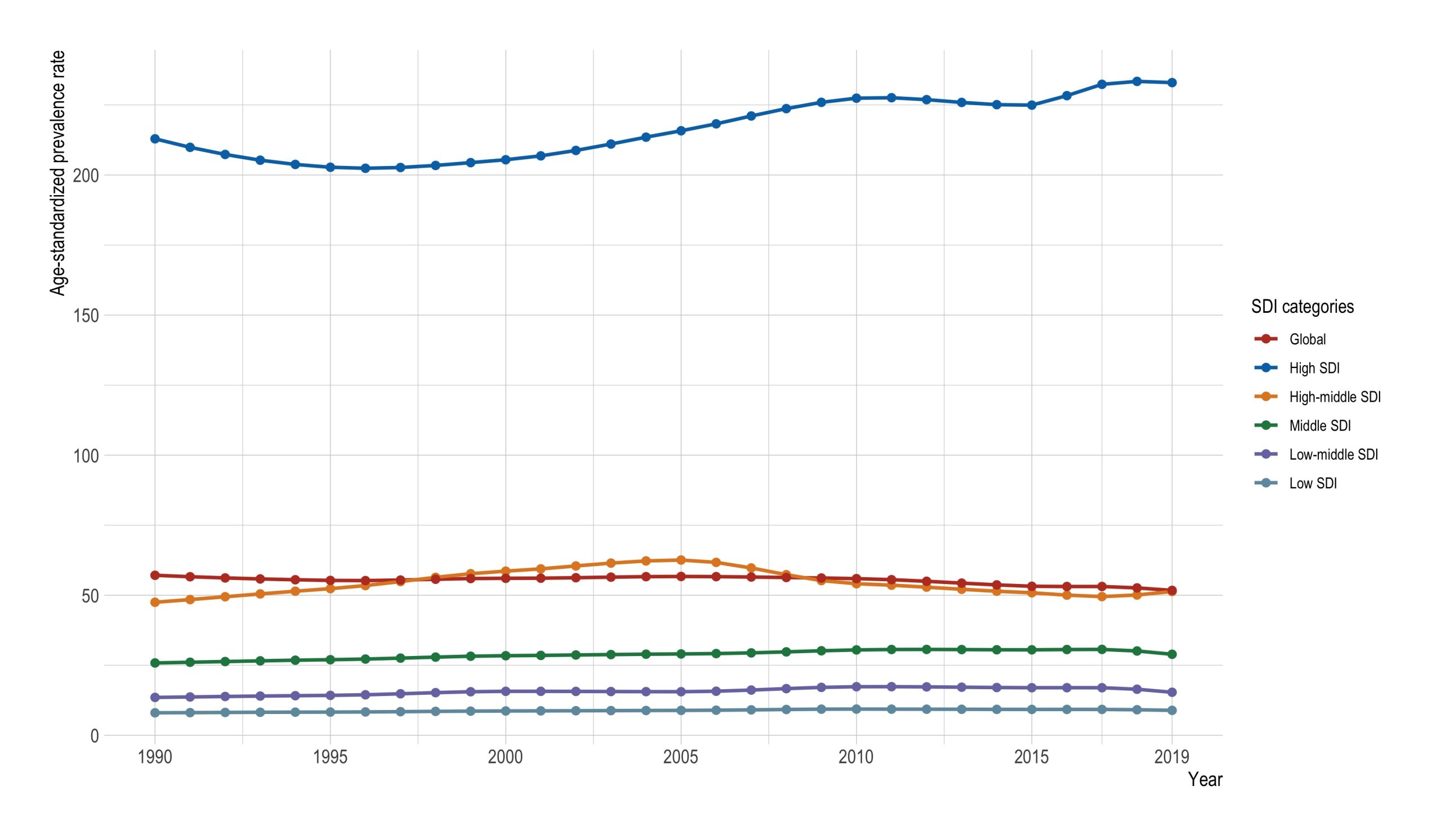
Background: Cocaine use disorders are a significant public health challenge, contributing to cardiovascular, neurological, and psychiatric complications. Chronic use exacerbates these risks and increases addiction rates. This study evaluates global, regional, and national trends in the burden of cocaine use disorders from 1990 to 2019 to inform targeted intervention strategies.
Methods: Using the Global Burden of Disease (GBD) database, we analyzed deaths, disability-adjusted life years (DALYs), incidence, and prevalence attributed to cocaine use disorders. Data were stratified by sex, age, region, social demographic index (SDI), and territories. Trends were quantified using estimated annual percentage changes (EAPCs).
Results: Globally, deaths due to cocaine use disorders rose from 2,355 (95% UI, 2,173–2,953) in 1990 to 12,779 (95% UI, 12,030–13,553) in 2019, a 443% increase (95% UI, 352–489%). DALYs increased by 114% (95% UI, 87–156%), while incidence and prevalence increased by 17% (95% UI, 12–23%) and 34% (95% UI, 26–43%), respectively. Age-standardized rates for deaths and DALYs rose by 227.1% (95% UI, 171.9–254.5%) and 42.4% (95% UI, 26.6–67.6%), while incidence and prevalence declined by -7.8% (95% UI, -10.7 to -4.5%) and -9.4% (95% UI, -13.1 to -5.3%). High SDI countries experienced the most significant burden increases, with deaths rising 852.5% (95% UI, 760.1–960.7%) and DALYs increasing 111% (95% UI, 74.3–172.4%).
Conclusions: The burden of cocaine use disorders is rising in high SDI countries due to factors like cocaine availability, stress, and cultural dynamics, while trends remain stable in lower SDI regions. Tailored interventions considering regional contexts are essential to mitigate this growing public health issue.