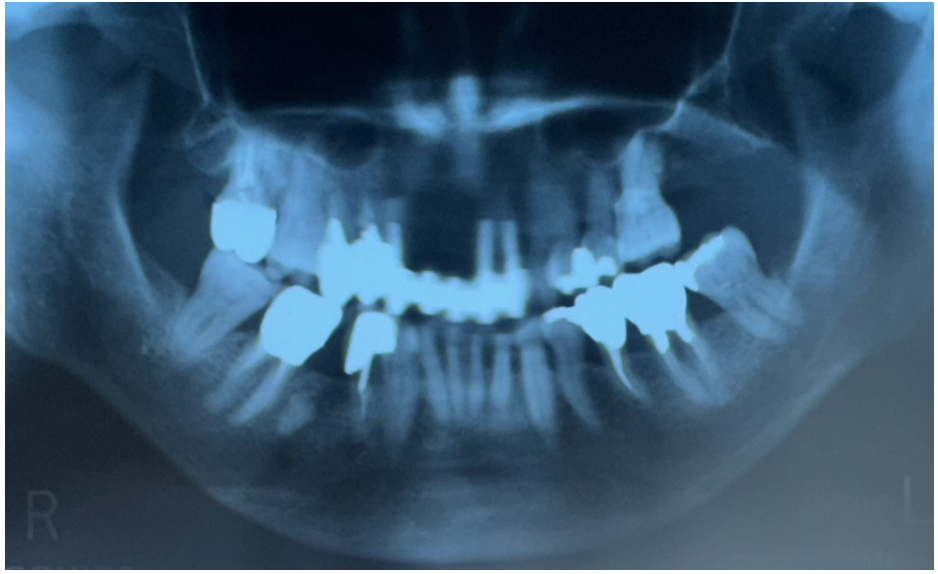
Case Presentation: A 77-year-old Japanese woman developed trismus after receiving a facial massage, two months before admission. She initially consulted a dental clinic, where panoramic radiography revealed a complete absence of the interincisal distance, and she was provisionally diagnosed with temporomandibular joint disorder. Her symptoms persisted with the development of a low-grade fever and difficulty eating, which led to a 5 kg weight loss. Trismus partially improved to three finger breadths, but the fever remained and she was referred to our hospital. On presentation, she was febrile but had no headache or jaw claudication. Laboratory tests showed elevated C-reactive protein and erythrocyte sedimentation rate.During the initial assessment, peritonsillar or cervical abscess and Lemierre’s syndrome were considered as differential diagnoses of trismus. Contrast-enhanced computed tomography demonstrated circumferential wall enhancement of the thoracic aorta, consistent with aortitis. Temporal artery biopsy showed granulomatous inflammation with multinucleated giant cells.
Discussion: Based on these findings and a total score of 15 points according to the 2022 American College of Rheumatology / European Alliance of Associations for Rheumatology (ACR/EULAR) classification criteria, the patient was diagnosed with large-vessel giant cell arteritis (LVGCA). Giant cell arteritis (GCA) was diagnosed in a patient who presented with trismus as the predominant symptom, representing an uncommon form without cranial involvement. Trismus has been reported in approximately 7% of patients with GCA and is thought to result from reduced blood flow to the masticatory muscles via distal branches of the external carotid arteries.
Conclusions: Jaw claudication is a recognized manifestation of GCA, whereas trismus has rarely been described. This case underscores the importance of collaboration between dentists and physicians, as panoramic radiography in a dental setting can provide an early diagnostic clue to GCA and help prevent serious ischemic complications.