Background: Caring for multiple patients with complex needs, especially those with behavioral and psychosocial challenges, can contribute to burnout and dissatisfaction in clinical work [1]. A recent internal survey of hospitalists within our division identified managing such patients as the primary barrier to sustainable clinical work. However, the definition of “complexity” varies between hospitalists and patients, and may be experienced at different levels, including at the individual-, service-, and health system-level. We sought to understand and define the specific challenges hospitalists face when caring for complex care patients.
Methods: At our large urban academic medical center, we held a virtual brainstorming session with 65 hospitalists to generate key themes regarding the challenges of caring for patients with complex needs and behavioral and psychosocial challenges. A subsequent survey was developed to further explore these themes by quantitatively and qualitatively assessing hospitalists’ needs for additional resources and support. The survey was distributed to hospitalist attendings via email listserv. Quantitative and inductive thematic analyses were performed on the responses.
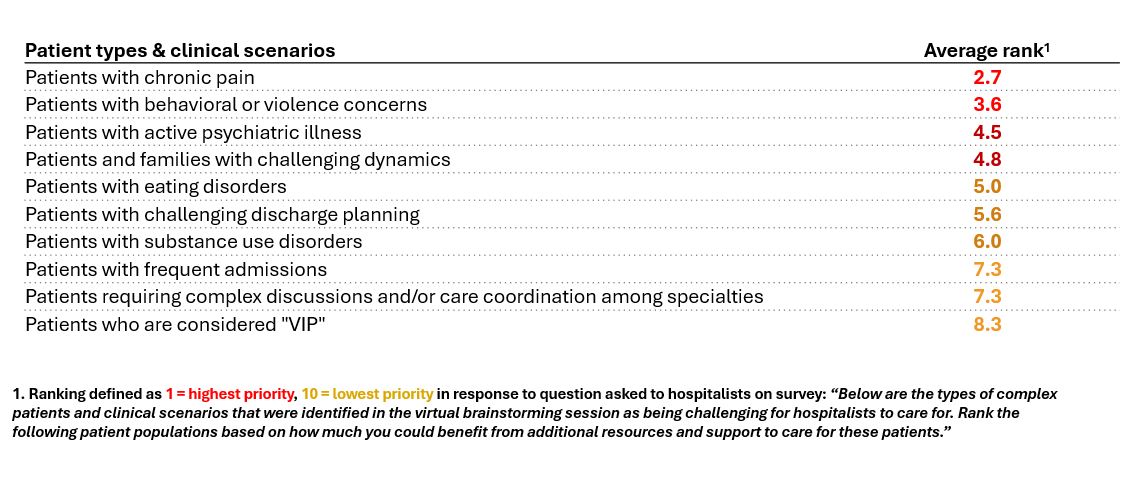
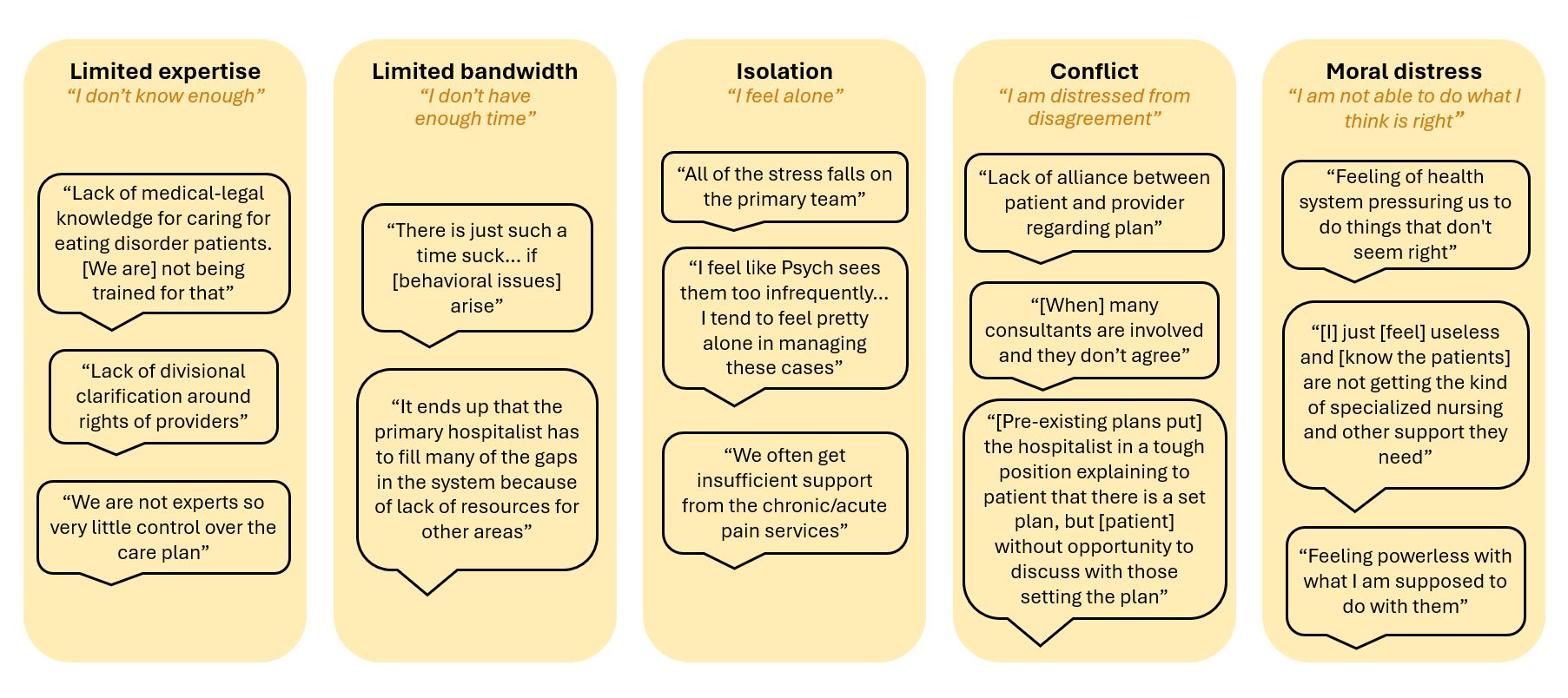
Results: A total of 46 hospitalists (26%) completed the survey. The distribution of clinical experience in hospital medicine as attendings varied across respondents, with 24% having had >10 years of experience, 11% having had 6-10 years of experience, 18% having had 2-5 years of experience, and 13% having had 0-1 year of experience. 11 types of complex patients and clinical scenarios were identified as particularly challenging for hospitalists to care for. Hospitalists ranked the clinical scenarios they would most benefit from additional resources and support (Figure 1). The clinical scenarios that hospitalists identified as being most challenging to manage included patients with chronic pain, patients with behavioral or violence concerns, patients with active psychiatric illness, and patients and families with challenging dynamics. When stratified by years of clinical experience, hospitalists on average still identified the same clinical scenarios in their top three ranked choices. Common themes were identified that contribute to challenges in caring for these patient types and scenarios, and include limited expertise, limited bandwidth, feelings of isolation, distress associated with conflict, and moral distress (Figure 2).
Conclusions: We identified specific clinical scenarios associated with caring for complex patients that hospitalists find challenging to manage and would benefit from additional resources and support, and found that this did not vary significantly based on hospitalists’ years of clinical experience. Understanding these challenges is crucial for designing effective support structures and resources to prevent burnout and promote career sustainability for hospitalists. Next steps include using these findings to advocate for the development of targeted interventions to support hospitalists in these prioritized clinical scenarios and thematic challenges, such as clinical care pathways, educational training, and structured multidisciplinary team approaches.