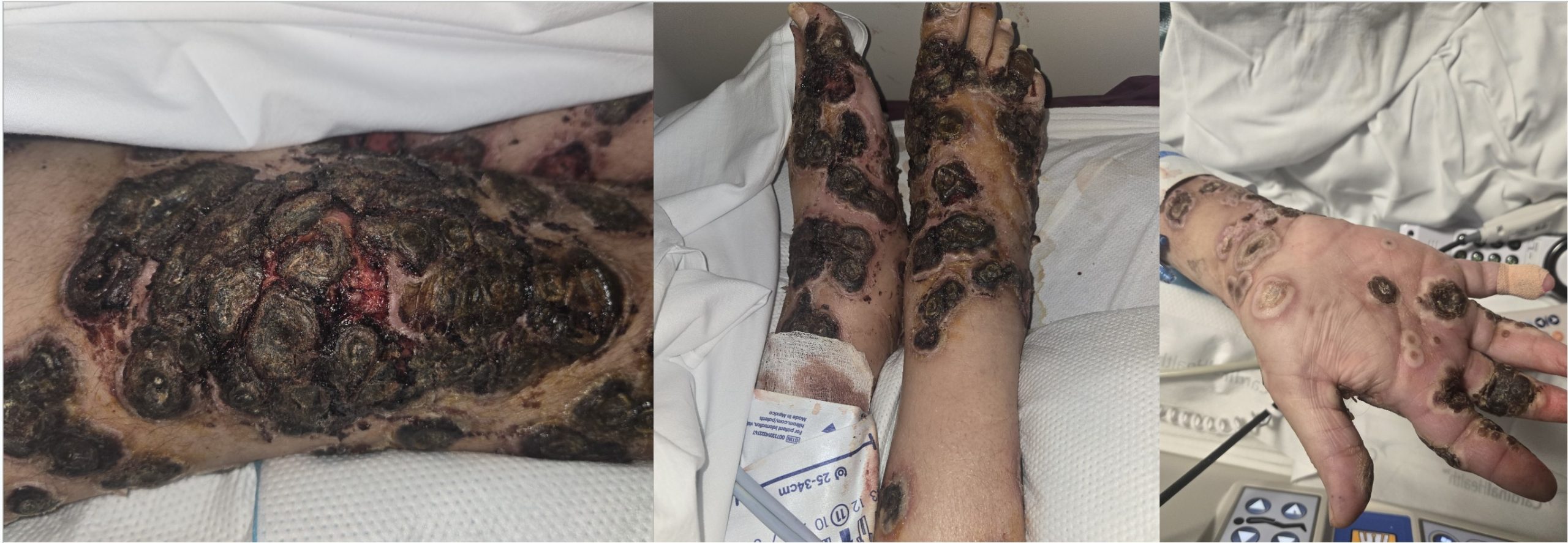
Case Presentation: We present the case of a 41-year-old male with a history of latent syphilis and recently diagnosed (about 10 days before admission) human immunodeficiency virus (HIV) and Mpox who presented to the ER with malaise, lethargy, and worsening cutaneous lesions. Clinical exam was notable for widespread skin lesions and purulent drainage from a perianal wound. Computed tomography (CT) of the chest revealed diffuse pneumomediastinum extending into the pericardium and retroperitoneum associated with esophageal ulcers. CT of the abdomen and pelvis showed a 6.6cm perirectal abscess with focal perforation of the rectal wall. Initial CD4 count was 82 cells/microliter with a viral load of 677,443 copies/mL. Due to septic shock, the patient was placed on vasopressors, intubated, and admitted to the intensive care unit. The pneumomediastinum, rectal perforation, and perirectal abscess were ultimately treated nonoperatively. He was started on broad-spectrum antibiotics, given vaccinia immune globulin (VIG), and initiated on trifluridine, cidofovir, and tecovirimat (TPOXX). He also was started on Bictegravir, Emtricitabine, and Tenofovir (Biktarvy) shortly after admission. In total, he received 4 doses of cidofovir and 3 courses, each lasting 2 weeks, of TPOXX. The patient developed immune reconstitution inflammatory syndrome and was started on prednisone, which resulted in new skin lesions, so it was discontinued. His hospital course was complicated by a large sacral ulcer with underlying coccygeal osteomyelitis, Klebsiella pneumoniae bacteremia, cytomegalovirus viremia, positive galactomannan Fungitell tests being treated with an extended course of at least 6 months of voriconazole, hemorrhagic shock due to a bleeding duodenal ulcer, acute deep vein thrombosis of the left internal jugular vein, acute kidney injury, oropharyngeal dysphagia, acute urinary retention, and critical illness myopathy. The patient was eventually placed on comfort care measures and unfortunately passed from his condition.
Discussion: Mpox is a viral disease caused by the monkeypox virus, an orthopoxvirus related to the smallpox and cowpox viruses. Most cases of Mpox are managed supportively.Cidofovir and TPOXX are not FDA-approved for Mpox treatment in the United States. Our patient received TPOXX via the expanded access investigational new drug protocol through the CDC. Given reports of TPOXX resistance developing in highly immunocompromised individuals, combination therapy with cidofovir should be considered. Our case is unique because throughout the prolonged hospitalization, despite 4 doses of cidofovir and 3 two-week courses of TPOXX, his lesions remained slow to scab and re-epithelialize, which was likely due to his profound immunocompromised status, extent of disease, and potential TPOXX resistance. Antiviral resistance testing, however, was not available at our institution. Frequent conversations took place with the patient and his brother to assess the goals of care. We also emphasized to our team members and other medical staff to address the disease as Mpox rather than monkeypox due to the stigma and discrimination associated with the latter term.
Conclusions: This case demonstrates the pivotal role of hospital medicine in managing and coordinating a complex case of disseminated Mpox infection in an immunocompromised patient with multiorgan involvement. It also underscores the need to be mindful of the stigma surrounding Mpox and the importance of further studies in antiviral therapy.