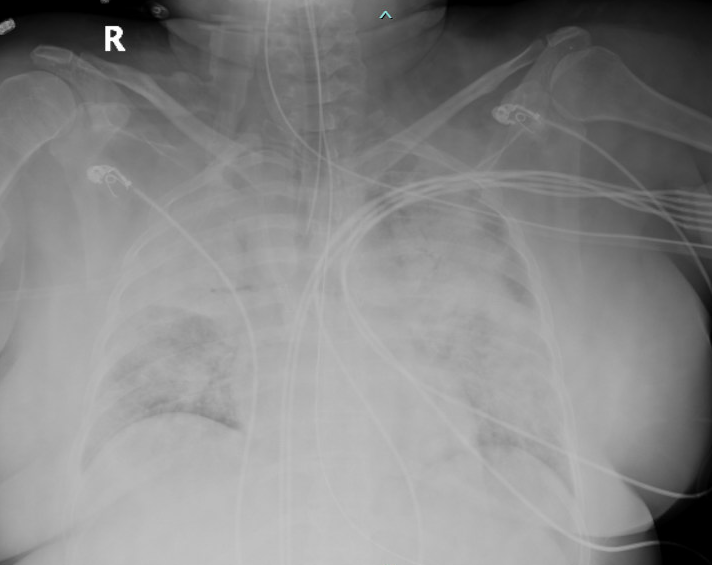
Case Presentation: A 41-year-old female with a past medical history of Bipolar 1 Disorder presented to the emergency department (ED) for psychogenic drug overdose. Patient took 2 mg of Risperidone and unknown amounts of Lamotrigine, Clonazepam, and Venlafaxine. Upon evaluation patient was minimally responsive to sternal rub. Poison control recommended ECG every 2 hours and closer monitoring. Patient was also found to be hypotensive and received a total of 4.5 L fluid resuscitation. Peripheral Norepinephrine was started up to 16 mcg and was titrated off after intensive care unit (ICU) evaluation in the ED. Labs were not significant. Urine drug screen was positive for amphetamines. Arterial blood gas (ABG) revealed non-anion gap metabolic acidosis. CT of head was negative and ECG showed sinus tachycardia and a QTc of 455 ms. Patient was admitted to telemetry floors. Later that night three rapid responses were called as patient was found to be agitated. However, at the last rapid but found to be hypoxemic and ABG confirmed this as pO2 was found to be 46.7 mmHg and O2 Hgb of 78%. Patient was intubated and transferred to the ICU for further management. She was found to be in severe acute respiratory distress syndrome (ARDS). ARDS protocol was followed and the next night patient found to be in bradycardia and went into PEA arrest, subsequently code blue called. Patient was successfully resuscitated, eventually extubated, and discharged to inpatient psychiatric ward.
Discussion: ARDS secondary to psychogenic drug overdose is rare but well-documented in case reports/small series, implicated agents include MDMA, antipsychotics, SSRIs, lithium, heroin, methamphetamine, and barbiturates. The true incidence is unknown, but polysubstance overdoses and psychiatric comorbidity are common in this population, increasing risk and complicating management. Pathophysiologically, drug-induced ARDS may result from several mechanisms: direct alveolar epithelial and endothelial injury, non-cardiogenic pulmonary edema, aspiration, neurogenic pulmonary edema, and idiosyncratic/immunologic reactions. Antipsychotic overdose and lithium toxicity have also been associated with ARDS, likely through direct toxicity and secondary complications. Benzodiazepines and barbiturates, especially in combination, increase risk of aspiration and respiratory compromise due to CNS depression. This patient initially here for psychiatric drug overdose but then found to be agitated and received benzodiazepines. Clinically, patients present with altered mental status, hypoxemia refractory to supplemental oxygen, and rapid progression to respiratory failure with bilateral infiltrates on chest imaging. Diagnostic workup should include chest radiography or CT to confirm bilateral infiltrates, exclusion of cardiogenic causes, and monitoring for aspiration events, which are common in overdose settings. Management is centered on airway protection, mechanical ventilation with lung-protective strategies, and supportive care. Endotracheal intubation is often required due to CNS depression and loss of airway reflexes and subsequent monitoring in the ICU.
Conclusions: It is important to keep ARDS in the differential diagnosis when presented with a psychogenic drug overdose, it is rare but well-documented in medical literature. Improper management can be deadly. However, with proper management of ARDS through proper oxygenation, ventilation, and fluid management young lives can be saved.