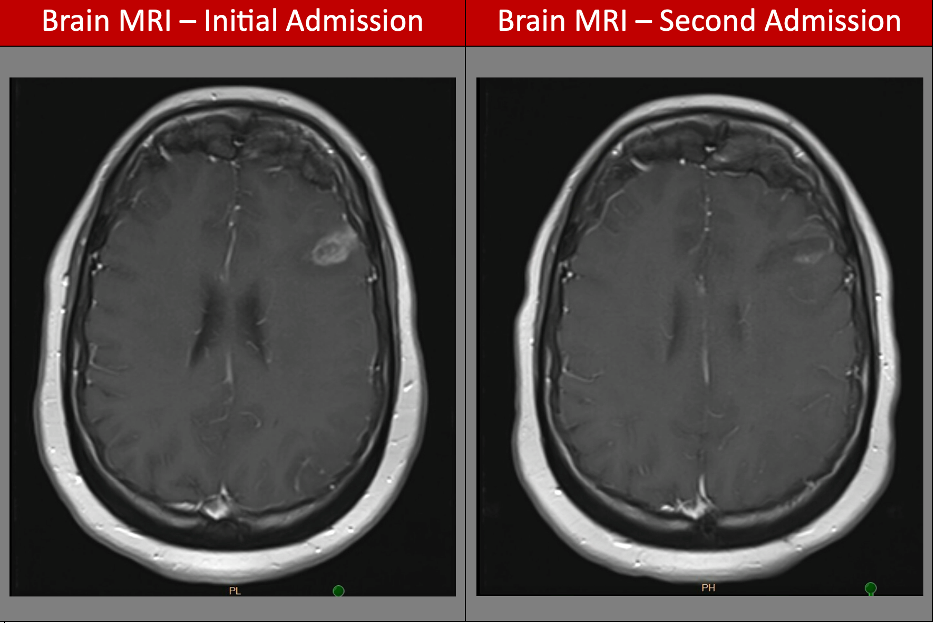
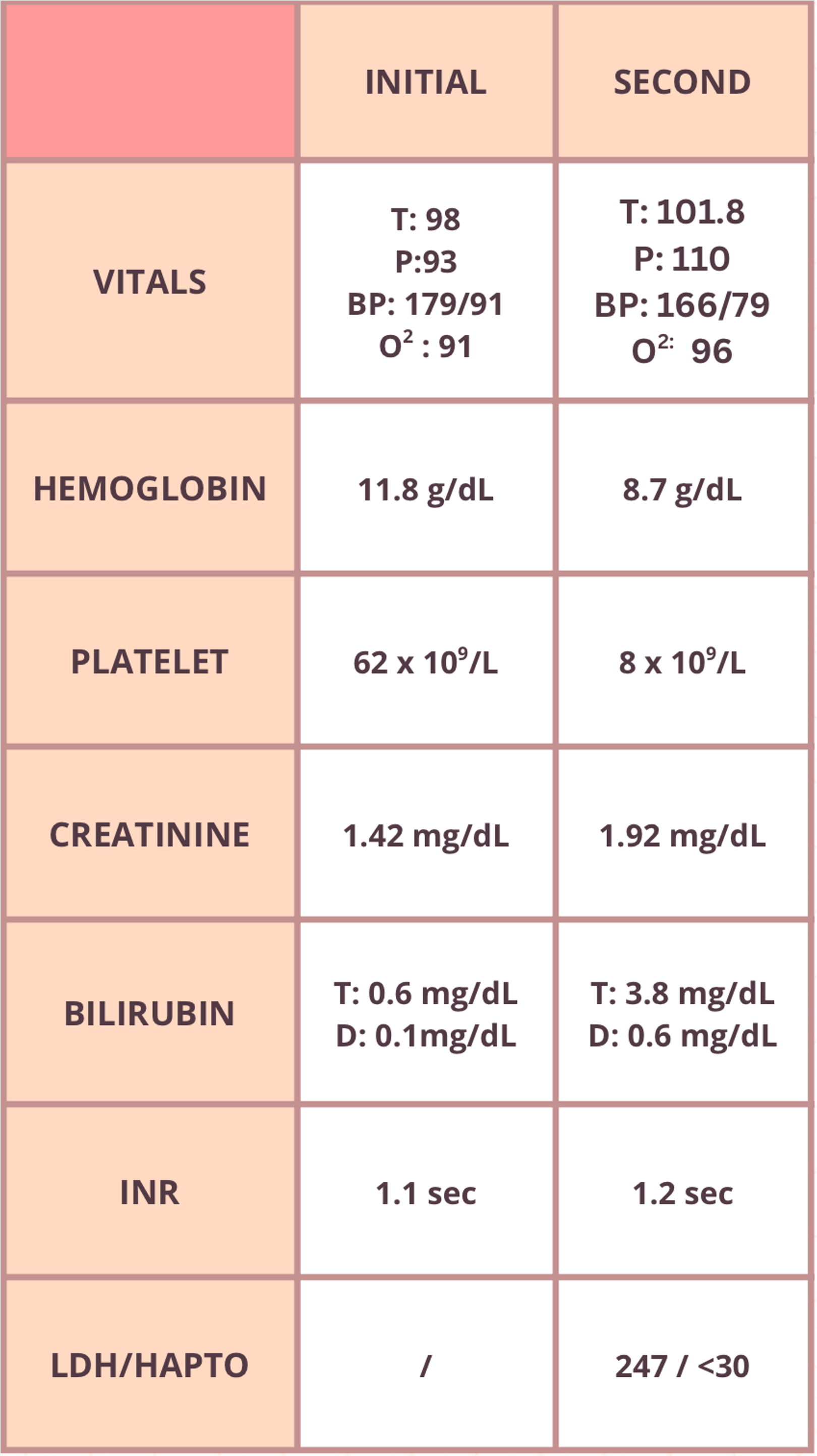
Case Presentation: A 53-year-old female presented with acute expressive aphasia. CT/CTA showed multiple cerebral infarcts; MRI revealed a 1.7 cm mass-like lesion in the frontal lobe concerning for high-grade CNS neoplasm. Work-up including CSF studies, autoimmune testing and staging scans was largely unremarkable except for moderate thrombocytopenia (62 K/μL) and elevated creatinine (1.42 mg/dL; baseline unknown). The presumed oncologic pathology delayed attention to thrombocytopenia, and she was discharged with improving symptoms. Three weeks later, she was readmitted with recurrent aphasia and fever (101.8 F). Labs revealed evidence of microangiopathic hemolytic anemia (Hgb 8.7 g/dL, undetectable haptoglobin, elevated LDH, schistocytes), thrombocytopenia (8 K/μL), and rising creatinine (1.92 mg/dL). Empiric TPE and corticosteroids were started for suspected TTP. Follow up testing confirmed severely reduced ADAMTS13 activity (< 2%) with a high inhibitor titer; Rituximab was added. Repeat MRI showed that the mass-like lesion had evolved, now consistent with a subacute infarct rather than a neoplasm. Caplacizumab was withheld due to concerns regarding hemorrhage around the infarct. Symptoms, thrombocytopenia, and renal function improved with continued treatment, allowing for discharge on day 7.
Discussion: Immune Thrombotic Thrombocytopenic Purpura (iTTP) is a life-threatening thrombotic microangiopathy caused by severe ADAMTS13 deficiency. Neurologic symptoms are common, but brain imaging is non-specific and may mimic other conditions, as in this case where the infarcted lesion initially resembled a high-grade CNS malignancy, delaying diagnosis. Her second admission clearly met criteria for TTP; however, her first episode was atypical with neurologic deficits and moderate thrombocytopenia without the classic combination of severe thrombocytopenia and hemolysis. This raises the question of whether the initial event was an atypical TTP presentation or a de novo stroke secondary to preexisting ADAMTS13 deficiency. Upreti et al. (Blood, 2019)[2] found that TTP patients in remission with reduced ADAMTS13 activity (< 70%) had a significantly higher risk of ischemic stroke compared with those with normal activity, independent of TTP recurrence. This suggests that low ADAMTS13 activity may predispose to a prothrombotic state, contributing to a CVA before a full TTP episode manifests. Thus, a high index of suspicion is crucial for any patient presenting with neurologic deficits and thrombocytopenia, especially given the high mortality associated with untreated TTP. Finally, the therapeutic approach to iTTP continues to evolve, with Caplacizumab being increasingly adopted as part of standard of care due to its association with faster platelet recovery and reduced mortality, relapse, and thromboembolic events. Its use carries an increased bleeding risk and current expert consensus supports individualized risk-benefit assessment prior to use. In this case, Caplacizumab was deferred due to the hemorrhagic area surrounding the lesion, underscoring the importance of individualized clinical judgment.
Conclusions: iTTP presents diagnostic challenges when neurologic symptoms and atypical imaging overshadow early hematologic clues. Low ADAMTS13 activity may predispose to cerebrovascular events before overt TTP. Timely recognition is crucial given the high mortality risk, and individualized management, including careful use of Caplacizumab, is essential to optimize outcomes.