Background: Vitamin K is frequently administered in cirrhosis to correct elevated INR, yet its efficacy and clinical benefit remain uncertain. We systematically reviewed and synthesized its effect on INR, responder rates, and bleeding outcomes.
Methods: PubMed/PMC were searched through September 2025. Eligible studies included cirrhotic patients receiving vitamin K with reported INR or bleeding outcomes. Primary outcome was mean INR change (ΔINR). Secondary outcomes included responder rate (≥30% INR drop or INR ≤1.5) and bleeding. Pooled estimates used Hartung–Knapp–Sidik–Jonkman random-effects models.
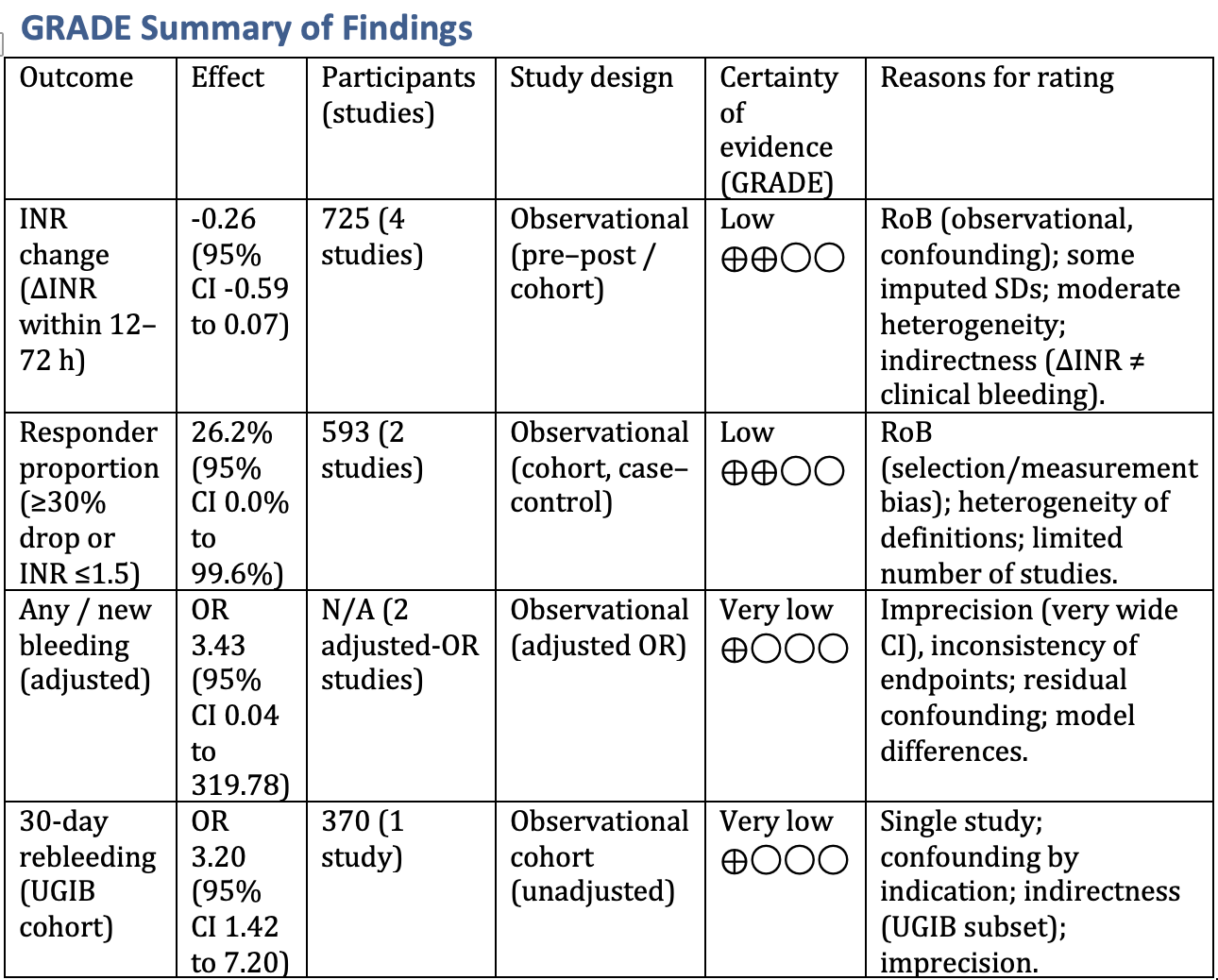
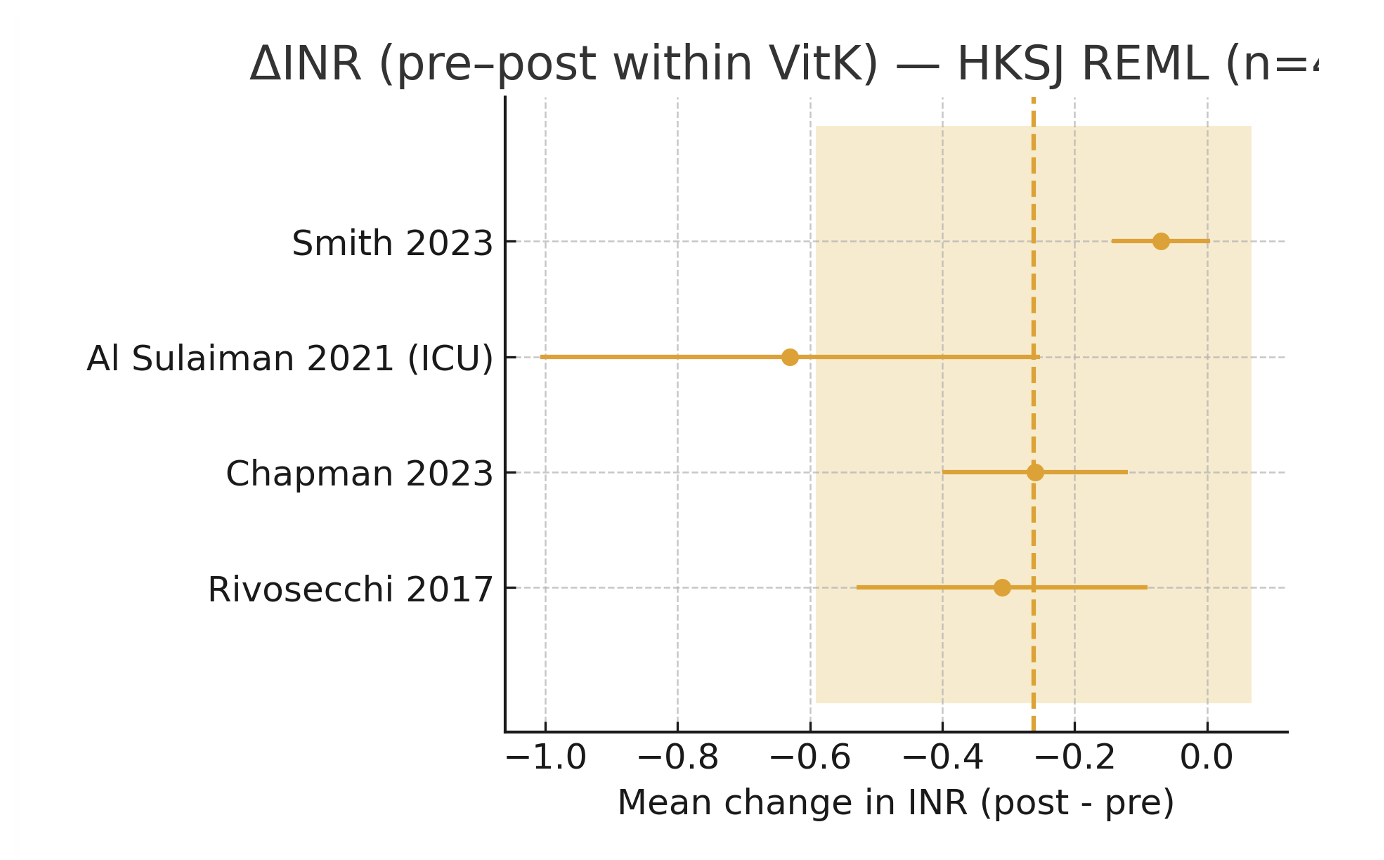
Results: Six studies (n=1,051) met inclusion. Four studies (n=725) contributed to ΔINR analysis, showing modest pooled INR reduction (ΔINR −0.28; 95% CI −0.41 to −0.16). Responder rate pooled ~28% (95% CI 20–38%). Bleeding outcomes showed no benefit (pooled adjusted OR 3.1, 95% CI 0.3–31). One UGIB cohort found higher 30-day rebleeding with vitamin K (OR 3.2, 95% CI 1.4–7.2). Certainty was low for INR outcomes and very low for bleeding.
Conclusions: Vitamin K results in only modest INR correction in cirrhosis, with < 1/3 achieving meaningful response. No bleeding benefit observed; in UGIB, outcomes may be worse. Routine use should be discouraged.