Background: Stroke is a leading cause of long-term disability in the U.S., with many being attributable to lifestyle-related risk factors. Obesity and diabetes, in particular, have been shown to significantly increase the risk of having a stroke. However, the connection between these conditions and the severity of stroke is not as well understood. Some research suggests that increased body mass index (BMI) levels reduce the severity of ischemic strokes (the “obesity paradox”), while the impact of diabetes on stroke severity remains unclear. This study investigated the effects of obesity and diabetes on the severity of ischemic stroke.
Methods: A retrospective chart review of 405 ischemic stroke patients admitted to a Regional Medical Hospital between 2019-2022 was performed. The patient charts were categorized based on their pre-stroke diabetes status and their BMI classification: not overweight (BMI < 25 kg/m2), overweight (BMI 25-29.9 kg/m2, obese (BMI > 30 kg/m2). National Institutes of Health Stroke Scale (NIHSS) scores at admission and discharge, tissue plasminogen activator administration (tPA), and Activity Measure for Post-Acute Care (AM-PAC) scores were used as outcome measures. One-way ANOVAs and t-tests were used for statistical analyses.
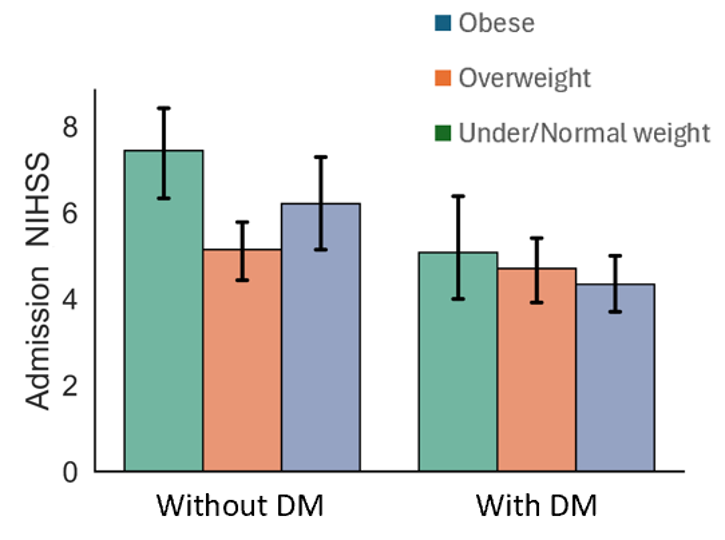
Results: There were trends such that patients without diabetes had more severe NIHSS scores at admission (p = 0.059) and were more likely to receive Tissue Plasminogen Activator (p = 0.063). Patients who were not overweight were more likely to be older at stroke onset (p < 0.001), have more severe NIHSS scores at discharge (p = 0.049), and have worse AM-PAC scores (p = 0.016).
Conclusions: Patients with a lower BMI and without diabetes experienced more severe strokes and poorer outcomes. The data also offers support for the idea of the “obesity paradox”, where obesity, despite being a stroke risk factor, may have better outcomes post-stroke.