Background: Environmental services (EVS) staff play a critical role in maintaining a safe, clean, and healthy hospital environment by performing timely cleaning, disinfecting, and waste management. In a Comprehensive Cancer Center comprised of approximately 764 active, current inpatient beds, a well-trained EVS team supports clinical care by ensuring rooms are cleaned and disinfected to reduce the risk of healthcare-associated infections. Additionally, EVS plays a key role in the flow of patients from admission to an inpatient bed through discharge (throughput process). Through efficient discharge cleaning, EVS can help ensure patient rooms are turned over quickly, consistently, and safely. This timely room readiness supports patient flow, reduces wait times for incoming patients, and maintains ready beds. Strong EVS practices such as multi-level disinfecting procedures lead to stable hospital infection rates and enhanced patient satisfaction. With increasing hospital discharge volumes on inpatient units, innovative ideas are required to reduce bed turnaround time.
Purpose: The purpose of this project was to reduce overall turnaround time of hospital discharge cleaning by implementing novel interventions across technology, people, and processes.
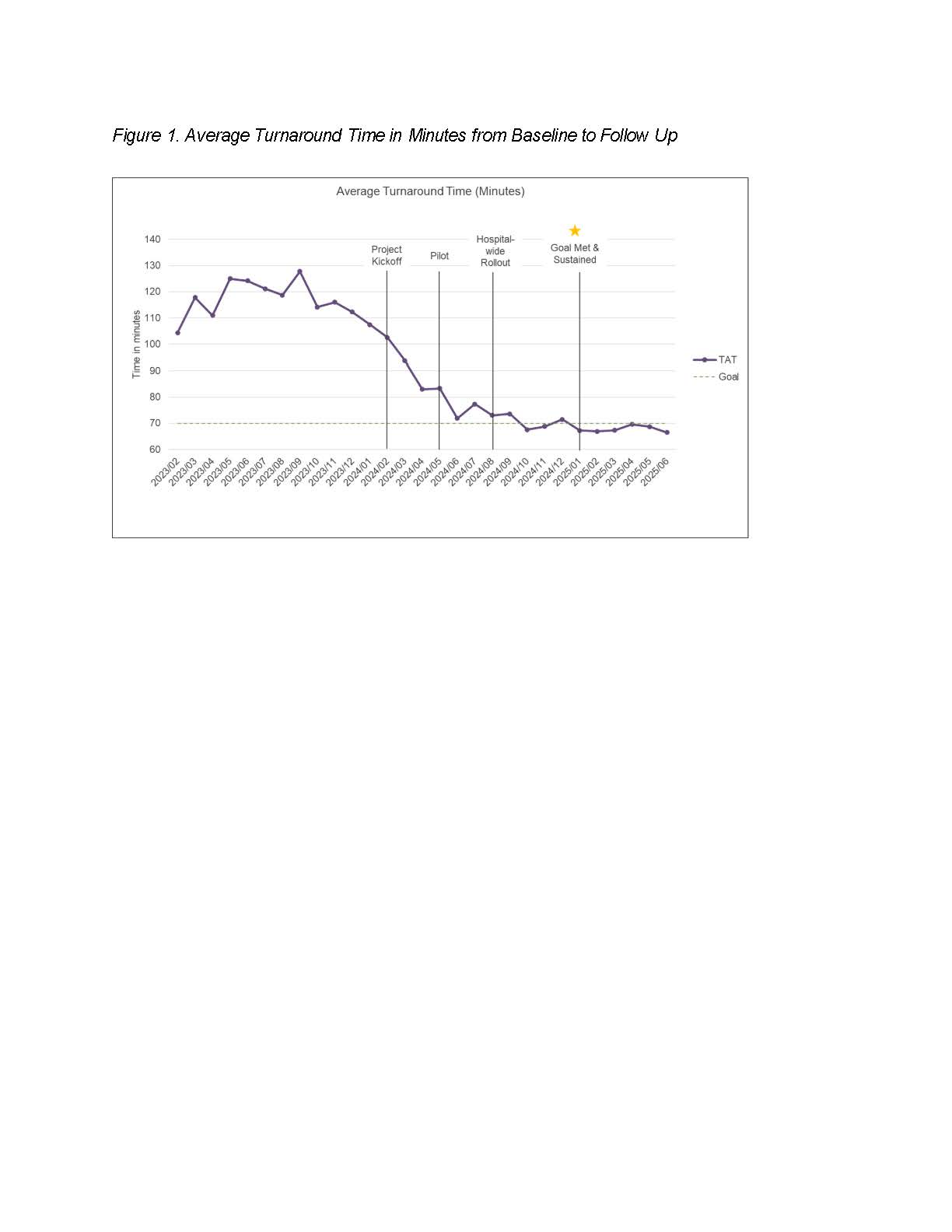
Description: TAT was defined as the monthly, average total time in minutes from the moment EVS received a request to clean a patient room until the patient room was cleaned, inspected, and released back to bed control. The Define-Measure-Analyze-Improve-Control (DMAIC) method was utilized for stakeholder engagement and identification of systemic barriers contributing to timely discharge. In February 2024, interventions to reduce TAT were implemented: 1) Technology: The auto-assign feature and time stamps in Epic© was used to replace manual EVS staff assignments. Tablets, mobile phones, and mobile Epic© application were used for real-time notifications. New robotic technology with lower cleaning time was used to improve TAT time. 2) People: A heavy shift in the EVS staffing model using an algorithm for assignment of primary floor cleaning, secondary floor cleaning, daily cleaners, and floaters helped the discharge curve and changed the culture. 3) Processes: Communication & feedback loops were developed with nursing staff and patient care technicians (PCTs) for process improvement. Operational changes included linen and equipment removal by PCTs and cleaning practice modifications such as the use of chemicals with a lower dwell time.
Conclusions: Overall, TAT decreased from an average of 115 minutes at baseline (Feb 2023 – Feb. 2024) to an average of 68 minutes at follow up (Jan 2025 – June 2025), representing a 41% decrease in TAT (Fig. 1).This project demonstrated how novel interventions across technology, people and processes can improve TAT. The 70-minute overall TAT goal was met and consistently sustained since January 2025. This improvement in TAT was achieved without additional staffing or overtime. The use of technology, novel staffing models and investments in equipment and communication processes can enhance EVS operational efficiency. In turn, improvements in EVS practices enhance patient satisfaction, safety and the quality of care delivery.