Background: As a burgeoning subspecialty, pediatric hospital medicine (PHM) has become a career path for many physicians. Whether working in a community hospital or an academic medical center, many pediatric hospitalists hold faculty appointments with a university or medical school. For hospitalists with faculty status, academic promotion recognizes an individual’s contributions in the field, serves as a marker for success, and often results in increased compensation. As a physician rises in rank, regional, national, and international recognition and support becomes essential for promotion. Therefore, academic promotion applications customarily require external referees or letter of support to bolster a candidate’s advancement portfolio. Obtaining these referees can be a barrier to promotion.
Purpose: Recognizing this challenge, representatives from three pediatric societies (the Academic Pediatric Association [APA], the Society of Hospital Medicine [SHM], and the American Academy of Pediatrics [AAP]) created the PHM Promotion Reviewer Database. This collaborative connects pediatric hospitalists applying for promotion with volunteer reviewers willing to provide letters of support within their areas of expertise, reducing the burden of locating external referees.
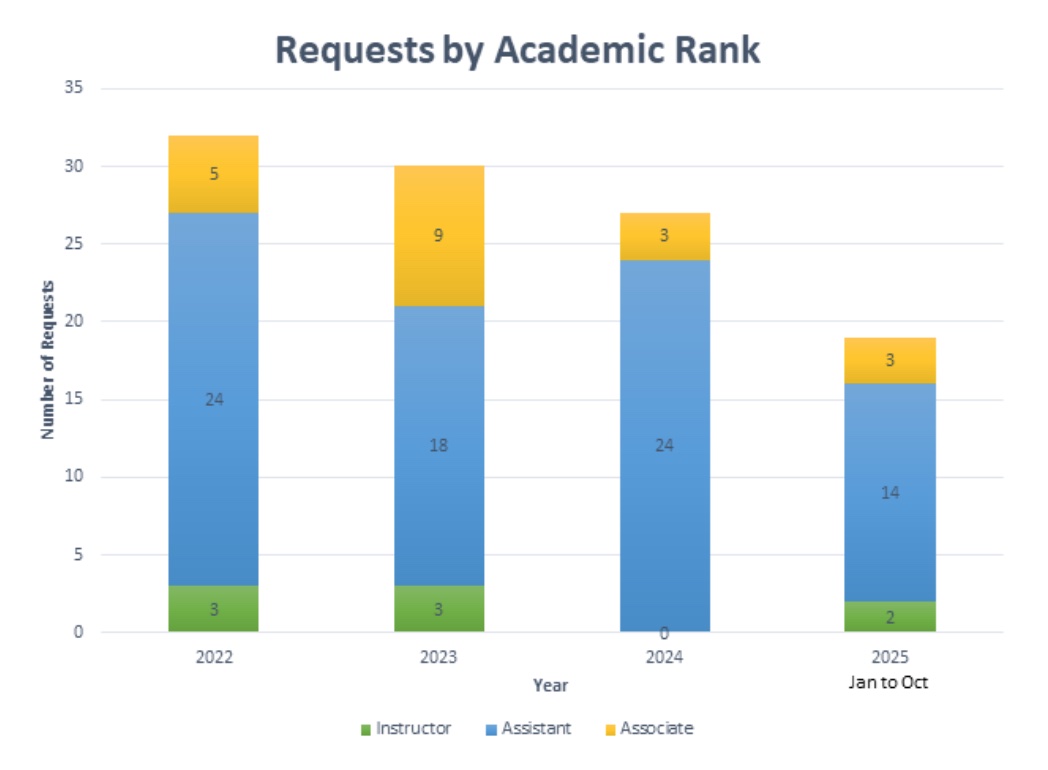
Description: Since its launch in 2022, the database has steadily expanded. Recruitment and outreach occur through institutional correspondence, email listservs, inter-society communication, and dissemination at national conferences. Junior faculty are informed about the resource, and senior faculty are encouraged to volunteer as reviewers. Volunteers specify the number of annual letters they are willing to write, academic rank (Assistant Professor, Associate Professor, Professor), institution, and areas of expertise (education, advocacy, research, administration, quality improvement, community hospital). Each requestor supplies current academic rank, requested position, willingness to serve as a future volunteer letter writer, and areas of interest. A small group of PHM physicians from the three societies match applicants with appropriate reviewers based on academic interests and rank. Each individual is tasked with monitoring the database over the course of 1 month for incoming requests. Email templates are used to contact requesting physicians and to notify letter writers their contact information was distributed. Each requestor typically receives 3-5 reviewer names. The promotion database accounts for the requirement that the external reviewer is an “arm’s length relationship” and allows the assignment of the letter writer to be made by a third party (the collaborative group managing the database). As of October 2025, the database has grown to 139 volunteers, and 108 pediatric hospitalists have used the database to identify external reviewers (Figure 1). Of the 108 requests, 60% have been promoted and many are likely still in process. Ongoing efforts are underway to evaluate promotion success, ease of use, and recommendations for improvement.
Conclusions: To our knowledge, this is the first structured, collaborative effort designed to support the academic promotion process in PHM. While not ensuring promotion, it addresses a barrier by facilitating equitable access to qualified reviewers. This low-cost, scalable innovation could be adapted by other pediatric subspecialities or fields of medicine to promote equitable access to academic advancement.