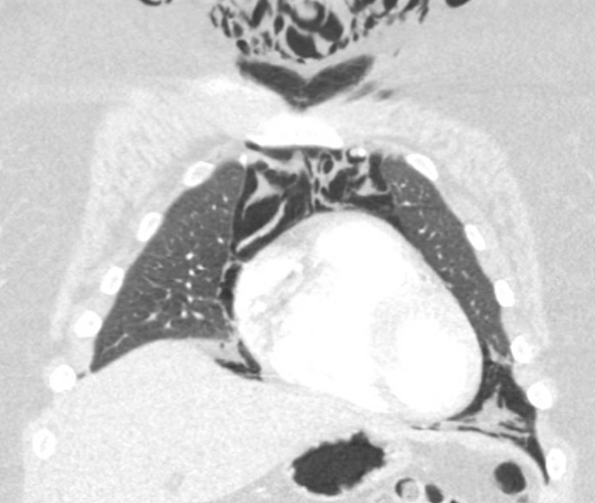
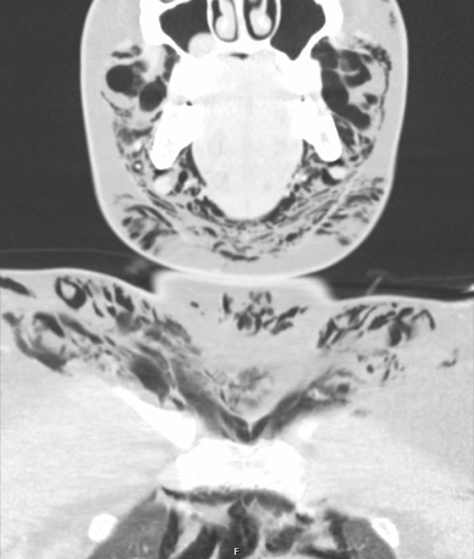
Case Presentation: A 26-year-old woman with well-controlled asthma presented with facial swelling after completion of a 21-mile open ocean swim 2 days prior to admission. She was stung multiple times by jellyfish and swam against the current. She described feeling as though she was breathing through a straw but attributed this to exertion, although prior long-distance swims had not provoked similar symptoms. She was given oral diphenhydramine and albuterol inhaler. Afterwards, she went to urgent care and was treated with IV methylprednisolone and diphenhydramine for a potential allergic reaction to jellyfish stings. The following day, she presented to the emergency department for ongoing symptoms. Vital signs were normal on presentation. Physical exam was notable for facial edema and palpable crepitus in her neck and chest wall. WBC was 21.1 x 1000/mm3 and CRP was 4.34 mg/dL; labs were otherwise unremarkable. Imaging including CT chest and neck revealed pneumomediastinum, bilateral pneumothoraces, and significant subcutaneous emphysema. Esophagram did not demonstrate an esophageal leak. Otolaryngology, cardiothoracic surgery, and pulmonary medicine evaluated the patient. No surgical intervention was recommended. Her symptoms and findings were deemed secondary to barotrauma from strenuous exertion and anticipated to improve without further intervention. Vital signs remained stable and she was improving at the time of discharge. Follow-up with pulmonary medicine was arranged. She was advised to avoid air travel, Valsalva maneuvers, and strenuous activity.
Discussion: Certain activities such as scuba diving are known to carry the risk of barotrauma but spontaneous subcutaneous emphysema, pneumothorax, and pneumomediastinum are rarely reported with other sports. Predisposing factors include underlying asthma. Thin, tall, and male patients are more often described. Athletes may consider severe respiratory symptoms to be an expected effect of exertion, not realizing they may instead indicate serious complications. Treatment is often supportive but surgical intervention may also be necessary. While this patient was initially treated for a presumed allergic etiology, the history and exam did not entirely support this. Hospitalists should be aware of rare but potentially life-threatening conditions when considering symptoms that only partially fit a diagnosis in order to rapidly escalate a comprehensive work-up with critical diagnostic studies and collaborative care with specialists. Fortunately, this patient improved and recovery was expected with supportive treatment.
Conclusions: Spontaneous pulmonary air leaks may be underrecognized complications with physical exertion. Maintaining a high index of suspicion for alternate etiologies when patients present with atypical symptoms is crucial for accurate diagnosis. Athletes and physicians should be aware of these rare but potentially morbid conditions that require immediate attention.