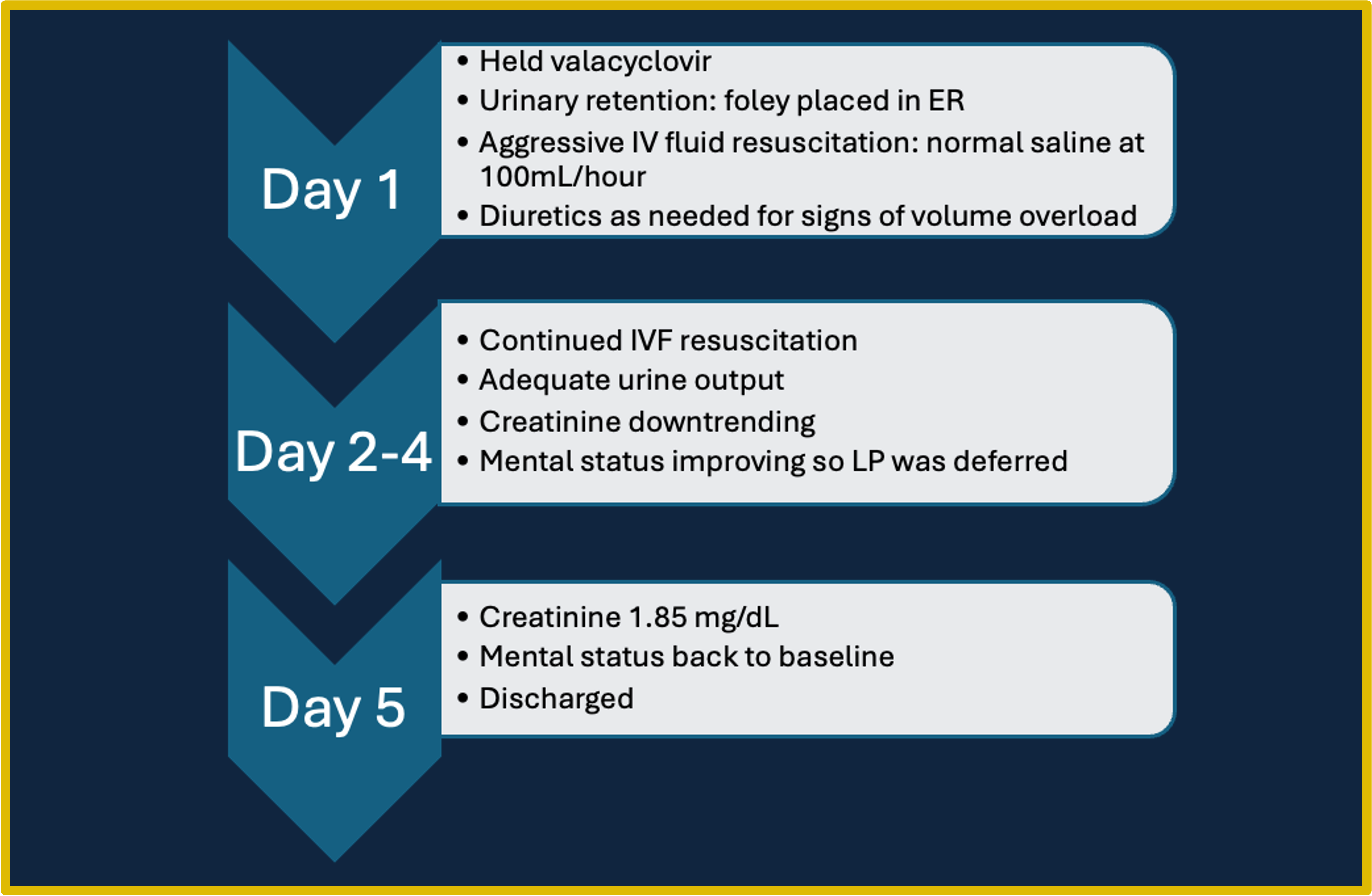
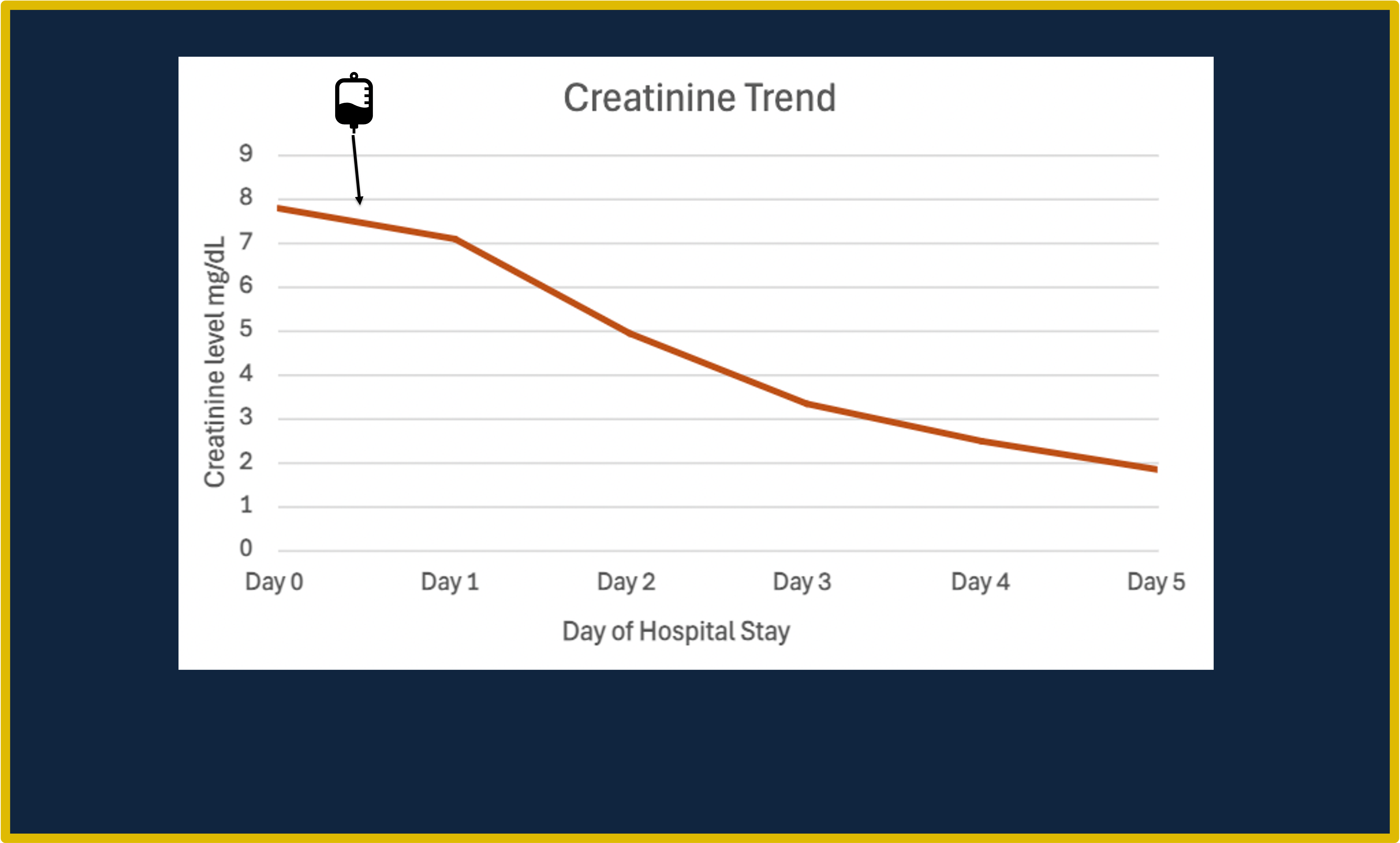
Case Presentation: Valacyclovir (a pro-drug of acyclovir) is a commonly used antiviral medication that can have the rare side effect of neurotoxicity and acute kidney injury. A 77-year-old woman with past medical history of acid reflux and recurrent urinary tract infections presented with confusion and falls. Three days prior to admission, she was diagnosed with shingles and started on oral valacyclovir. She had taken ibuprofen at home. Subsequently, she developed new tremors, dysarthria, and unusual behavior necessitating presentation to the hospital. Initial vitals were unremarkable. Her physical exam was notable for crusting rash in the T8-T10 dermatomal distribution on her right side. She had no focal deficits on her neurologic exam but she was slow cognitively. Her initial lab values were notable for creatinine of 7.84 mg/dL; prior baseline creatinine was approximately 0.9-1.1 mg/dL. Initial urinalysis was unremarkable. Post-void residual was 1 liter requiring urinary catheterization. A renal ultrasound was notable for mildly hyperechoic renal parenchyma. A non-contrast CT of the head was normal. She was initiated on aggressive IV fluid resuscitation for concerns of valacyclovir induced acute kidney injury (AKI). By the next day, the patient’s presumed acute metabolic encephalopathy improved though her creatinine remained elevated to 7.13 mg/dL. She continued to have adequate urine output and thus dialysis was deferred. Lumbar puncture was considered initially to rule out Varicella Zoster encephalitis but deferred given improvement in mental status with IV fluid resuscitation. Over the next five days her creatinine continued to downtrend and upon discharge it was 1.85 mg/dL. Since her discharge, she has been recovering well and reports eating and drinking without issues.
Discussion: Most reported cases of valacyclovir neurotoxicity occur in patients with advanced renal impairment or those on dialysis. Although our patient had normal baseline creatinine, she likely developed acute kidney injury due to urinary retention, illness-related dehydration, or NSAID use.Valacyclovir toxicity is primarily a clinical diagnosis, as serum drug levels do not correlate with symptoms. Reported AKI incidence with IV acyclovir ( surrogate for valacyclovir) ranges from 12–48%, with modern estimates near 13–18%. In a systematic review of 119 acyclovir/valacyclovir neurotoxicity cases, 83% had renal impairment, 57% had ESRD, and nearly 60% received doses above renal-adjusted recommendations.Renal failure may result from crystal nephropathy or acute interstitial nephritis, and neurotoxicity arises from accumulation of acyclovir and its metabolite 9-CMMG, which can be reduced by ~64% after a 4-hour hemodialysis session. Toxicity should be suspected in patients with AKI and altered mental status after starting valacyclovir, even when drug levels are not elevated. Most patients recover with supportive care and hydration, though dialysis may be required if renal recovery is delayed.
Conclusions: Oral valacyclovir can rarely cause neurotoxicity and acute kidney injury, particularly in older adults or patients with existing renal impairment. The diagnosis is mainly clinical, since drug levels do not reliably reflect symptom severity.Acute kidney injury and neurotoxicity from valacyclovir are primarily managed with intravenous fluids to promote renal clearance and expedite drug clearance, though dialysis may occasionally be required if renal recovery is delayed.