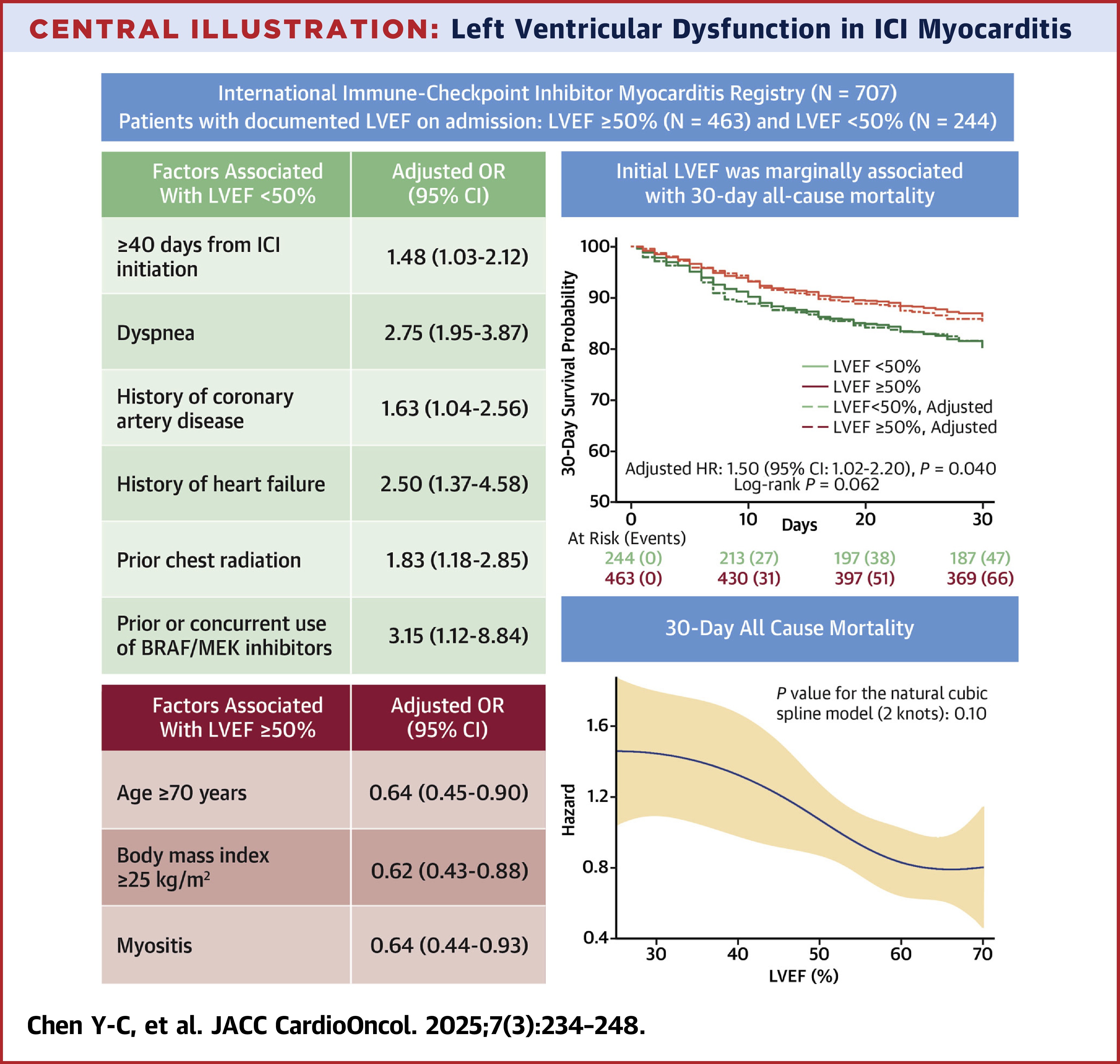
Case Presentation: A 67-year-old female with recurrent cutaneous squamous cell carcinoma metastatic to the axillary lymph nodes initiated cemiplimab therapy. Treatment was discontinued after one cycle due to severe myalgias and transaminitis. Over the following weeks, she developed progressive fatigue, lower-extremity edema, and worsening dyspnea, prompting hospitalization. She was clinically volume overloaded with sinus tachycardia on ECG. Laboratory evaluation showed proBNP 11,455 pg/mL, troponin-T 124 ng/L, and CRP 57 mg/L. Echocardiography revealed global LV hypokinesis, mild LV dilation, and an ejection fraction of 25–30%. Prior cardiac imaging demonstrated calcium scores of 62–200 and normal perfusion without ischemia. Right and left heart catheterization confirmed angiographically normal coronaries and a mildly elevated pulmonary vascular resistance of 2–3 Wood units. Findings were consistent with non-ischemic dilated cardiomyopathy, most likely immune-mediated myocarditis. She received pulse-dose intravenous methylprednisolone with symptomatic improvement. Telemetry captured multiple runs of sustained but hemodynamically stable ventricular tachycardia, along with sinus tachycardia and PVCs, improving after amiodarone. She was discharged on oral steroids and guideline-directed medical therapy for new-onset heart failure. She later required ICD placement for persistent ventricular arrhythmias. Follow-up echocardiography showed EF improvement to 45–50% and GLS to –15.5%, consistent with partial recovery.
Discussion: Acute myocarditis is an inflammatory disorder of the myocardium with presentations ranging from mild chest discomfort to cardiogenic shock. It affects 4–14 per 100,000 individuals annually, with reported mortality of 1–7%. Immune checkpoint inhibitors (ICIs) have emerged as a rare but life-threatening cause, with an incidence of 0.06–1% and mortality approaching 20–50%, most often within the first few treatment cycles. Although highest with combined CTLA-4 and PD-1 blockade, cases also occur with single-agent PD-1 inhibitors such as cemiplimab. ICI-associated myocarditis often mimics common cardiac conditions and may present with nonspecific symptoms, disproportionate troponin elevation, or even preserved ejection fraction, complicating early diagnosis. This irAE can lead to major adverse cardiac events including ventricular arrhythmias, high-grade heart block, acute heart failure, or cardiogenic shock, making rapid recognition and immunosuppression essential.
Conclusions: As ICI use expands, myocarditis will continue to pose significant diagnostic and therapeutic challenges. Although high-dose corticosteroids remain first-line therapy, optimal dosing is not well defined, and steroid-refractory disease may require agents such as abatacept, mycophenolate, IVIG, or JAK inhibitors. Improved outcomes will depend on standardized monitoring, earlier diagnostic pathways, and coordinated oncologic–cardiac care.