Background: Emergency department (ED) boarding time is an important measure of throughput and is also known to impact patient safety and experience. Hospitalized patients often have complex medical issues involving different specialties, and timely assignment of admission service is critical to reduce ED boarding. Many hospitals lack consistent guidelines for assigning patients to the most appropriate service based on their main clinical needs, leading to inconsistent practices and less transparency, resulting in unnecessary time spent debating service assignments, which increases ED boarding and leaves patients caught in the middle.
Purpose: Standardized admission guidelines offer substantial benefits by promoting collegiality and shared patient-care responsibility between multiple clinical teams, supported by departmental leadership. Accessible guidelines that are tailored to specific services allow all stakeholders to reference consistent criteria, enhancing transparency regarding service assignment decisions. This approach decreases the frequency of cases where service and bed assignment is delayed, as agreed-upon criteria set by leadership replace case-by-case decisions by individuals.
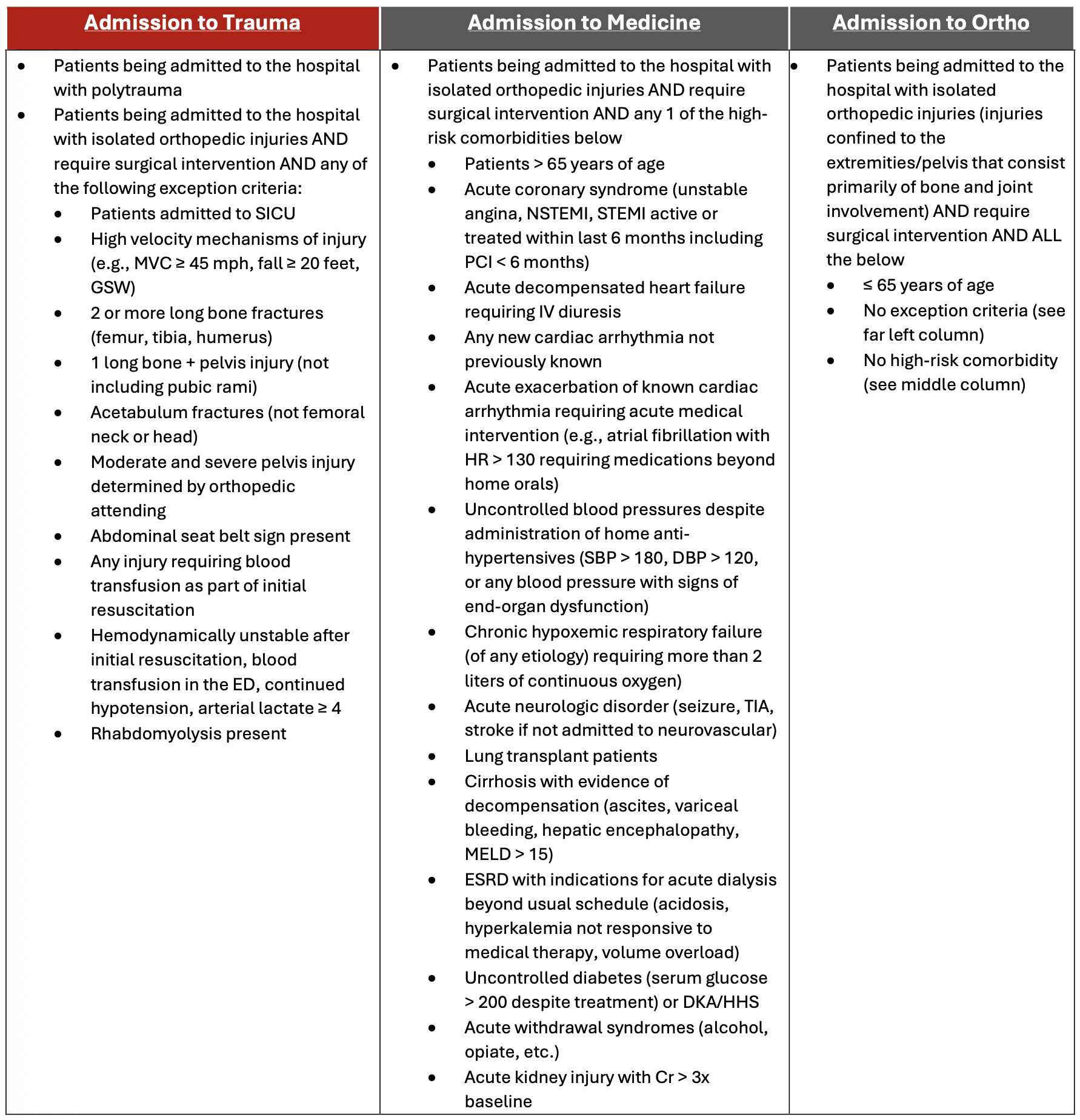
Description: At our hospital, patients with orthopedic trauma can be admitted to one of three services: Trauma Surgery, General Medicine, or Orthopedics, a scenario ripe for improvement. This guideline was carefully designed to consider the details of the traumatic injuries, patient age, and high-risk co-morbidities. Representatives from patient placement, the ED, and respective services convened to draft the guideline using a collaborative approach. Each group subsequently conducted internal departmental reviews with additional leaders, facilitating consensus on variables that initially prompted differing perspectives. The finalized guideline was then submitted to the Trauma Quality Multidisciplinary Committee and received approval.After approval, the guideline was distributed to respective departments and made available on an internal website to promote accessibility. Service assignment for patients followed the established guideline. Impact assessment included reviewing data for patients evaluated by both Trauma and Orthopedic services in the ED who were then admitted to non-ICU level of care. Comparing data from the six months before implementation to the six months after, admissions to Medicine decreased from 79.4% to 64.3%, combined admissions to Orthopedics and Trauma increased from 20.6% to 35.7%, median time from admission request to service assignment decreased from 92 to 73 minutes, and median ED boarding time reduced from 249 to 186 minutes.
Conclusions: Our experience with an admission guideline for patients with orthopedic trauma showcases the many benefits of a guideline-directed approach to admission service assignment, which are anticipated to be seen when expanded to other services as well. Guideline development creates an important opportunity for collaboration between services, creates consistency and transparency around the criteria for admission to specific services, and improves throughput. Most importantly, this approach ensures that the right patient is in the right place with the team best suited to direct their care, ensuring they receive the highest quality care in a timely fashion.
.jpg)