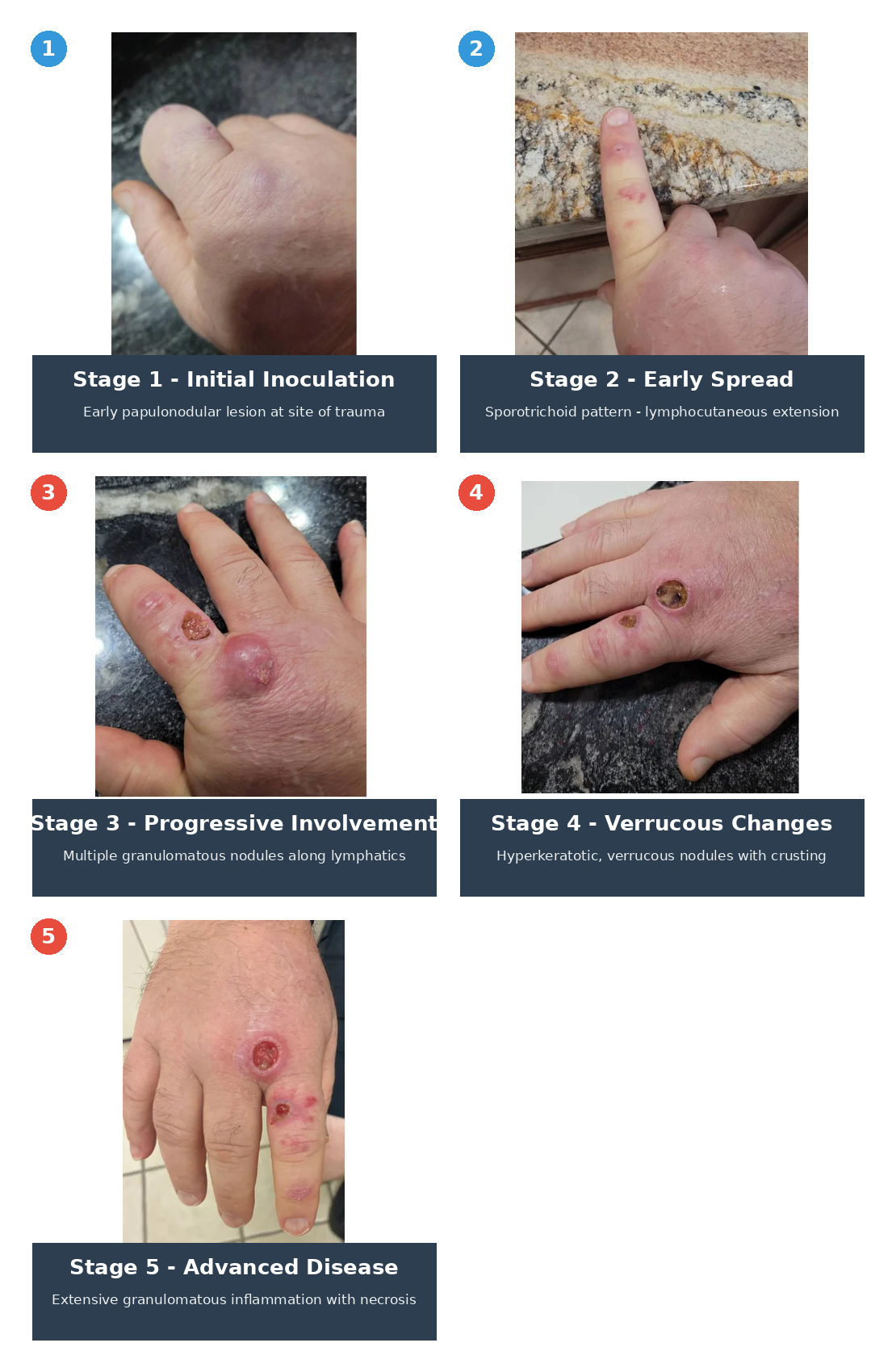
Case Presentation: A 53-year-old man with type 1 diabetes mellitus presented with a chronic annular lesion on the right index finger near the distal interphalangeal joint, evolving to involve the hand and forearm refractory to multiple courses of antibiotics (Augmentin, TMP-SMX, doxycycline). Biopsy showed suppurative granulomatous dermatitis with pseudoepitheliomatous hyperplasia. Cultures and serologies were negative. Subsequent infectious disease evaluation revealed frequent fish tank cleaning, raising suspicion for Mycobacterium marinum. Despite negative AFB cultures, histopathology and exposure history were diagnostic. The patient improved with treatment with clarithromycin and rifampin.
Discussion: Mycobacterium marinum is a slow-growing, photochromogenic nontuberculous mycobacterium associated with aquatic exposure. It causes a rare cutaneous infection frequently misdiagnosed as bacterial cellulitis or fungal dermatitis. Diagnostic delays are common due to its unique incubation requirements (30°C rather than 37°C) and nonspecific early manifestations. This case highlights the diagnostic challenge when standard cultures remain negative despite classic histopathologic findings. The combination of granulomatous dermatitis, refractory skin lesions, and occupational exposure to aquarium water strongly suggested M. marinum infection even without microbiologic confirmation.
Conclusions: This case emphasizes the importance of detailed environmental exposure history and laboratory awareness of M. marinum’s specialized culture requirements. Recognition of atypical mycobacterial infections is essential to avoid diagnostic delays and ensure appropriate therapy be initiated early on. Clinicians should maintain high suspicion for M. marinum in patients with chronic skin lesions and aquatic exposure, even when cultures are negative.