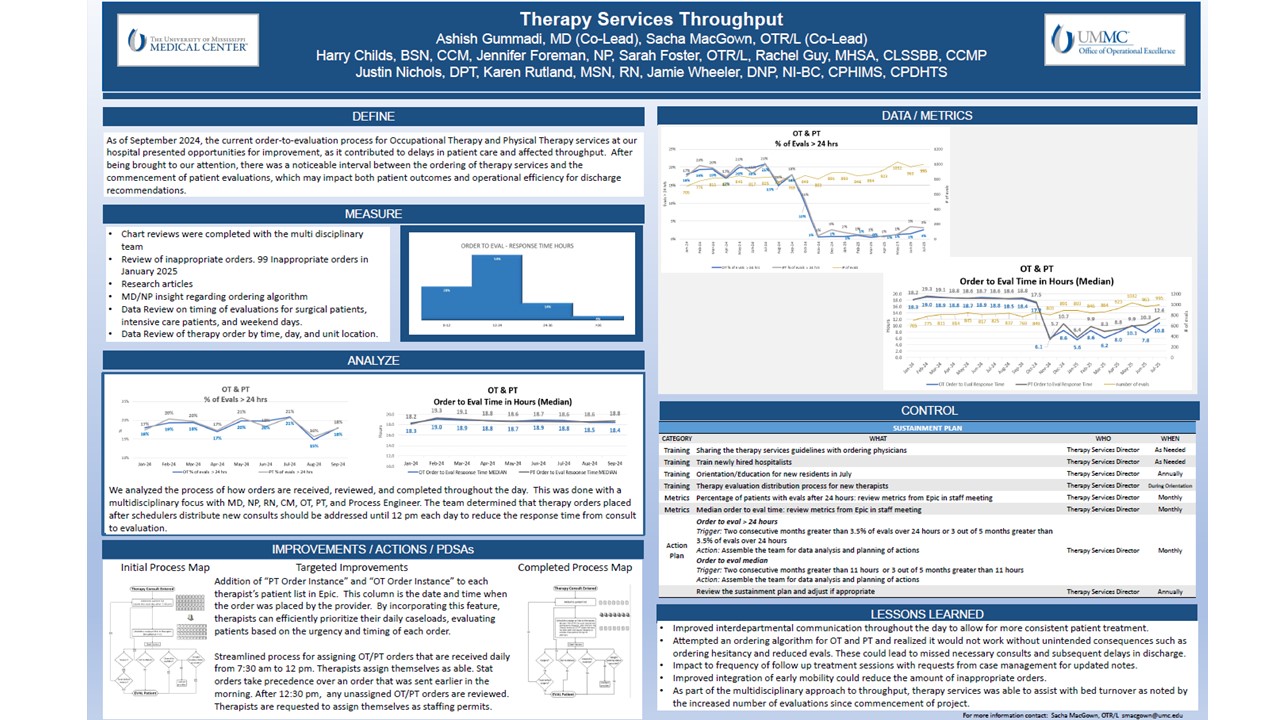
Background: Timely initiation of therapy evaluations is critical for optimizing patient outcomes and hospital throughput. At our institution, approximately 80% of initial therapy evaluations were completed within 24 hours of order placement—a rate that remained unchanged for several years. Recognizing this as an opportunity for improvement, we aimed to increase the proportion of evaluations completed within 24 hours.
Purpose: Reducing the time from therapy order to initial evaluation can improve patient outcomes, minimize discharge delays, and enhance overall operational efficiency
Description: A multidisciplinary team—including physicians, nurse practitioners, registered nurses, case managers, physical and occupational therapists, and a process engineer—conducted a comprehensive review of workflows, electronic health record data, and relevant literature. The team analyzed therapy evaluation delays across various patient populations (e.g., surgical, ICU), timeframes (weekday vs. weekend), and unit locations. Based on these findings, the team implemented a revised workflow: therapy consults were distributed throughout the day until 12:00 p.m., allowing therapists to prioritize evaluations more effectively. We initially implemented our new work process on October 31, 2024 .All new OT/PT orders received from 7:30 am to 12 pm are evaluated on the same day. In December 2024, we decided to track our “Inappropriate orders” for January 2025 . In January 2025, 99 inappropriate therapy consults were identified out of 893 total orders. The revised workflow significantly reduced the time to initial therapy evaluations without compromising follow-up treatment sessions. Improvements were sustained over a 9-month period through targeted interventions, including education of ordering providers and integration of therapy guidelines into orientation programs for new staff.
Conclusions: A data-driven, multidisciplinary approach to optimizing therapy workflows led to measurable improvements in evaluation timeliness. Sustained success was achieved through ongoing training, process monitoring, and adaptive interventions.