Background: Rapid and accurate diagnosis is essential in hospital care, yet diagnostic uncertainty is often high, and many hospitalists work without team-based support. Informal diagnostic second opinions from hospitalist colleagues may provide diagnostic value, but it remains unclear how frequently hospitalists seek such opinions and what barriers they encounter.
Methods: A cross-sectional survey was conducted between August and September 2025. Participants were physicians and Advanced Practice Providers (APP) practicing hospital medicine at 13 geographically diverse hospitals. Participants were recruited via email lists provided by each site’s coordinator. The survey assessed the frequency of requesting second opinions, comfort level discussing diagnostic uncertainty, and perceived barriers using the following six items: time constraints, fear of bothering a colleague, difficult to determine who to ask, vulnerability, not compatible with our culture, and limited value to informal peer consultation. Additionally, demographic variables were collected. Chi-square tests compared differences in barriers by years of experience (5 years or less vs. over 5 years) and gender.
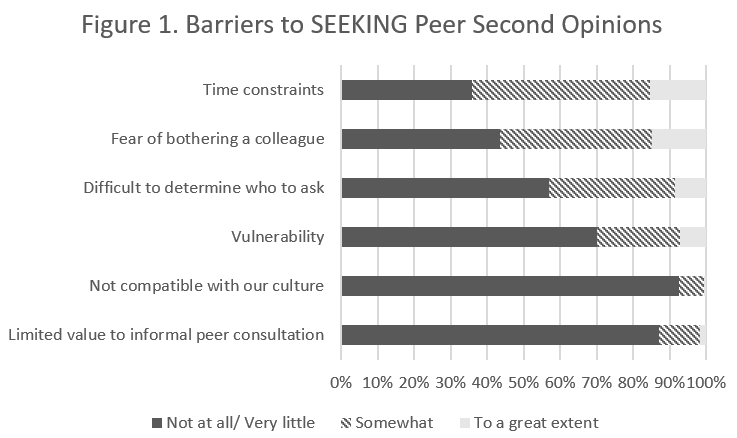
Results: Three-hundred thirty-eight hospitalists from 13 sites responded: 295 physicians (87.4%), 183 women (54.2%), and 244 individuals identifying as White (72.1%). Most respondents (291, 86.1%) spent at least part of their time providing daytime direct care. Half (51.5%) reported most of the time or always seeking a second opinion when facing diagnostic uncertainty. 98.2% of hospitalists felt safe speaking candidly about diagnostic uncertainty, and 96.4% felt comfortable asking for help even after an unexpected clinical decompensation. The majority (81.3%) described their department’s culture as supportive of diagnostic collaboration, and 97.3% believed that second opinions from colleagues improved diagnostic accuracy. The most commonly cited barriers to seeking a peer second opinion were time constraints (64.3%) and fear of burdening colleagues (56.6%). Less experienced hospitalists were more likely to report vulnerability as a barrier (39.2% vs. 26.8%, p=0.03) though no other differences were found. No gender differences were observed.
Conclusions: Hospitalists commonly seek diagnostic second opinions from their colleagues and almost universally perceive them as psychologically safe. However, practical barriers—particularly time constraints and concerns about burdening colleagues—limit their regular use for more than half of respondents. Early-career hospital physicians may also have more of a barrier in vulnerability when asking for help. Strengthening systems that facilitate peer consultation and supporting junior clinicians could enhance diagnostic collaboration and improve diagnostic accuracy.