Background: Under newly posed strict legal work-hour restrictions in Japan, efficient and effective educational strategies are essential. While formal peer education programs are known to improve well-being, the impact of informal, spontaneous sharing of cases among resident physicians remains unknown. This study aimed to characterize residents who spontaneously share clinical cases with peers and to evaluate the association between this behavior, burnout prevalence, and objective clinical knowledge.
Methods: We conducted a nationwide cross-sectional study involving Postgraduate Year (PGY) 1 and 2 residents across 633 teaching hospitals who took the General Medicine In-Training Examination (GM-ITE) in 2022. Participants were categorized based on self-reports of whether they spontaneously shared their own clinical cases with peers for learning purposes. The primary outcomes were burnout, assessed using a validated single-item measure, and clinical competence, measured by the total GM-ITE score. Multivariable regression analyses (modified Poisson regression for burnout and robust linear regression for exam scores) were performed to adjust for potential confounders, including age, sex, hospital characteristics (rural/urban, university/community), and workload metrics (emergency duties, daily patient volume, study time).
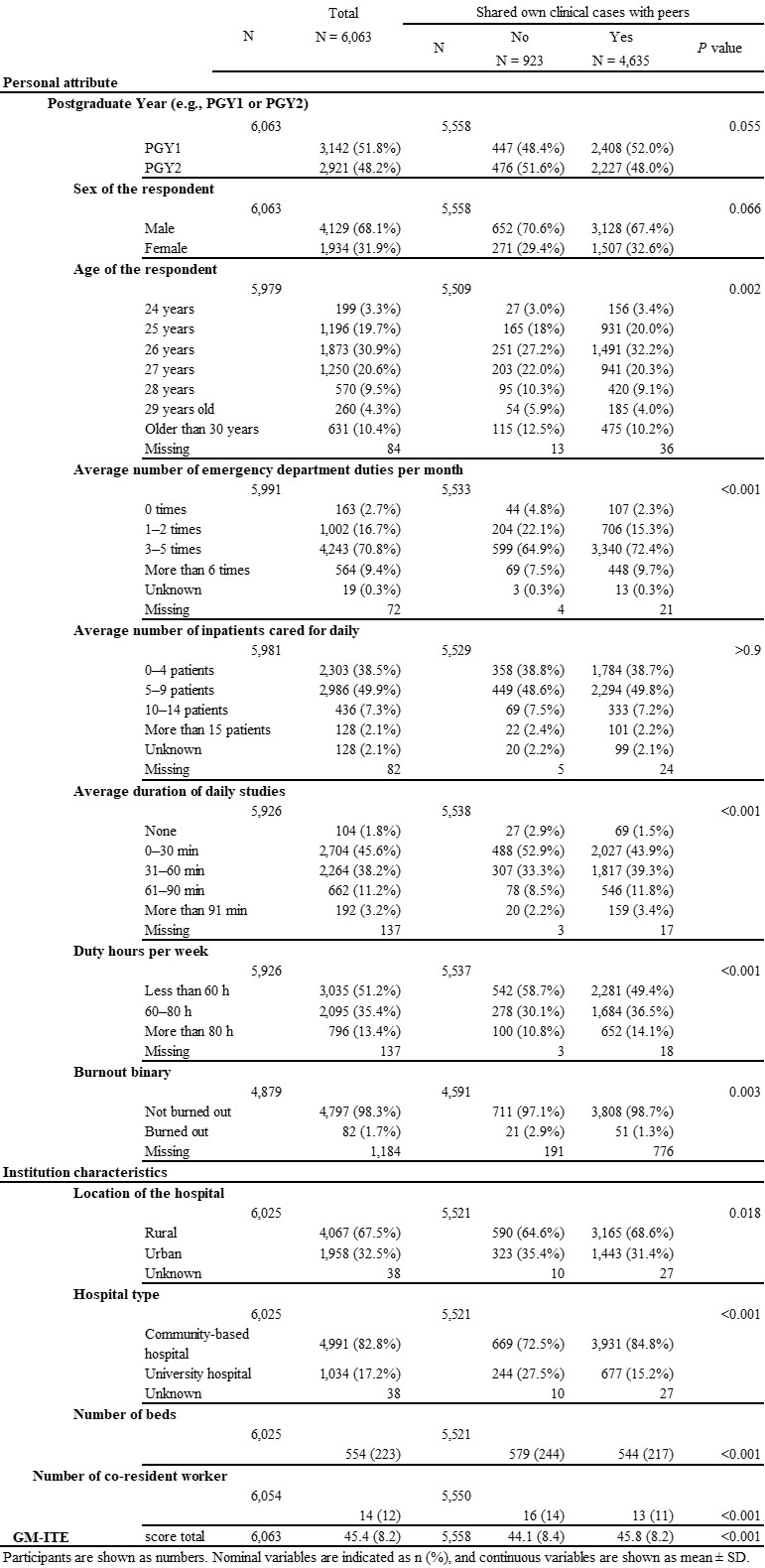
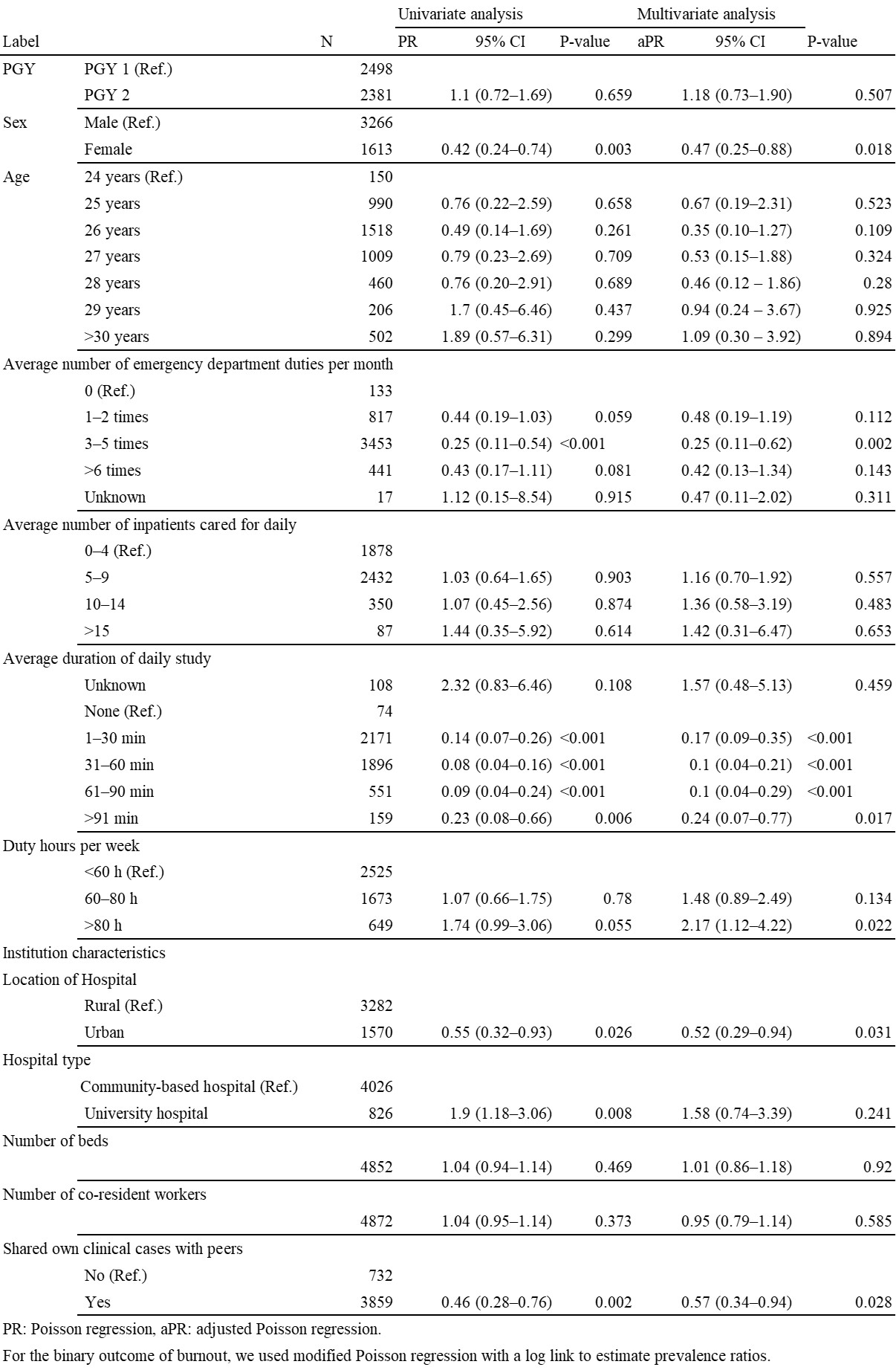
Results: Of 6,063 residents, 4,635 (76.4%) reported sharing cases with peers. Residents who shared cases were significantly younger (P = 0.002), managed higher emergency department workloads (P < 0.001), engaged in more daily self-study (P < 0.001), and were more likely to train in rural or community-based hospitals (P < 0.001) compared to non-sharers. The overall prevalence of burnout was 1.7%. In the multivariable analysis, spontaneous case sharing was independently associated with a significantly lower risk of burnout (Adjusted Prevalence Ratio: 0.56 [95% CI, 0.34–0.94], P = 0.028). Furthermore, case sharing was associated with higher objective clinical knowledge scores (Coefficient: 0.62 [95% CI, 0.06–1.17], P = 0.029).
Conclusions: We observed that spontaneous case sharing, prevalent among younger and highly motivated participants in smaller groups, was associated with significantly reduced burnout and enhanced clinical competence. Fostering this informal culture serves as a useful educational strategy and a vital, low-resource intervention to mitigate burnout, even in labor-restricted environments. Promoting case sharing offers a practical approach to enhance team resilience and supports the re-evaluation of peer-to-peer education at the international level.