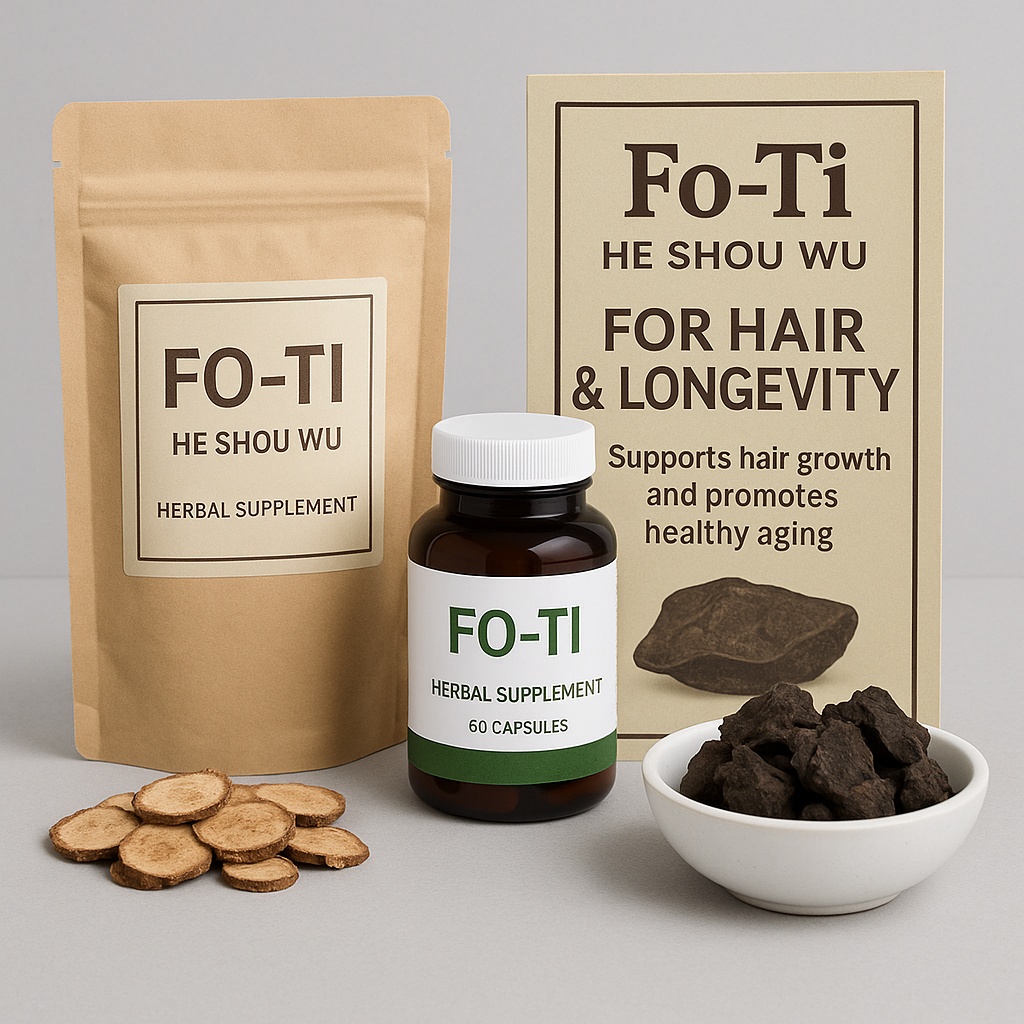
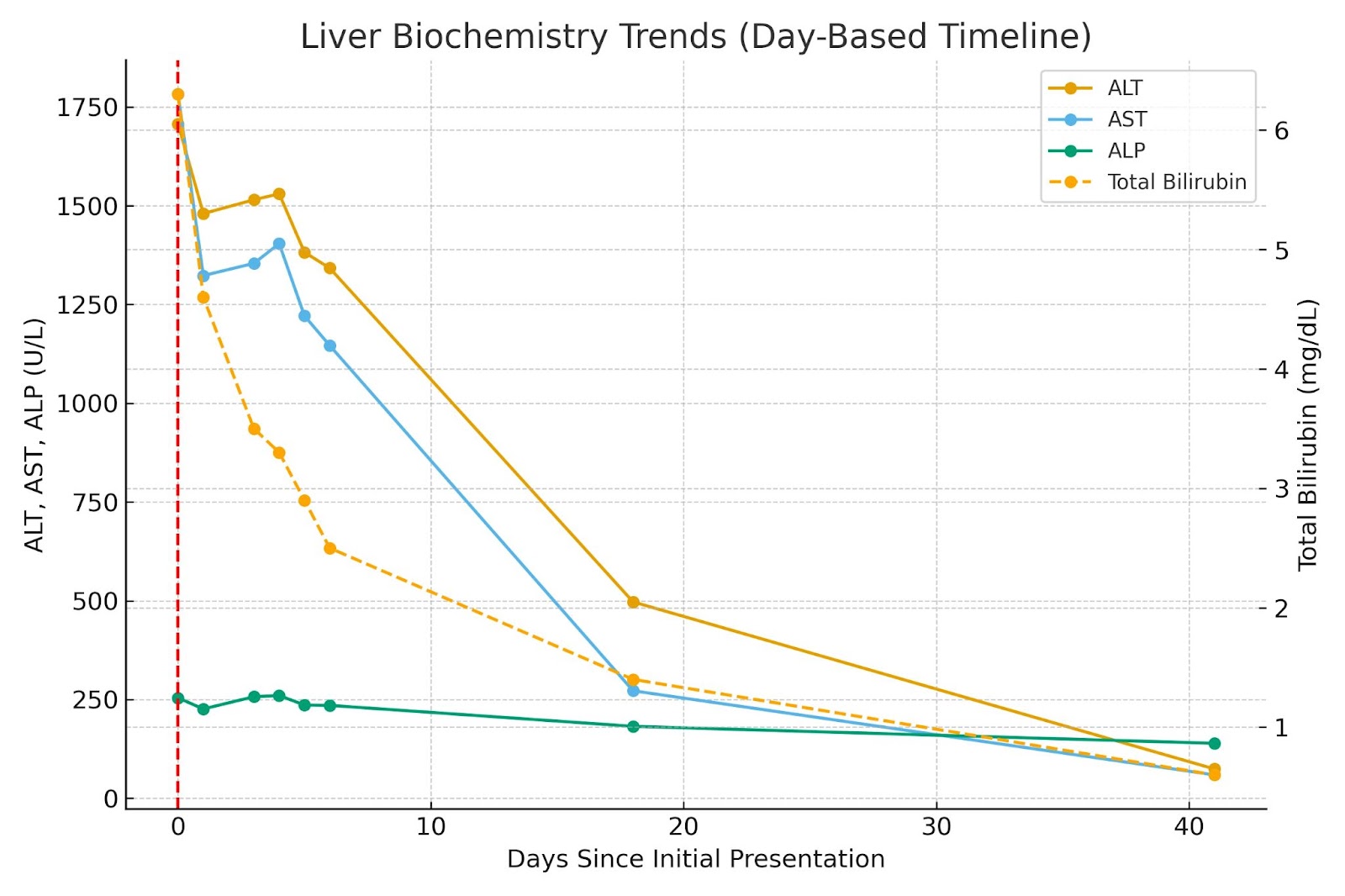
Case Presentation: A 52-year-old woman with no significant medical history presented to the hospital with several weeks of pruritus, dark urine, and scleral icterus. She denied medication changes, alcohol use, or travel. Physical exam was unremarkable. Labs showed markedly elevated aminotransferases (aspartate aminotransferase [AST] 1,782 U/L, alanine aminotransferase [ALT] 1,707 U/L), alkaline phosphatase 254 U/L, and total bilirubin 6.3 mg/dL. Evaluation for viral hepatitis, cytomegalovirus [CMV], Epstein–Barr virus [EBV], metabolic disease, and autoimmune etiologies was negative except for a low-titer antinuclear antibody [ANA] (1:160). Abdominal computed tomography [CT] and Doppler ultrasound showed patent vasculature without cirrhosis, obstruction, or Budd–Chiari syndrome. With no clear etiology identified, additional history revealed daily use of an over-the-counter supplement for hair health for about one year. The supplement—Fo-Ti (He Shou Wu)—was discontinued, and she was managed supportively. Liver enzymes normalized over several weeks (AST 59 U/L, ALT 74 U/L, bilirubin 0.6 mg/dL), confirming herbal-induced hepatocellular injury.
Discussion: This case demonstrates a clear temporal association between Fo-Ti ingestion and acute hepatocellular herb induced liver injury (HILI), supported by marked transaminase elevation and prompt improvement after discontinuation. Fo-Ti is commonly used for hair growth, gray-hair reversal, and anti-aging (1,4). The presentation mirrors published patterns, including chronic ingestion preceding symptoms (1), predominance among middle-aged women (2), and features such as jaundice, dark urine, and fatigue (1,3). Most reported cases originate from China, where Fo-Ti is consumed as decoctions or multi-herb formulas (1,2). In contrast, this case involved a U.S. commercial capsule; although extraction was unspecified, commercial products often differ in processing and constituent ratios. These differences matter: ethanol extracts show greater hepatotoxicity than water extracts in hepatocyte models due to higher concentrations of emodin(anthraquinone) (2), and processing reduces stilbene glycosides while increasing anthraquinones (4). No single hepatotoxic compound has been definitively identified (2,3). Host factors may also modify risk; HLA-B*35:01 has been associated with Fo-Ti HILI in Chinese cohorts (3), and individuals “do not respond uniformly” to exposure (4), which may have contributed to the rapid recovery in this case.
Conclusions: Fo-Ti–associated herb-induced liver injury (HILI) is often underrecognized because patients may not report supplement use and clinicians may not routinely ask about it. This case highlights that herbal products can cause significant liver injury and should be considered in the evaluation of unexplained hepatocellular damage. Incorporating tools such as the Roussel Uclaf Causality Assessment Method (RUCAM) / Revised Electronic Causality Assessment Method (RECAM) (1,5) and intentionally assessing nonprescription supplement use can improve early identification. As use of unregulated herbal products grows, patient education and clinician awareness are critical to preventing delayed diagnosis and reducing harm.