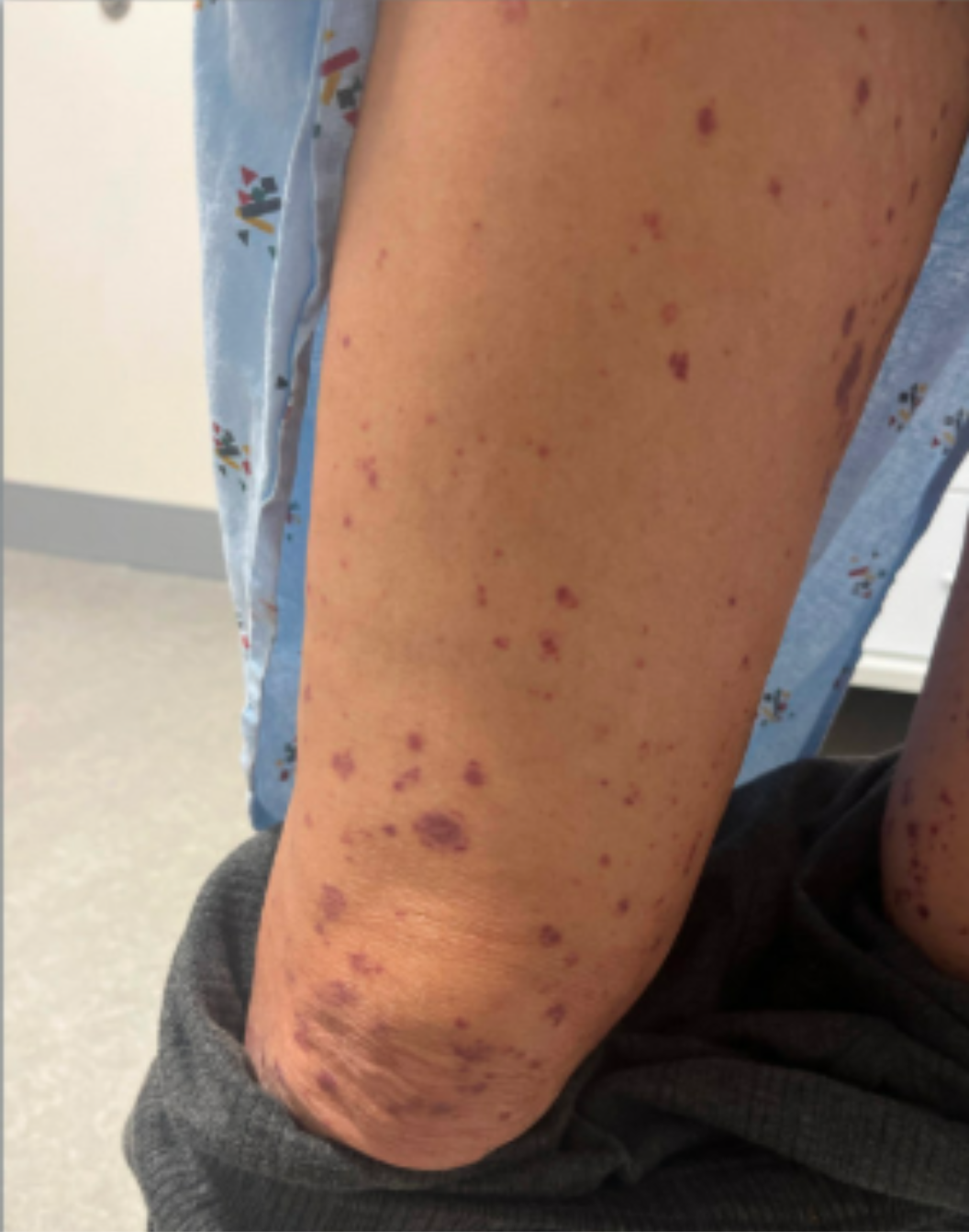
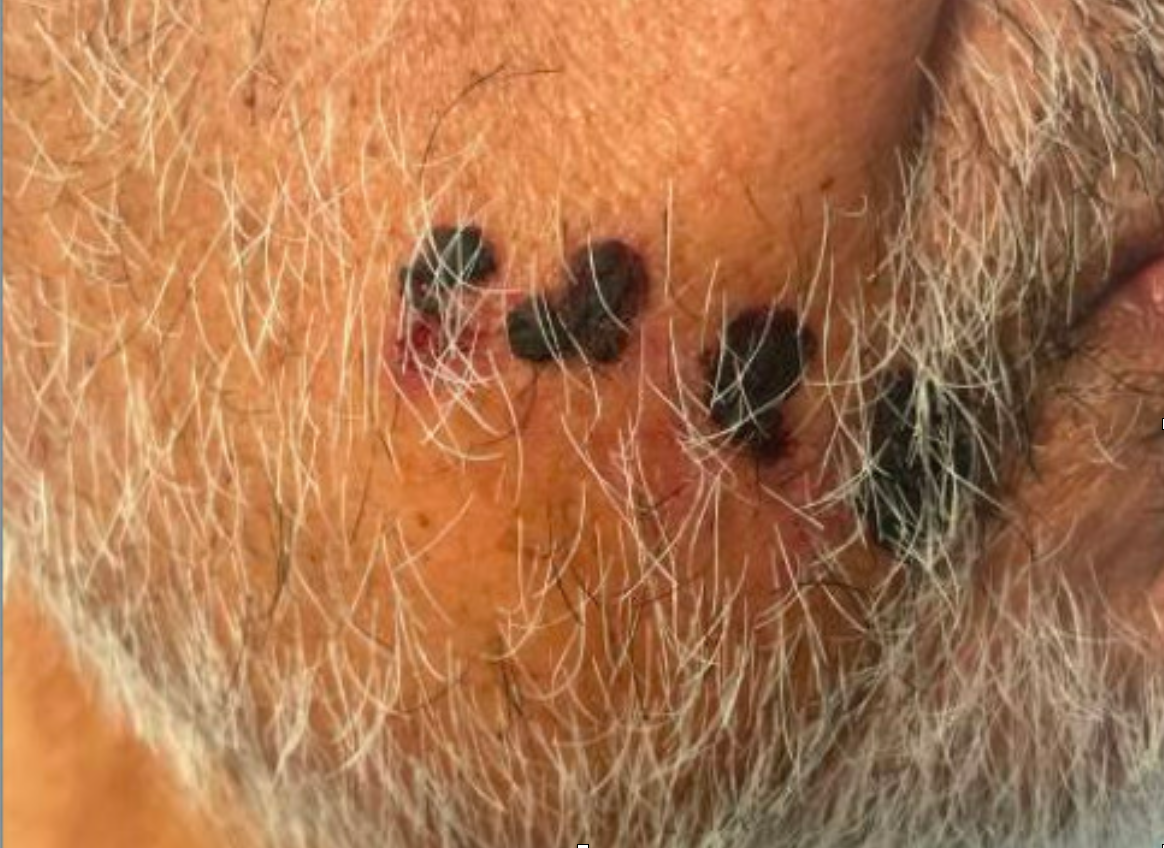
Case Presentation: A 76-year-old male with diabetes presented to the ED with diarrhea and worsening rash on legs. Admission labs with platelets 134,000/mL, and creatinine elevated at 2.5 mg/dL. CT abdomen/pelvis with findings consistent with enteritis. Stool culture positive for E. Coli O157:H7. Renal function and thrombocytopenia worsened despite supportive care. Rash spread to the face, torso, and arms. Work up for TTP and hemolysis was negative. Etiology believed to be due to bone marrow suppression from E. coli. Workup revealed low C3 38 mg/dL and C4 < 0.4 mg/dL. On hospital day 10, blood smear revealed deposits concerning for cryoglobulins. IV methylprednisolone was started for vasculitis/immune complex deposition. Following, platelets stabilized for several days but then worsened. Renal function worsened with development of oliguria requiring dialysis. Kidney biopsy with membranoproliferative pattern suspicious for cryoglobulinemic glomerulonephritis. Serum cryoglobulins elevated at 15% ppt. Cryo immunofixation showed Type 1 cryoglobulinemia with monoclonal IgG kappa. SPEP revealed gamma M spike with confirmed IgG kappa. Patient was diagnosed with Type 1 cryoglobulinemic vasculitis due to a monoclonal gammopathy of renal significance. As renal failure and thrombocytopenia did not improve with IV steroids, treatment was changed to weekly CyBorD and prednisone. After 2 cycles, urine output increased but remained on dialysis. Given ongoing thrombocytopenia, regimen was changed to Rituximab and dexamethasone. After 2 cycles, platelet count improved and he was discharged. Following 4 cycles of Rituximab, thrombocytopenia resolved and renal function returned to baseline with cessation of dialysis. Treatment was stopped and patient remained stable at 1 month follow up.
Discussion: Monoclonal Gammopathy of Clinical Significance (MGCS) is a newer clinical entity encompassing pathological conditions associated with monoclonal gammopathy where the M protein causes specific symptoms or damage. MGCS can affect multiple organ systems and is called Monoclonal Gammopathy of Renal Significance (MGRS) when it affects the kidneys. Cryoglobulinemic vasculitis (CryoVas) are rare conditions when cryoglobulinemia leads to symptoms. Type I accounts for 10-15% of cases and contains a single type of monoclonal immunoglobulin. The pathogenesis of Type I CryoVas is primarily attributed to cryoglobulin precipitation in the microcirculation, leading to inflammatory vasculitis and vessel obstruction. Clinical manifestations of Type I CryoVas range from the typical symptoms of cryoglobulinemic syndrome to organ failure. Renal involvement occurs in about 30% of patients. Diagnosis of CryoVas relies on a combination of clinical features, elevated serum cryoglobulins, and histological evidence of vasculitis5. Immunofixation is used to determine the isotype and clonality of the cryoglobulins5. Given the strong association of Type I cryoglobulinemia with B-cell lymphoproliferative disorders, a thorough investigation for an underlying hematologic condition, including MGUS or overt malignancy, is essential.
Conclusions: Type I Cryoglobulinemic Vasculitis represents a significant clinical entity within the spectrum of MGCS. When evaluating patients with monoclonal gammopathies, diagnostic evaluation should assess for disorders beyond multiple myeloma and MGUS. MGCS should be on the differential in patients with unexplained end-organ dysfunction and monoclonal gammopathy.