Background: The American Diabetes Association’s 2024 guidelines on diabetes care in the hospital setting advises performing A1c testing for all patients with diabetes or hyperglycemia upon hospital admission if an A1c value within 90 days isn’t available. Rationale for this testing includes diagnostic evaluation of hyperglycemia and guidance about appropriate modalities of pharmacologic therapy. For instance, a review of four randomized controlled trials previously demonstrated that A1c is an effective predictor of glycemic control and insulin requirements for hospitalized patients with type 2 diabetes. A prospective multicenter study also showed that admission A1c can assist with determining the treatment regimen – with significant improvement in A1c values 12 weeks after discharge. Our team identified a gap in quality regarding inadequate admission A1c testing ordered by our resident physician colleagues on inpatient services at Mayo Clinic in Florida. Therefore, we led a quality improvement (QI) initiative to increase appropriate A1c testing rates by internal medicine residents in our program.
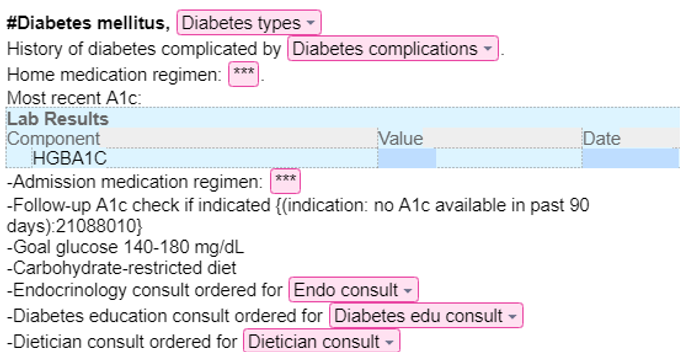
Methods: We conducted a retrospective chart review of patients admitted to internal medicine resident teaching services. 74 patients diagnosed with diabetes were included in the baseline analysis. 49 patients lacked an available A1c value within 90 days of presentation, but only 16 of these patients (32.6%) had an A1c level ordered on admission. Our goal was to increase the percentage of appropriate admission A1c testing relative to this metric by 15% (from 32.6% to 37.5%) by 5/1/25. The baseline analysis also showed that 3 of 25 patients (12%) underwent repeat A1c testing on admission despite having an available A1c value within 90 days of admission. To ensure we avoided erroneous testing with our intervention, our counterbalance measure was defined as not significantly increasing the percentage of A1c testing among this group. Use of a fishbone diagram and impact/effort matrix identified gaps in provider knowledge and inconsistent documentation as contributing factors toward this quality gap. Our team therefore provided educational sessions to our co-residents and crafted a SmartPhrase documentation tool in the Epic electronic medical record for residents to utilize in their documentation. The SmartPhrase automatically pulled the last available A1c value into a note, which would prompt residents to order an A1c test if indicated.
Results: Three cycles of post-intervention data were collected. In the final cycle, 40 total patients with diabetes were identified and 21 of them lacked an A1c level within 90 days prior to admission. 11 of 21 patients (52.4%) underwent appropriate A1c testing upon admission. Additionally, no patients for this cycle had an inappropriate A1c level collected (defined as obtaining an A1c value on admission despite the presence of an available value within 90 days).
Conclusions: Our team recognized a gap in quality care for patients with diabetes admitted to our institution. The combined use of educational and documentation tools was a viable strategy to improve appropriate admission A1c testing per American Diabetes Association guidelines. This strategy also did not subject patients to additional erroneous testing. We plan to partner with our endocrinology stakeholders to continue implementation of this initiative. An option for future research is to assess our intervention’s impact on inpatient diabetes-related care and long-term glycemic control after discharge.
.png)