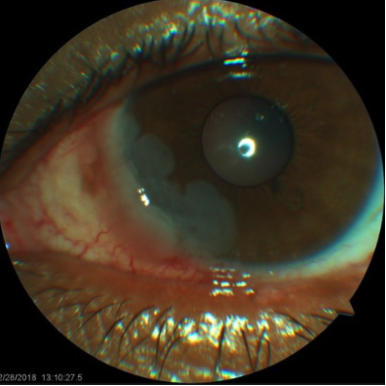
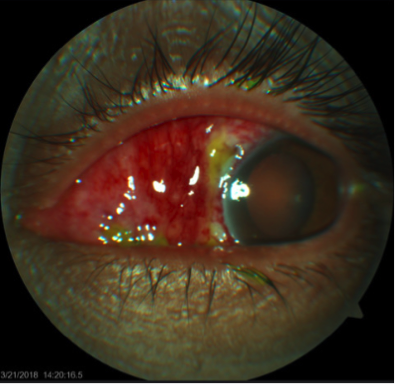
Case Presentation: IntroductionEye pain is a common symptom that is initially managed by primary care physicians. A comprehensive eye examination is included in primary care yet has become a lost art in this current era of medicine. As a result, important details may be missed when not performed properly. Several questions to consider during an optical evaluation: 1) Is this particular eye condition part of a larger systemic disorder or of a primary eye disease? 2) Are there any alarming findings that necessitate urgent ophthalmological care? 3) Is a biopsy necessary? Meticulous patient history and risk factor analysis help guide differential diagnosis and devise future management strategies. In this 35-year-old male patient with persistent left eye pain, a peculiar appearance of the eye, and new visual changes were red flags that required urgent ophthalmologic evaluation. These symptoms were not typical of pterygium. The lack of progressive systemic symptoms obviated the need for in-depth rheumatologic or infectious disease testing.
Case Presentation
A 35-year-old Hispanic male patient with a history of pterygium presented with complaints of worsening left eye pain for months. Prior to these symptoms, the patient had been treated for pterygium for years without eye pain. Over the past two weeks, the patient had also noticed more redness and soreness that occured all day. He noticed darkening in the medial vision of his left eye, persistence of left eye pain and visual changes. An excisional biopsy of the lesion was performed. The final biopsy reports revealed an ocular surface squamous cell carcinoma in situcausing pterygium.
Discussion: Eye pain is common and initially managed by primary care physicians. Questions to consider when examining patients: 1) Are there any alarming eye findings that need an urgent ophthalmology referral? 2) Is this particular eye condition part of a larger systemic disorder or one of a primary eye disease? 3) Is there a need for additional testing such as HIV or HPV screening? 4) Should a biopsy be performed? Meticulous patient history and risk factor analysis combined with a clinical examination will help formulate a differential diagnosis and inform further management. By doing so, it obviates the need for unwanted testing, early specialist referral, and improves patient outcome.
Conclusions: Familiarization with the typical presentation and appearance of a pterygium will portend an opportunity for the comprehensive practitioner to treat with conservative therapy, thus saving the patient time and discomfort. In the rare refractory case or atypical appearance, consultation with ophthalmology is needed.